Alcohol and Long-Term Health: Dose Context and Uncertainty
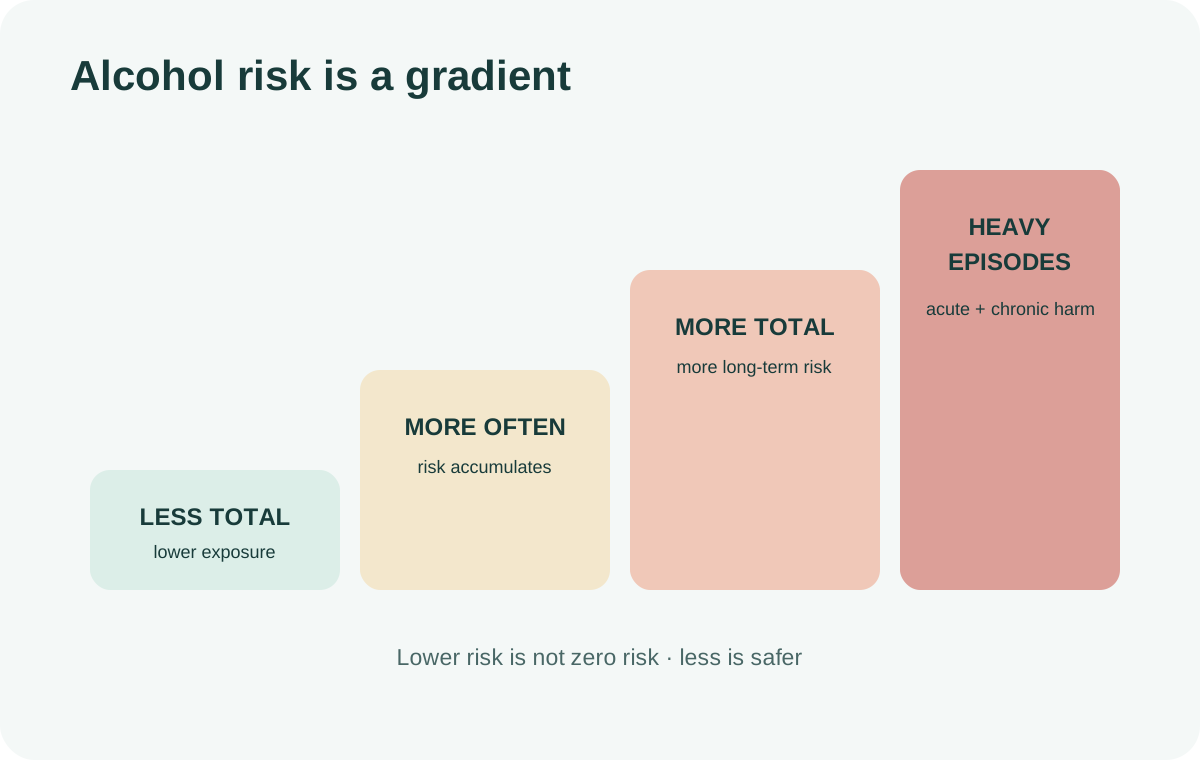
Alcohol risk rises with dose and heavy episodes; lower exposure is lower risk, but no level is risk-free.
 Sofia LindbergLongevity & Prevention editor5 September 2026
Longevity & Prevention · Evidence guide
Alcohol risk rises with dose, pattern and context. Low consumption carries less risk than high consumption, but “less risky” does not mean risk-free or medically beneficial.

In short
- Ethanol is psychoactive, dependence-producing and carcinogenic.
- Risk generally increases with total dose and heavy episodes.
- Apparent heart benefits in observational studies are vulnerable to bias.
- Pregnancy, driving, interacting medicines and some illnesses call for no alcohol.
Start with dose, not beverage prestige
Beer, wine and spirits all deliver ethanol. Container size and alcohol-by-volume determine dose, so one large strong beer can contain several “standard drinks.” Standard-drink definitions differ by country; use the local unit and measure home pours occasionally.
Wine is not made protective by antioxidants when the comparison includes alcohol-related cancer and injury risk.
Long-term health effects
Alcohol contributes causally to liver disease, several cancers, cardiovascular conditions, injuries and mental-health problems. It can worsen sleep quality, blood pressure and medication side effects. Individual outcomes depend on genetics, sex, age, health, social environment and drinking pattern.
WHO states that no form of consumption is risk-free. Most population harm is concentrated in heavy episodic and heavy continuous use, but cancer risk can rise at low levels.
Why older studies looked protective
Observational comparisons sometimes found lower heart risk among moderate drinkers than abstainers. The abstainer group can include former heavy drinkers or people who stopped because of illness, and drinkers may differ in income, diet and care. Adjusting does not remove every bias.
Alcohol should not be started for health. Proven cardiovascular strategies include treating blood pressure, avoiding smoking, movement and indicated medicines.
Pattern changes risk
Seven drinks in one evening are not equivalent to seven spread across a week. Rapid intake raises intoxication, injury, violence, aspiration and rhythm-disturbance risk. Drinking without food, combining substances or using alcohol for sleep adds risk.
A weekly guideline is a ceiling or risk marker, not a target to save for the weekend.
Situations for no alcohol
Avoid alcohol during pregnancy or when trying to conceive according to local guidance; before driving, swimming or operating machinery; with interacting medicines; before hazardous work; and when a condition is worsened by alcohol. People unable to control intake should seek support rather than rely on moderation rules alone.
Never pressure another person to explain abstinence.
Practical reduction
- Measure your usual pour and count local standard drinks.
- Choose alcohol-free days and an alcohol-free first drink.
- Reduce strength or serving size.
- Set the amount before the occasion and avoid rounds.
- Track sleep, mood, spending and cravings for four weeks.
Alcohol-free options can preserve ritual and social participation. If cues are strong, change the setting as well as the drink.
Dependence needs care
Daily heavy use can produce dangerous withdrawal. Tremor, sweating, agitation, hallucinations or seizures after reducing alcohol require urgent medical help. People with possible dependence should not abruptly stop without clinical advice.
Effective treatment can include brief intervention, medication, psychological care and peer support. Shame is not a treatment.
Communicate uncertainty honestly
No population estimate predicts one person's outcome. “No safe level” means no threshold with zero risk; it does not mean every sip causes immediate disease or that all doses are equally harmful. The useful direction is less exposure and fewer high-risk occasions.