Balance Training: The Neglected Part of Fitness
Balance is trainable and specific. Progress stance, stepping, turning and attention while keeping a reliable support within reach.
 Priya ShahMovement & Mobility editor5 September 2026
Movement & Mobility · Practical guide
Balance is trainable, specific and easy to neglect. A safe progression challenges your stance just enough while keeping a reliable support within reach.
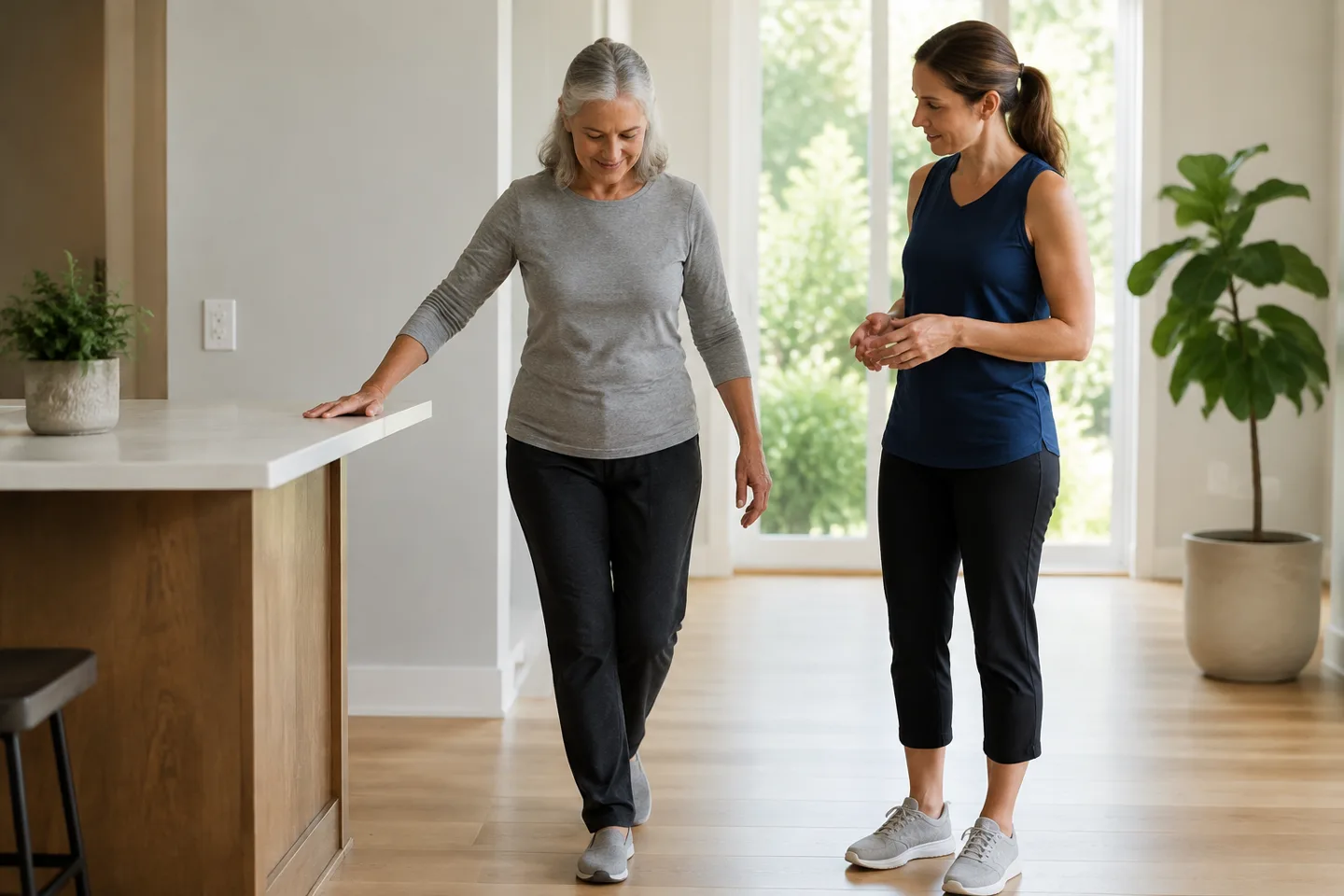
In short
- Balance draws on vision, inner-ear signals, body sensation, strength, attention and rapid reactions.
- Train the situations you want to improve: narrow stance, stepping, turning and controlled changes of direction.
- Progress one variable at a time and keep a sturdy support—not a wheeled chair—within reach.
- New dizziness, fainting, weakness or repeated falls deserve assessment, not a harder home workout.
Why ordinary workouts can miss balance
Walking, cycling and resistance training are valuable, but they do not necessarily challenge postural control enough to improve it. Balance adapts to the task. Standing with feet wide apart on a predictable floor asks less than stepping over a curb while turning your head and carrying a bag.
The goal is not to become motionless. Useful balance is the ability to keep or regain control while the body and environment change. That includes anticipatory control before a reach, reactive control after a perturbation and orientation using sensory information.
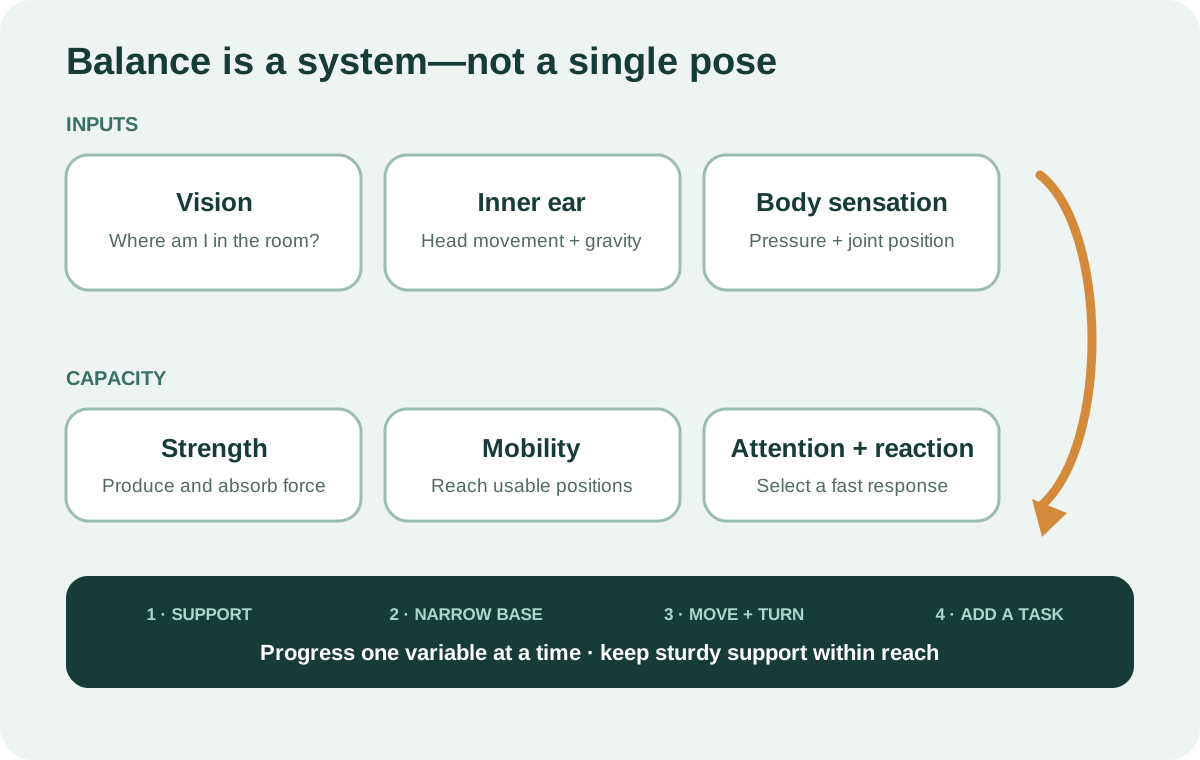
The systems working together
Vision locates you relative to the room. The vestibular system in the inner ear detects head movement and gravity. Sensory receptors in skin, joints and muscles report pressure and position. The nervous system combines these inputs, while strength, joint range, attention and confidence help produce the response.
This explains why balance may worsen in dim light, on uneven ground, during illness, with some medicines or when attention is divided. It also explains why closing the eyes is a substantial progression rather than a casual trick.
Set up before you begin
Use a clear, well-lit area with a firm floor. Stand beside a kitchen counter, heavy table or fixed rail. Wear secure footwear or train barefoot only if that is safe and comfortable for you. Keep pets, loose rugs and cables away. A wheeled chair and a lightweight furniture edge are not dependable supports.
If you have fallen recently, use a walking aid, have osteoporosis, neuropathy, significant vision loss or a neurological or vestibular condition, ask a physiotherapist or other qualified professional to tailor the starting point. Supervision is a training variable, not a sign of failure.
A simple ten-minute session
Begin with two minutes of easy marching or walking. Then choose three drills and perform two or three short rounds, resting before form deteriorates.
- Stance: feet together, semi-tandem, then heel-to-toe as appropriate. Hold for 10–30 seconds with fingertips near support.
- Weight shifts: move pressure slowly side to side and forward to back without lifting the feet.
- Stepping: step to marked points in front, beside and behind, returning under control.
- Functional control: practise a slow sit-to-stand or heel raise if safe for your knees and support surface.
Finish with easy walking. Quality beats fatigue. The right level produces mild wobble that you can correct; repeated grabbing, breath-holding or panic means the challenge is too high.
How to progress without gambling
Change only one lever: narrow the base of support, reduce hand contact, add a slow head turn, increase reach distance, change stepping direction or add a simple cognitive task. Keep the other conditions familiar. Do not combine closed eyes, an unstable cushion and a dual task at once.
Progress when you can complete the current drill with controlled breathing and only occasional light support across several sessions. Regression is legitimate on a tired day. Training is the repeated dose, not the most dramatic version of an exercise.
What the evidence supports
In community-dwelling older adults, a large Cochrane review found that programmes centred on balance and functional exercise reduced fall rates. Programmes combining categories—often balance, functional and resistance work—also helped. These results concern sustained programmes, not a one-off balance test.
The World Health Organization recommends multicomponent activity that emphasises functional balance and strength for older adults, particularly to enhance function and prevent falls. The exact programme should still fit health status, environment and goals. For a younger athlete, specificity might instead mean landing, change of direction or sport-specific perturbations.
Track what matters
Record the stance, support used, duration and quality. Practical signs of progress include needing less hand pressure, turning more smoothly, recovering from a small wobble or feeling steadier on stairs. A single timed test can vary with fatigue and familiarity, so look for a trend.
Fear of falling can reduce activity and then reduce capacity. A graded programme may rebuild confidence, but reassurance alone is not enough when the environment, vision, medication or medical condition is contributing. Falls prevention is often broader than exercise.
Stop and seek help
Stop if you develop chest pain, faintness, severe shortness of breath, a new neurological symptom, sudden severe headache or an injury. New spinning vertigo, double vision, one-sided weakness or inability to walk normally requires prompt assessment. Repeated falls, near-falls or a rapid change in steadiness should trigger a medication, vision, footwear and health review.