How to Begin Meditating at Home Without Chasing Perfection
A five-minute, choice-led beginner practice built around noticing and returning—not blanking the mind, forcing the breath or chasing a brainwave state.
 Maya ChenMind & Brain editor5 September 2026
Mind & Brain · Beginner guide
Meditation does not require an empty mind, a floor cushion or a special brain state. Begin by choosing a workable posture and one ordinary anchor, then practise noticing and returning.
In short
- Start with three to five minutes rather than waiting for ideal conditions.
- Use breath, sound, touch or sight as an anchor; none is inherently more advanced.
- Mind-wandering is the moment you practise returning, not evidence of failure.
- Keep the practice choice-led and stop or switch outward if inward attention becomes destabilising.
Choose a position you can leave
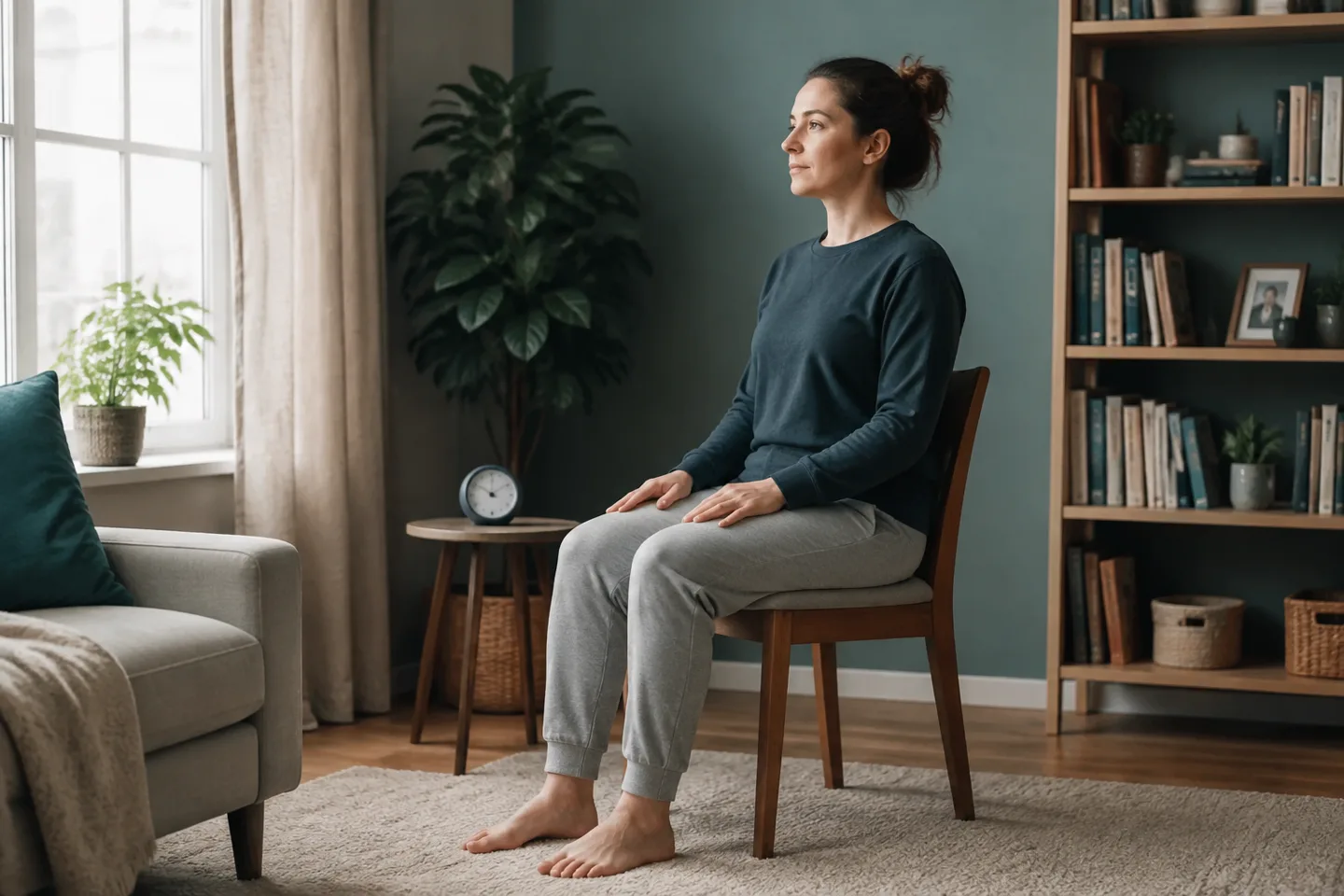
Sit on a chair, stand, walk slowly or lie down if sleep is not the immediate problem. Let the posture be alert enough to notice experience and comfortable enough that pain does not dominate it. Eyes can be open, lowered or closed. Set a gentle timer and make sure you can hear important sounds around you.
Meditation is a family of practices, not one posture. Some focus attention on a sensation, sound, image or phrase. Mindfulness practices emphasise awareness of present experience with less automatic judgment. Traditions and secular programmes differ in aims and context.
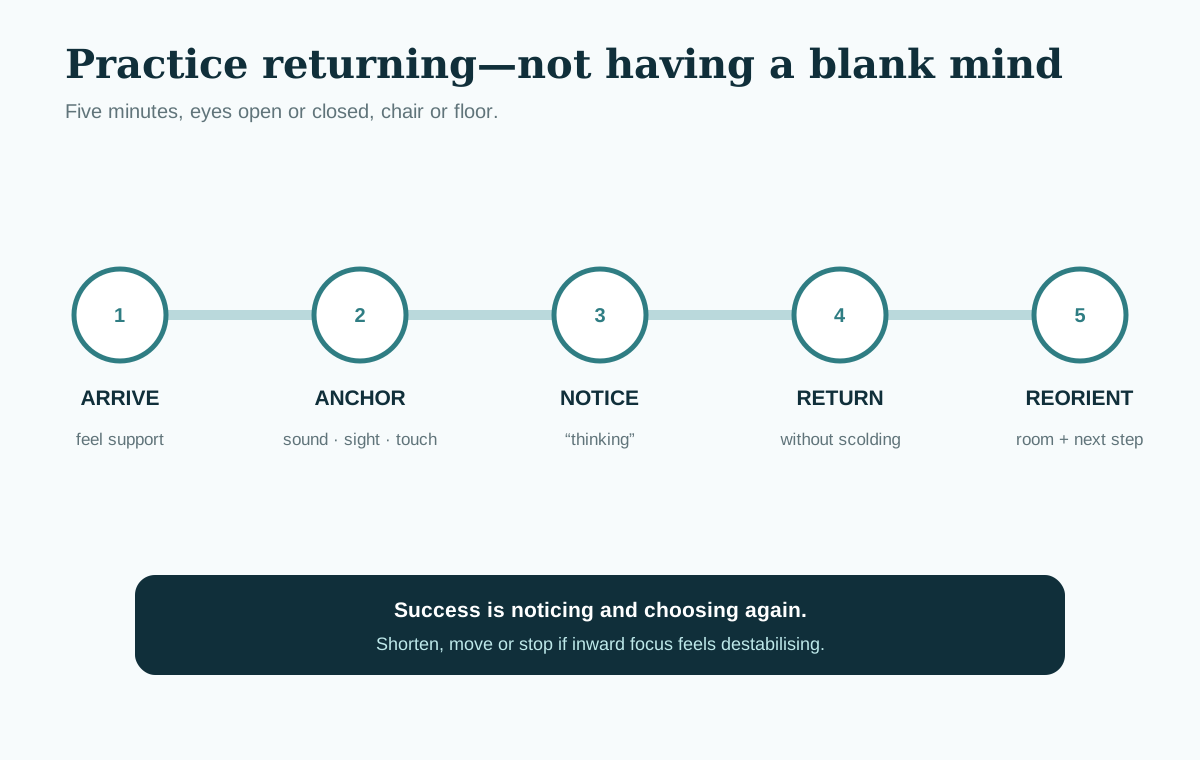
A five-minute first session
- Arrive. Feel the support beneath your feet or body and notice the room.
- Choose one anchor. Try the contact of your hands, ambient sound, a fixed visual point or the sensation of one ordinary breath.
- Notice what happens. Thoughts, planning, emotion and discomfort will appear. Silently label “thinking,” “hearing” or “feeling” if that helps.
- Return without scolding. Come back to the anchor. You may do this dozens of times.
- Reorient. Look around, move naturally and decide what you will do next before standing.
The aim is not to hold perfect focus for five minutes. It is to recognise where attention went and respond with a little more choice.
If breath focus does not feel calming
Breathing is common but not mandatory. It can feel uncomfortable during panic, respiratory illness, trauma responses or intense self-monitoring. Use sound, sight, touch or movement instead. Keep eyes open and name objects in the room. Shorten the session to thirty seconds or stop.
A practice can be worthwhile without relaxation. Sometimes it reveals tiredness, irritation or grief. Meditation is not a command to approve of pain or tolerate an unsafe situation.
Common obstacles, gentler responses
| Experience | Try |
|---|---|
| “My mind will not stop.” | Count one return as one completed repetition. |
| Restlessness | Stand or walk slowly and feel the soles of the feet. |
| Sleepiness | Open the eyes, sit more upright or practise earlier. |
| Self-criticism | Use a neutral label: “judging is here.” |
| No time | Attach one minute to an existing transition. |
What about music and binaural beats?
Sound can be a pleasant anchor and may make a routine easier to begin. Binaural, monaural or isochronic audio is optional. Evidence does not justify promises that a precise track instantly moves every brain from “beta” to “alpha,” synchronises the hemispheres or replaces years of meditation training. EEG frequency bands overlap across tasks and do not map one-to-one onto named states.
If you use audio, keep the level comfortable, protect hearing and do not listen while driving. Notice whether it supports attention rather than assuming the stated frequency guarantees an outcome.
How often?
Choose a dose you can repeat: three minutes after tea, five minutes before opening email or one mindful walk per week. Increase duration only if the practice remains useful. Regularity can build familiarity, but missed days do not erase learning.
Structured programmes in research often include instruction, group discussion, home practice and other supports. Their results should not be attributed to a few minutes of silent sitting alone. Reviews suggest benefits for some symptoms and populations, while study quality and effect sizes vary.
Safety is part of good teaching
Meditation is often low-risk, but adverse experiences including anxiety, low mood, agitation and altered perception are reported. Risk may be greater with intensive retreats, sleep deprivation, prolonged practice or pre-existing vulnerability. Seek a trained, trauma-aware teacher or clinician when practice interacts with mental-health treatment.
Stop and get support if meditation produces persistent panic, dissociation, mania-like activation, frightening perceptual changes or worsening thoughts of self-harm. Do not use it to replace established care.