Bone Health Across Adulthood: A Practical Overview
Exercise, nutrition, risk review, screening and fall prevention work together to protect bone strength across adulthood.
 Sofia LindbergLongevity & Prevention editor5 September 2026
Longevity & Prevention · Science guide
Bone is living tissue. Across adulthood, loading, nutrition, hormones, medicines and falls risk shape whether the skeleton can keep doing its quiet structural work.
In short
- Bone mass accumulates in youth and is remodelled throughout life.
- Strength and weight-bearing exercise, adequate protein and calcium, and vitamin D sufficiency support bone health.
- Osteoporosis is often silent until a fracture.
- Screening depends on age, sex, fracture history, medicines and other risk factors.
Bone is active, not inert
Specialised cells continually remove and replace bone. During growth, formation usually exceeds breakdown. Peak bone mass is reached by early adulthood, then the balance gradually changes. Menopause can accelerate loss because oestrogen falls; ageing, low activity and some illnesses or medicines can also shift remodelling.
Density is important, but bone strength also reflects architecture and quality. A scan cannot capture every element of fracture risk, which is why clinicians combine bone mineral density with age, previous fractures and other factors.
Movement: load in more than one way
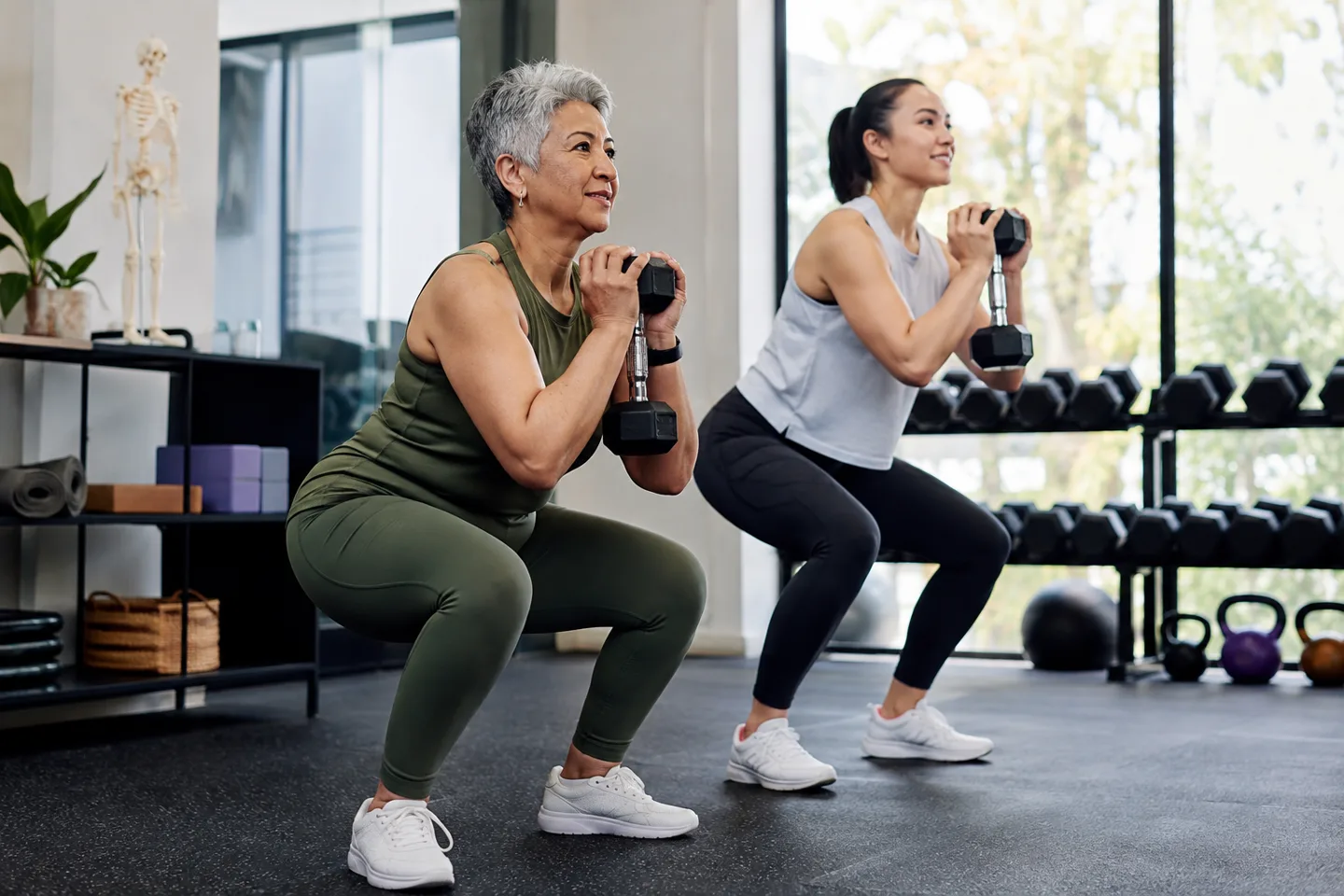
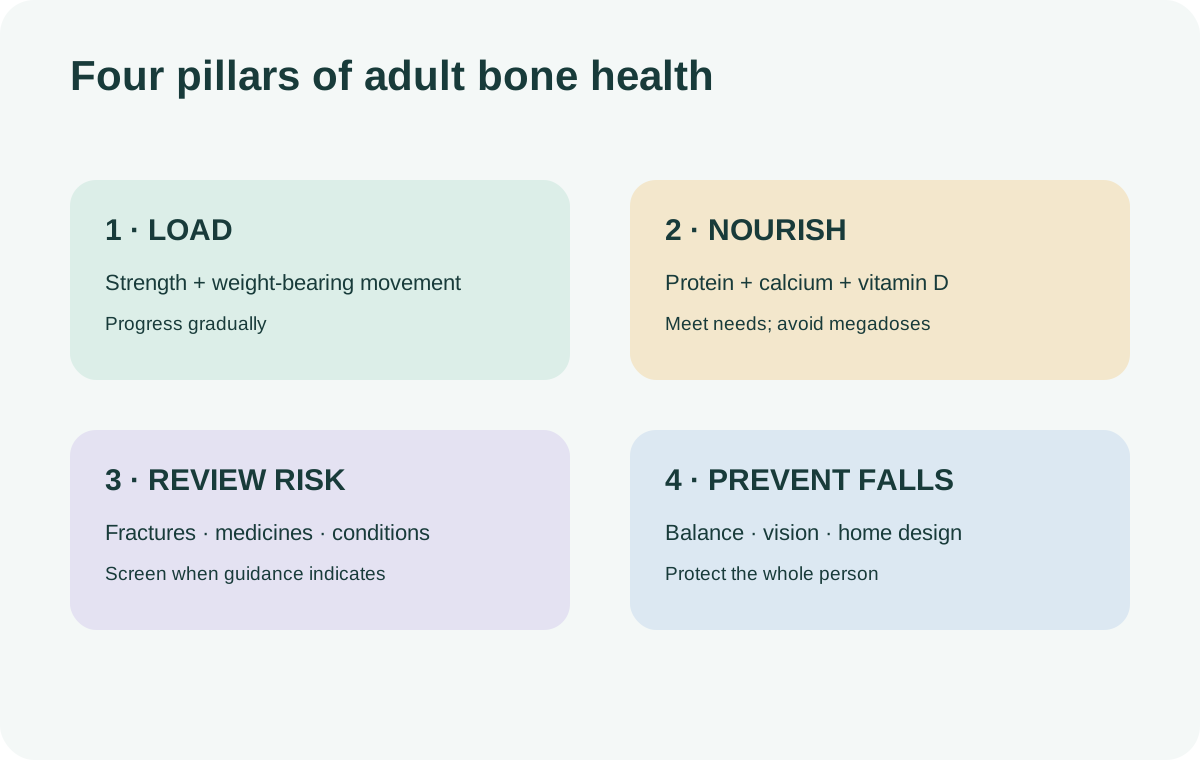
Weight-bearing activity means moving against gravity while on your feet: walking, stair climbing, dancing and some court sports. Resistance training loads bone through muscle force. Balance and functional training reduce the chance that a trip becomes a fracture.
The programme should match current capacity. Two or more weekly strength sessions are a practical foundation, progressing resistance gradually. People with known osteoporosis, vertebral fractures, severe pain or major balance problems should obtain individual advice before loaded spinal flexion, impact work or unfamiliar lifting.
Nutrition: meet needs, do not chase megadoses
Calcium provides mineral, protein supplies structural material and vitamin D supports calcium absorption and muscle function. Food sources are generally useful because they arrive with other nutrients. Dairy or fortified alternatives, calcium-set tofu, some fish and selected greens can contribute. Needs vary by age and health system guidance.
Supplements are not automatically protective and high doses can cause harm. A clinician or dietitian can review intake, vitamin D risk, kidney function and medicine interactions. People with restrictive diets, malabsorption or low body weight deserve particular attention.
Know the risk factors
Previous low-trauma fracture, increasing age, parental hip fracture, smoking, heavy alcohol use, low body weight and long periods of immobility raise concern. Conditions affecting hormones, absorption, kidneys or inflammation can contribute. Long-term glucocorticoids are especially important; several other medicines may also matter.
Do not stop a prescribed medicine because it appears on a risk list. Ask whether bone protection, dose review or monitoring is appropriate.
What a DXA scan tells you
Dual-energy X-ray absorptiometry estimates bone mineral density, usually at the hip and spine. Results may include a T-score comparing density with a young adult reference and a Z-score comparing with an age-matched reference. The meaning depends on age, sex, menopause status and clinical context.
Screening recommendations differ between countries. Many recommend routine screening for women from 65, earlier assessment for postmenopausal women at increased risk, and case-finding for men and younger adults with risk factors. Follow local guidance rather than applying one age threshold everywhere.
A fracture is a health signal
A fracture after a fall from standing height may be a fragility fracture. Wrist, hip, spine and upper-arm fractures are common sites. Vertebral fractures may present as sudden back pain, height loss or increasing spinal curve, but can also be missed.
After a fragility fracture, ask about osteoporosis assessment and fracture-liaison services. Treating the first fracture as an isolated accident can miss an opportunity to prevent the next.
Fall prevention completes the picture
Review vision, hearing, footwear, sedating medicines, blood-pressure drops, home hazards and balance. Strengthen legs and practise tasks such as standing from a chair and changing direction. Handrails and better lighting are not admissions of frailty; they are risk engineering.
Your practical review
- List fractures, falls, family history and medicines.
- Estimate calcium-rich foods and protein across a typical day.
- Include strength, weight-bearing movement and balance each week.
- Ask whether screening applies to your age and risks.
- Seek assessment for unexplained height loss or a low-trauma fracture.