Boundaries as Recovery Infrastructure
Clear limits protect the time and attention that recovery requires, while organisational problems still need organisational solutions.
 Daniel OkaforStress & Emotional Health editor5 September 2026
Stress & Emotional Health · Feature
A boundary is not a wall around your life. It is a rule that protects time, attention and safety so that effort can end and recovery can begin.

In short
- Boundaries define what is available, when and under what conditions.
- They can reduce repeated interruptions and create predictable recovery time.
- A boundary is a behaviour you control, not a command that guarantees another person will change.
- Individual boundaries cannot repair unsafe workloads or abusive systems.
Think of boundaries as infrastructure
Recovery is not only a feeling or a holiday. It is the repeated opportunity to stop responding to demands. If messages, caring duties and unfinished tasks can enter every hour, the nervous system receives few clear signals that effort has ended. Boundaries create doors, schedules and handovers around attention.
The metaphor matters because infrastructure should be designed before a crisis. Waiting until resentment peaks often produces a boundary that is abrupt, vague or impossible to sustain. A modest rule kept consistently is usually more useful than a dramatic declaration.
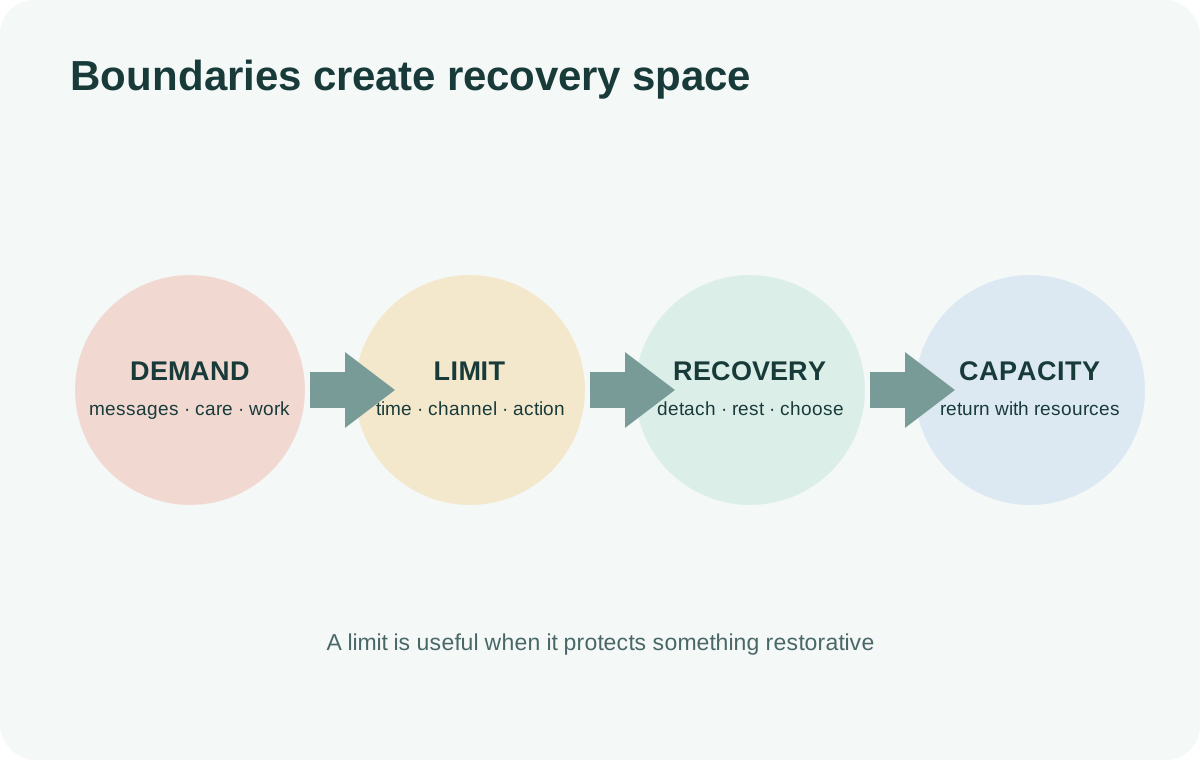
What a workable boundary contains
A workable boundary has four parts: a situation, a limit, an action and a review. “After 6.30 pm, I mute work notifications; urgent issues use the on-call number; we review this after the launch” is clearer than “people need to respect my time.” It tells others what to expect and identifies what you will do.
The action should sit mainly within your control: leaving a meeting at the stated time, not opening an app, moving a conversation or asking a manager to reprioritise work. Consequences are not punishments; they are how the limit is maintained.
Recovery is more than inactivity
Detaching from work, relaxing, choosing an activity and experiencing competence outside the demand are commonly studied recovery experiences. The right boundary protects one of these. A phone rule may support detachment; a protected lunch may support physical replenishment; an evening class may restore autonomy and mastery.
Scrolling can feel like stopping while continuing to expose attention to novelty and social demand. It may still be enjoyable, but notice whether it produces the recovery you intended.
Start with friction, not personality
People often frame boundary problems as weakness or selfishness. Look first at the system: unclear roles, constant alerts, no handover, meetings without endings, invisible care work or a manager who rewards permanent availability. Changing defaults can reduce the need for repeated willpower.
Try delayed send, shared coverage, quiet hours, a closed door, a separate work profile or a written decision log. A physical cue can carry a social message without requiring the same conversation every day.
Scripts that preserve the relationship
- “I can do A today or B tomorrow. Which is the priority?”
- “I am not available this evening. I can reply by 10 tomorrow.”
- “I want to continue this conversation when we are both calmer.”
- “I can help for twenty minutes, then I need to leave.”
- “Please use the urgent channel only for issues that cannot wait.”
Brief language is easier to remember under stress. You do not need to provide a biography to justify every limit.
Expect an adjustment period
A new boundary changes a pattern. Other people may test it, forget it or feel disappointed. That discomfort does not automatically mean the boundary is wrong. It may mean the old arrangement benefited them. At the same time, listen for genuine constraints and negotiate where reciprocity matters.
Consistency builds credibility. If exceptions are frequent, name them as exceptions and reset the normal rule afterwards.
Where self-help stops
WHO guidance on mental health at work emphasises organisational interventions such as workload, schedules, communication and staffing. Telling workers to set boundaries while leaving impossible demands intact transfers responsibility to the individual. Document patterns, involve worker representatives or occupational health, and seek formal support where needed.
In controlling or abusive relationships, announcing a boundary can increase risk. Prioritise a safety plan and specialist support rather than confrontation. Persistent exhaustion, sleep disruption, panic, hopelessness or thoughts of self-harm require professional care.
A one-week experiment
- Name the recurring demand that follows you into recovery time.
- Choose one observable limit small enough to keep for seven days.
- Tell affected people in advance.
- Protect a specific recovery activity after the limit.
- Review energy, resentment and practical consequences.
The goal is not perfect control. It is a more reliable transition from demand to restoration.