Breathing Meditation or Music: Choosing a Practice That Fits
Breathing, meditation and music use different anchors. Choose by state, setting, skill and preference.
 Daniel OkaforStress & Emotional Health editor5 September 2026
Stress & Emotional Health · Comparison
Breathing, meditation and music use different anchors. Choose by state, setting, skill and preference—not by claims that one method works for everyone.
In short
- Slow breathing directly changes respiratory pace and can influence arousal.
- Meditation trains a relationship to attention and experience; it is a broad family of practices.
- Music can shift mood and attention with less instruction, but preference and context matter.
- None is a substitute for urgent or condition-specific care.
Three different entry points
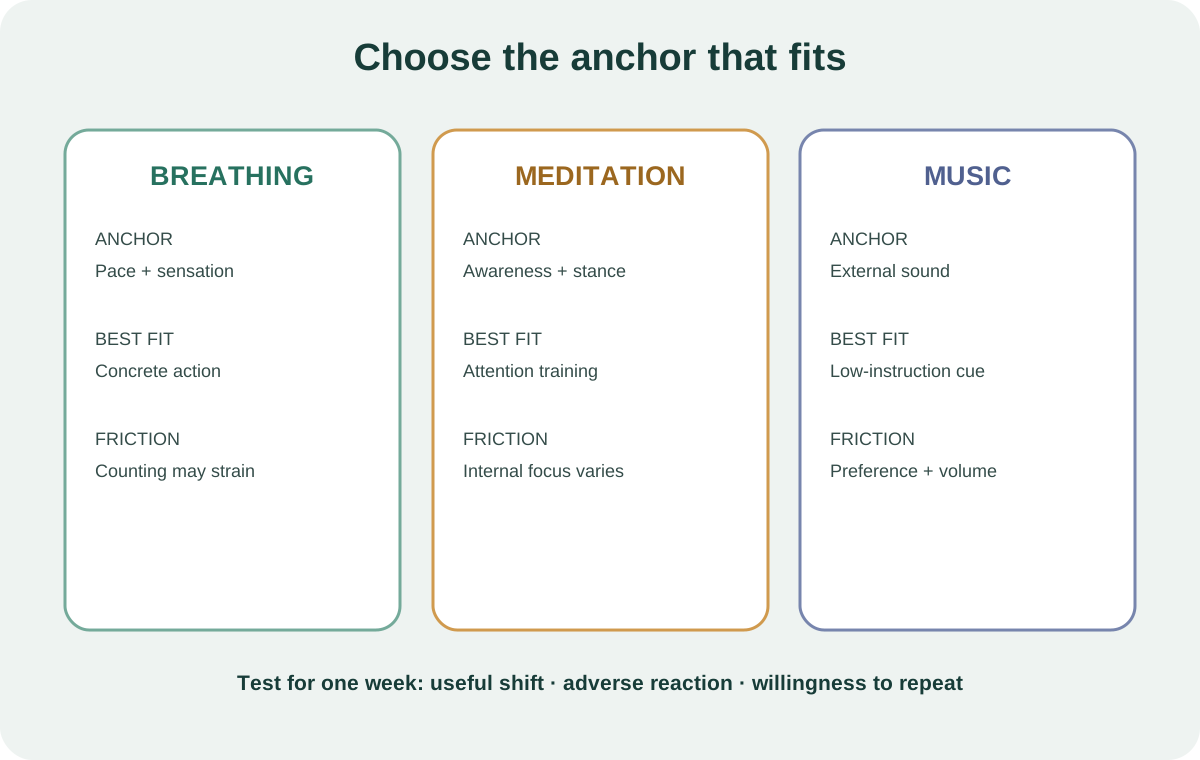
Breathing practice uses the breath as both anchor and action. Meditation may observe the breath without changing it, or focus on sound, body sensations, compassion or open awareness. Music provides an external sensory structure through rhythm, melody, expectation and memory.
The categories overlap. A meditation can include paced breathing and music. For comparison, ask which element is doing the practical work and which burden—silence, counting, headphones, instruction—the person is willing to accept.
Choose breathing when you want a concrete action
A gentle slower breath with a comfortable exhale can be useful before a meeting, during a transition or after activation. Begin without large breaths: over-breathing can cause tingling, light-headedness and more anxiety. Let depth remain natural and stop counting if it creates strain.
People with respiratory or cardiac conditions, pregnancy-related breathlessness, panic triggered by breath focus or a history of fainting may need adaptation. Breathlessness that is new or severe needs assessment.
Choose meditation when you want to train attention
Mindfulness practice notices present-moment experience with less automatic judgement. The aim is not to erase thought. Start with two to five minutes and a clear option to open the eyes, move or stop. Guided practice can lower the entry cost.
Research on meditation includes many programmes and outcomes, and interpretations can be too optimistic. Structured approaches may help some people with stress, anxiety or depression, but they are not universally benign. Trauma, dissociation, mania or psychosis can require skilled guidance and different anchors.
Choose music when an external cue is easier
Music may be accessible when internal focus feels effortful. Use a familiar track whose tempo, timbre and emotional associations fit the goal. Instrumental is not automatically calmer; lyrics are not automatically distracting. Volume and predictability often matter more than a wellness label.
Music-based interventions have evidence for some stress-related outcomes, but programmes vary and music therapy delivered by a trained professional is not equivalent to pressing play. Do not transfer a group average to every playlist or frequency.
A practical comparison
| Situation | Try first | Why |
|---|---|---|
| Activated with one minute available | Gentle slower breathing | Concrete, portable and easy to time. |
| Practising response to thoughts | Guided meditation | Explicitly trains attention and stance. |
| Internal focus feels threatening | Preferred neutral music | Offers an external, optional anchor. |
| Shared transition | Music or brief guided practice | Creates a common cue without demanding disclosure. |
Run a seven-day fit test
Choose one method for two to ten minutes at the same transition each day. Before and after, rate activation and willingness to repeat from zero to ten. Note adverse reactions. The goal is not to prove a mechanism; it is to find a low-friction practice that produces a useful shift.
If nothing helps, change the dose or anchor. If stress reflects unsafe work, caregiving overload, violence, pain or financial crisis, a self-regulation practice may support coping but cannot solve the external cause.
Combine without creating a ritual trap
You might take three comfortable slow breaths, listen to one track and sit in silence for one minute. Keep the sequence flexible. If missing the exact headphone, timer or posture makes you unable to cope, simplify so the skill travels.
When to seek more support
Persistent anxiety, depression, panic, trauma symptoms, insomnia or impaired daily function deserves appropriate care. If a practice increases agitation, dissociation, intrusive memories or breathing distress, stop and choose grounding, movement, social contact or professional guidance.