Four Breathing Techniques for Everyday Wellbeing
Compare equal breathing, a longer exhale, box breathing and the physiological sigh. The useful rhythm is gentle, comfortable and easy to stop if it makes you dizzy or more anxious.
 Daniel OkaforStress & Emotional Health editor5 September 2026
Stress & Emotional Health · Practical guide
Breathing practices differ in rhythm, effort and use of pauses. The best everyday technique is not the most complicated one—it is the one you can perform gently without dizziness, strain or a promise it cannot keep.
In short
- Slow breathing can influence heart rate, blood-pressure regulation and perceived arousal, but responses vary.
- A count is only a guide. Smaller, softer breaths are often more comfortable than taking the deepest breath possible.
- Breath holds and repeated forceful breathing are optional and can provoke air hunger, tingling or dizziness.
- Breathing exercises can support stress management; they do not replace treatment for persistent breathlessness, panic or medical symptoms.
What changes when you control the breath
Breathing is both automatic and voluntary. Changing its pace and depth influences carbon-dioxide levels, pressure inside the chest and the timing of signals between the lungs, heart and brain. Heart rate naturally tends to rise during inhalation and fall during exhalation, a pattern called respiratory sinus arrhythmia.
When breathing slows comfortably, those fluctuations can become more pronounced and may interact with baroreflexes that help regulate blood pressure. A systematic review of studies in healthy adults found changes in heart-rate variability, respiratory sinus arrhythmia and self-reported relaxation, while also noting that methods and samples were limited. This is plausible physiology—not proof that one count treats a disease.
1. Gentle equal breathing
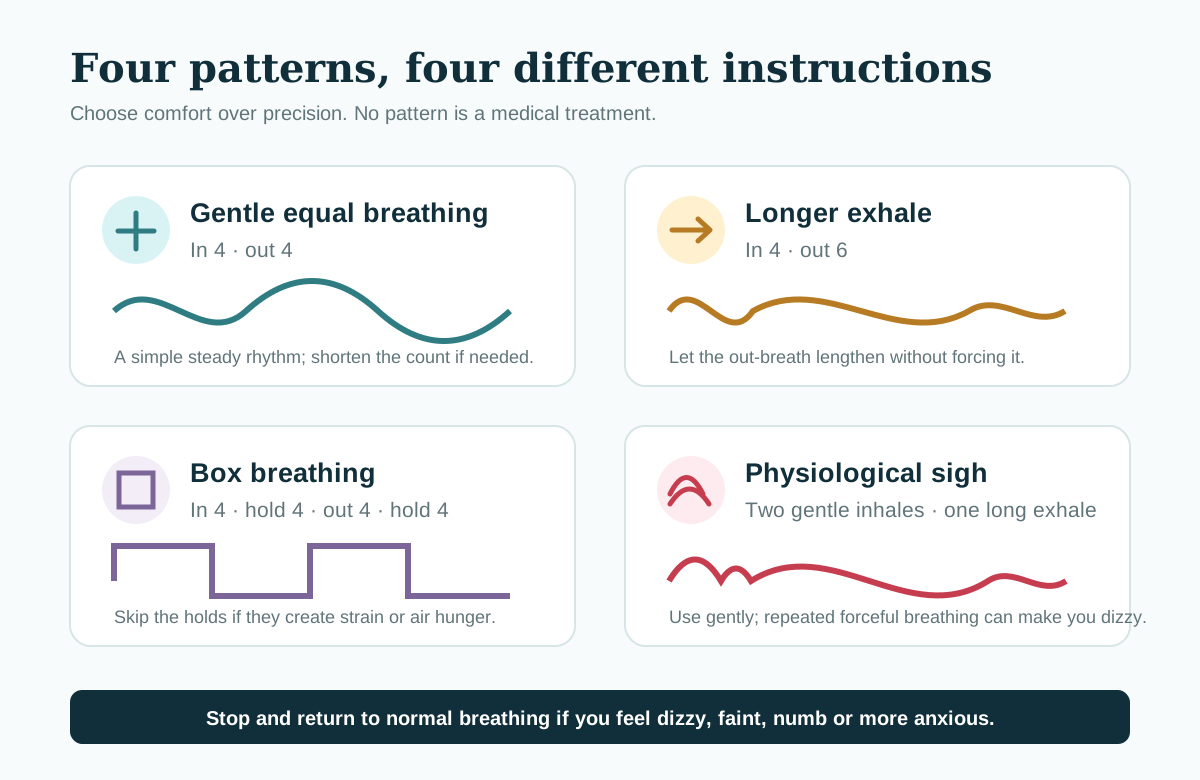
Try: inhale gently for about four counts, then exhale for about four. Continue for one to five minutes.
This is the simplest way to make breathing slower and more regular without adding breath holds. Let the lower ribs and abdomen move if comfortable, but do not force the belly outward or try to fill the lungs completely. A three-count rhythm may suit you better than four; the number is not the active ingredient.
Useful when: you want a neutral rhythm for starting a practice, settling before a conversation or checking whether counting itself feels reassuring.
2. A slightly longer exhale
Try: inhale softly for three or four counts and exhale for five or six. Pause naturally, without holding, and repeat.
A longer exhale may feel settling because heart rate often slows during that phase. It should remain easy. Emptying the lungs forcefully or stretching an exhale until you gasp on the next inhale works against the purpose.
Useful when: you feel activated but can still attend to the breath comfortably. It is not compulsory for relaxation; equal breathing is a reasonable alternative.
3. Box breathing
Try: inhale, hold, exhale and hold for equal comfortable counts—often three or four each. Complete a few rounds, then return to normal breathing.
The clear sequence can anchor attention during a demanding moment. The holds are not necessary for a breathing practice to work, and they may feel unpleasant to people with respiratory conditions, panic symptoms or pregnancy. Skip them or choose an uninterrupted rhythm if there is strain or air hunger.
Useful when: a structured four-part sequence helps organise attention. It is not inherently superior because it is used in high-pressure professions.
4. The physiological sigh
Try: take one gentle nasal inhale, add a smaller second inhale, then release one long, unforced exhale. One or several repetitions may be enough.
A 2023 remote randomised study compared five minutes a day of mindfulness with three breathing practices over one month. The exhale-focused “cyclic sighing” group showed the largest improvement in positive mood and a reduction in respiratory rate. The study is promising, but it does not establish that sighing is the best technique for every person or condition.
Useful when: you want a brief reset and the double inhale feels natural. Avoid turning it into repeated maximal inhalations.
Why “deep breathing” can be misleading
Taking breaths that are both very large and frequent can remove carbon dioxide faster than the body produces it. The resulting overbreathing may cause light-headedness, tingling, chest sensations or feelings of unreality—the same sensations that can intensify panic. A helpful slow breath is often quiet and modest, not visibly enormous.
If counting makes you monitor every sensation, shift attention outward: feel the chair, listen to room sounds or walk slowly. Relaxation methods occasionally increase anxiety or intrusive experiences, particularly for some people with trauma histories. Stopping is a valid response, not a failure.
A two-minute way to choose
- Sit or stand with enough support and loosen anything restrictive.
- Observe two ordinary breaths before changing them.
- Choose equal breathing or a slightly longer exhale for six comfortable cycles.
- Rate tension, dizziness and ease—not how accurately you kept time.
- Continue only if the practice is neutral or helpful.
Regular short practice may make the pattern easier to use when stress rises. It should sit alongside sleep, movement, social support and changes to the stressor itself rather than becoming another optimisation demand.
When breathing needs medical attention
Do not use an exercise to explain away new or severe shortness of breath, chest pain, fainting, bluish lips, confusion or other acute symptoms; seek urgent care. Persistent breathlessness, repeated panic, sleep-related gasping or symptoms during ordinary activity deserve assessment. If you have a respiratory or cardiovascular condition, ask your clinician or respiratory physiotherapist which techniques and breath holds are appropriate.
Sources and further reading
- Balban et al. (2023): Brief structured respiration practices, mood and arousal
- Zaccaro et al. (2018): Systematic review of slow-breathing physiology
- Russo et al. (2017): Physiological effects of slow breathing in healthy humans
- US NCCIH: Relaxation techniques—evidence and safety
- NHS: Breathing exercises for stress