Caffeine Half-Life: Why the Afternoon Cup Can Reach Bedtime
Caffeine does not disappear when the alert feeling fades; timing, dose and individual clearance determine how much reaches bedtime.
 Elena MoralesSleep & Recovery editor5 September 2026
Sleep & Recovery · Explainer
Caffeine does not disappear when the alert feeling fades. Its half-life varies widely, so an afternoon dose can still be biologically active at bedtime.

In short
- Half-life is the time required for the body to remove half of a dose—not all of it.
- In healthy adults the average is often around several hours, with substantial individual variation.
- Pregnancy, medicines, smoking status, liver function and genetics can change clearance.
- A personalised cut-off is more useful than one universal “no coffee after 2 pm” rule.
What half-life means
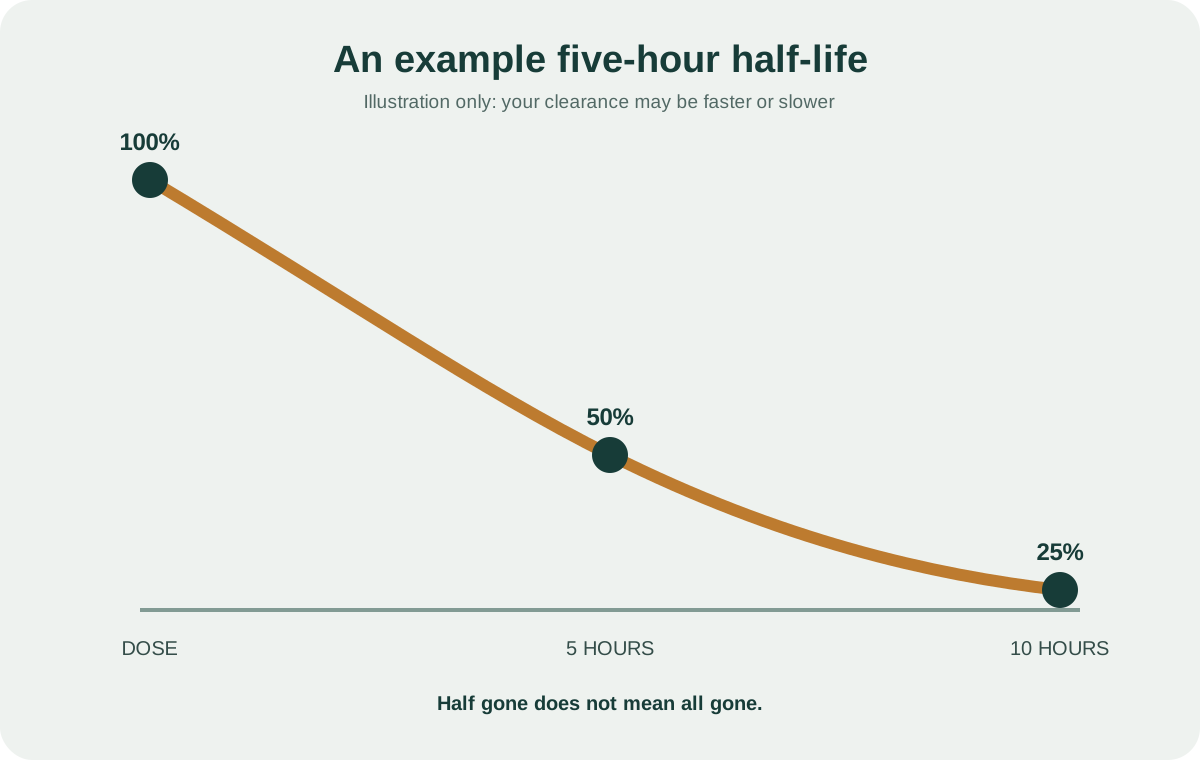
If caffeine’s half-life for you were five hours, roughly half of a dose would remain after five hours and a quarter after ten. Elimination is not a perfect kitchen timer, but the model explains why “I can fall asleep after coffee” does not prove the dose has left the body.
Caffeine blocks adenosine receptors. Adenosine signalling is one part of the pressure for sleep that builds during wakefulness. Blocking the signal can reduce perceived sleepiness while sleep need continues accumulating.
Why the same cup behaves differently
Genes affecting the CYP1A2 enzyme contribute to variation. Pregnancy can markedly slow clearance, particularly later in pregnancy. Some medicines and liver conditions slow metabolism; cigarette smoking tends to speed it, so stopping smoking can increase exposure from a previously familiar intake. Oral contraceptives may also prolong clearance.
Age, habitual intake and sensitivity influence experience. Tolerance to the feeling of stimulation does not necessarily eliminate effects on sleep architecture.
Dose is easy to underestimate
Coffee strength and serving size vary. Espresso volume is small but concentrated; a large brewed coffee may contain several shots’ worth. Tea, cola, chocolate, energy drinks, pre-workout products, pain relievers and supplements also contribute. Labels may report per serving while a container holds more than one serving.
The FDA cites 400 mg per day as an amount not generally associated with negative effects for most adults, not a sleep target or a safe limit for everyone. Pregnancy guidance and medical conditions can require lower intake.
What the sleep evidence shows
In a small randomised study, 400 mg of caffeine taken at bedtime, three hours before, or six hours before reduced sleep compared with placebo. The dose was substantial and the sample limited, so “six hours” should not become a precise universal boundary. It does show that caffeine can matter well before the final evening routine.
People may underestimate the disturbance subjectively. Sleep can become shorter or lighter even when falling asleep still seems possible.
Find your own cut-off
- For one week, record caffeine source, estimated dose and time.
- Choose a cut-off eight to ten hours before intended sleep as a cautious test.
- Keep wake time and sleep opportunity reasonably stable.
- Track time to fall asleep, awakenings and morning refreshment.
- Adjust earlier if sleep improves or remains fragile.
Reduce gradually if intake is high; abrupt cessation can cause headache, fatigue and irritability. Substitute a smaller serving, half-caf or a caffeine-free ritual.
When caffeine is solving another problem
Repeated late doses may compensate for insufficient sleep, shift work, untreated sleep apnoea, depression, anaemia or medication effects. Caffeine can improve alertness temporarily but cannot replace adequate sleep. Dangerous sleepiness while driving requires stopping, resting and addressing the cause.
Use it strategically
Place caffeine earlier and use the lowest dose that serves the purpose. Avoid powdered or highly concentrated caffeine, where measuring errors can be dangerous. Do not combine multiple stimulant products without checking ingredients.
Palpitations, chest pain, severe anxiety, vomiting, confusion or seizures after a high dose need urgent help. Children and adolescents are more vulnerable and should not be treated as small adults.