Chronic Stress: When a Survival Response Stays Switched On
Stress is an adaptive response, but repeated demands without enough control or recovery can make activation the background of daily life. Here is how to recognise the pattern and respond without self-blame.
 Daniel OkaforStress & Emotional Health editor5 September 2026
Stress & Emotional Health · Explainer
The stress response is designed to help you adapt, not to harm you. Difficulty begins when demands keep arriving, control and recovery remain scarce, and an emergency response becomes the background setting of ordinary life.
In short
- Acute stress is a coordinated brain-and-body response that can sharpen action for a limited period.
- “Chronic stress” describes repeated or sustained strain with inadequate recovery; it is not defined by one feeling or hormone reading.
- Sleep, mood, concentration, digestion, pain and health behaviours can all be affected, but these symptoms have many possible causes.
- Useful action includes reducing demands where possible, strengthening recovery and seeking care when symptoms are persistent, severe or unsafe.
A survival response, in modern conditions
When the brain detects threat or high demand, the sympathetic nervous system can rapidly increase heart rate, breathing and alertness. Adrenaline helps mobilise energy for action. A slightly slower pathway involving the hypothalamic–pituitary–adrenal axis changes cortisol and other signals that help the body respond.
This is often called “fight or flight,” but real responses are broader. People may freeze, seek support, become unusually focused or feel driven to escape. The system also responds to social evaluation, uncertainty and anticipated problems—not only physical danger. A difficult presentation can therefore produce a pounding heart even when nobody is chasing you.
For a short challenge, activation can be useful. The body is expected to change again after the demand passes. Stress is not evidence that the nervous system is broken; it is evidence that the system has detected something important.
What makes stress chronic
There is no single number of busy days after which normal stress becomes chronic. The pattern involves duration, repetition, intensity, predictability, control, meaning and opportunity to recover. A demanding week followed by genuine rest is different from months of insecure work, caring pressure, discrimination, pain or disrupted sleep with no reliable exit.
Chronic stress can also be episodic: repeated crises may keep the body preparing for the next one even during apparently quiet periods. Conversely, feeling activated during a chosen challenge is not necessarily harmful when the person has resources, support and recovery.
Allostasis explains adaptation—and its cost
Allostasis is the process of maintaining stability through change. Heart rate, hormones, immune activity, attention and behaviour adjust together to meet demand. Allostatic load is a research framework for the cumulative biological burden that may develop when those adjustments are repeatedly activated or poorly regulated.
The framework is useful because it avoids blaming a single hormone. Cortisol is neither a toxin nor a complete “stress score,” and one consumer measurement cannot establish chronic stress. Researchers use different combinations of cardiovascular, metabolic, inflammatory and neuroendocrine markers, and there is no single universally accepted clinical test for allostatic load.
How chronic strain can show up
| Domain | Possible pattern | Important caution |
|---|---|---|
| Sleep | Trouble winding down, waking early, unrefreshing sleep | Sleep apnoea, medication and circadian problems can look similar |
| Thinking | Rumination, forgetfulness, narrowed attention, indecision | Depression, anxiety, ADHD and medical conditions may overlap |
| Body | Muscle tension, headache, digestive upset, palpitations | New or severe symptoms should not be self-labelled as stress |
| Emotion | Irritability, worry, numbness, feeling overwhelmed | Persistent symptoms may warrant mental-health assessment |
| Behaviour | Withdrawal, more alcohol or nicotine, erratic eating, less movement | Coping habits can create a second cycle of harm |
No item on this list proves chronic stress. The pattern becomes more informative when several changes persist, interfere with daily life and track with sustained demands.
The source is not always inside the person
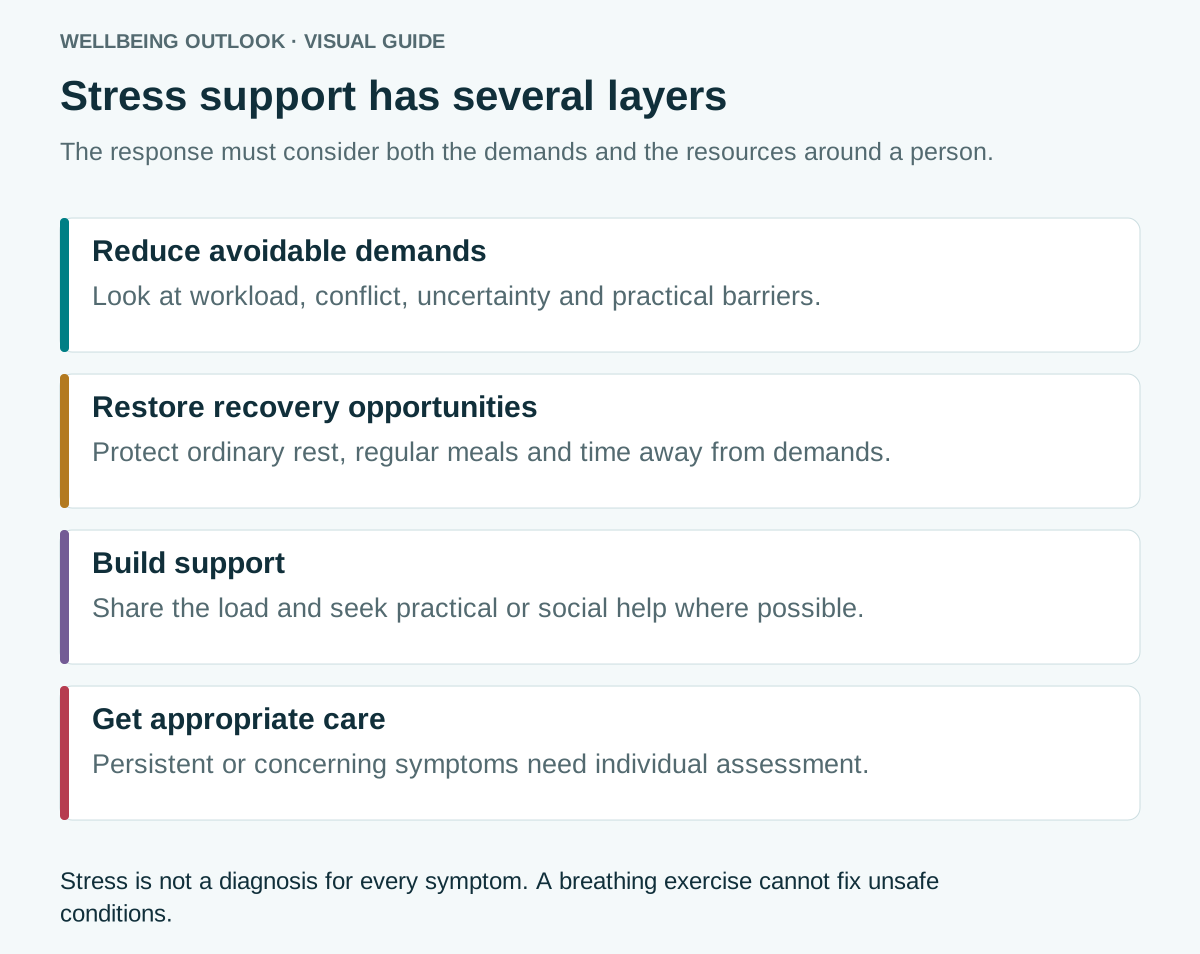
Stress advice often moves too quickly to breathing exercises. Personal regulation matters, but it cannot make an unsafe workload, abusive relationship, financial crisis or discriminatory environment acceptable. Sometimes the correct intervention is organisational: clearer priorities, more staffing, protected time off, safeguarding, benefits advice or a change in living conditions.
Ask two questions in parallel: “What can help my system recover today?” and “What demand needs to change?” Treating recovery as the employee’s private responsibility while the harmful condition stays in place is not a complete stress strategy.
A layered response works better than one perfect technique
1. Name the active demands
Write down the specific pressures rather than the verdict “everything is stressful.” Mark what is urgent, what is uncertain and what belongs to somebody else. This does not solve the situation, but it turns undifferentiated threat into decisions.
2. Protect basic recovery
Regular opportunities for sleep, food, movement and social contact give the body conditions in which activation can come down. These are not cures and should not be framed as proof of discipline. When a person lacks time, safety or resources for them, that constraint is part of the problem.
3. Use a repeatable downshift
Slow breathing, progressive muscle relaxation, guided imagery and mindfulness can help some people evoke a relaxation response. The US National Center for Complementary and Integrative Health notes that these practices are generally safe but that evidence for specific health conditions is limited. They should support care, not delay it.
4. Create boundaries that another person can see
A boundary is stronger when it changes behaviour or expectations: notifications end at a stated time, a colleague knows which task will wait, or a family member takes a defined shift. A private intention to “worry less” leaves the same demand in place.
5. Bring in appropriate support
A primary-care clinician can assess physical symptoms and common contributors such as medication effects or sleep problems. A mental-health professional can help when rumination, anxiety, low mood or trauma-related symptoms persist. Occupational-health, social, legal or safeguarding support may be the relevant route when the stressor is structural or unsafe.
What improvement may look like
Recovery is not permanent calm. More realistic signs are that activation fits the situation, comes down sooner afterward and no longer dominates sleep, attention or relationships. A five-week randomised trial found reductions in self-reported stress across physical activity, mindfulness and heart-rate-variability biofeedback groups, with no clear winner between them. That does not prove equivalence for every person; it supports offering more than one credible route.
Track function over two or three weeks: sleep opportunity, moments of uncontrollable rumination, concentration, substance use and whether the original demands changed. If an elaborate wellbeing routine becomes another obligation, simplify it.
Stress, anxiety and burnout are not synonyms
Stress usually refers to a response to an external or internal demand. Anxiety can continue even when there is no immediate threat and may become a disorder requiring assessment. Burnout is an occupational phenomenon in the World Health Organization’s classification, centred on exhaustion, mental distance or cynicism toward work, and reduced professional efficacy; it is not a catch-all diagnosis for every form of exhaustion.
The labels can overlap in ordinary conversation, but a useful assessment asks what is happening, how long it has lasted and how much it impairs daily life.
When not to assume it is “just stress”
Seek urgent medical help for chest pain or pressure, fainting, severe difficulty breathing, sudden weakness, confusion or other acute symptoms. Seek immediate crisis support if you may harm yourself or someone else, or if you are not safe where you live or work. Persistent insomnia, panic, low mood, escalating substance use or symptoms that impair work and relationships deserve professional care even when stress is an obvious contributor.