Circadian Rhythms: How Your Body Clock Shapes the Day
Your body clock coordinates far more than sleep. Learn how light, timing and daily routines shape circadian rhythms—and why the timing of an intervention matters.
 Elena MoralesSleep & Recovery editor5 September 2026
Sleep & Recovery · Explainer
Your body clock is not merely a preference for early mornings or late nights. It is a distributed timing system that helps coordinate sleep, alertness, hormones, temperature, digestion and performance across the day.

In short
- Circadian rhythms are biological patterns that repeat approximately every 24 hours.
- A master clock in the brain coordinates with clocks throughout the body.
- Light is the strongest environmental timing cue, but meals, activity and routines also matter.
- Timing changes the effect: morning light and evening light can move the clock in different directions.
What a circadian rhythm is
Circadian comes from Latin words meaning “about a day.” The term describes internally generated rhythms that continue even without a normal day-night schedule, while being adjusted by signals from the environment.
The brain’s principal clock sits in the suprachiasmatic nucleus, or SCN, in the hypothalamus. Specialised cells in the retina send it information about environmental light. The SCN helps coordinate daily timing across the body, while molecular clocks operate in many tissues and organs.
This is why the body clock is bigger than sleep. Daily timing affects alertness, body temperature, hormone release, appetite and metabolic processes. Sleep itself is shaped by an interaction between circadian timing and sleep pressure—the need for sleep that generally builds with time awake.
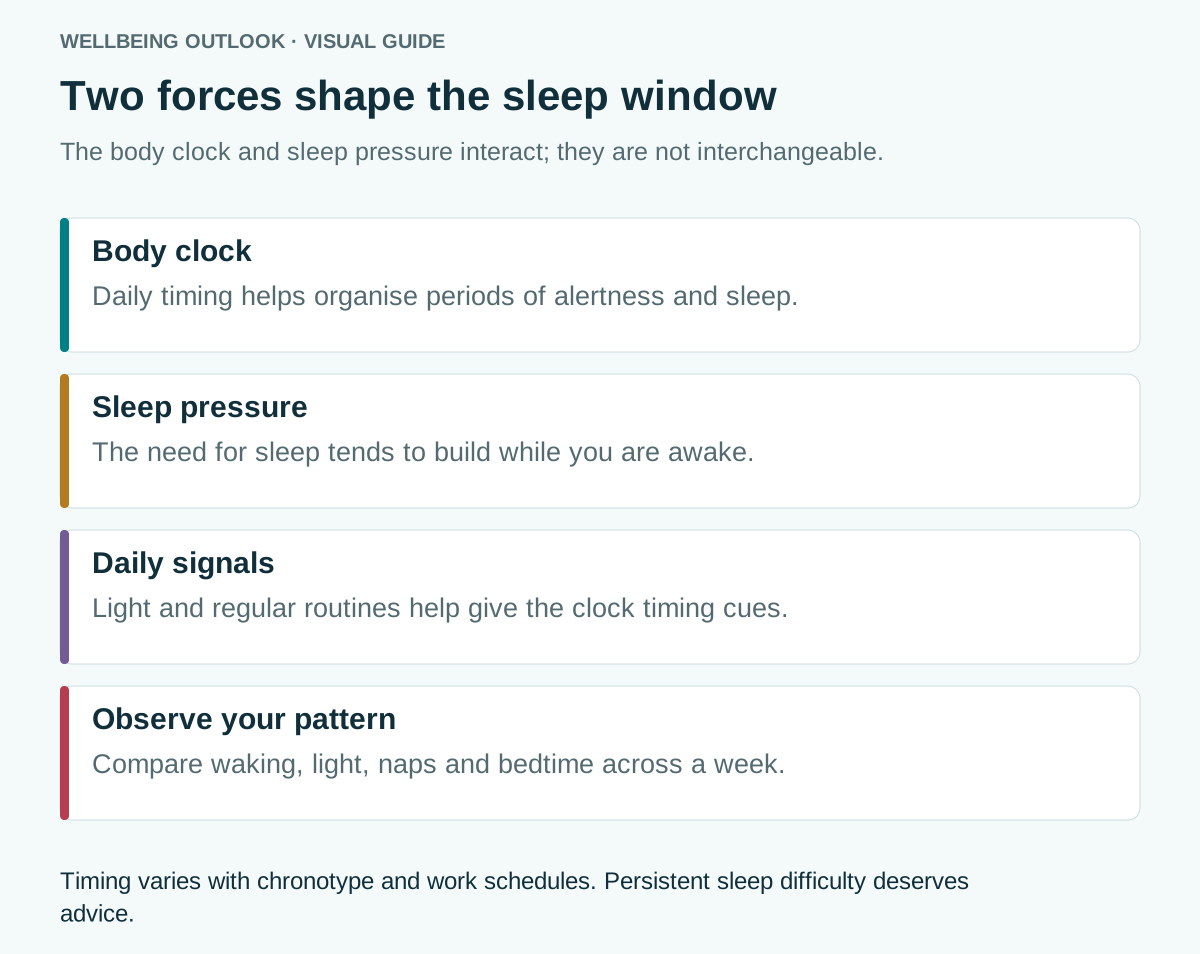
Two forces shape the sleep window
The circadian system creates a changing signal for wakefulness and sleep across the day. Alongside it, homeostatic sleep pressure generally increases the longer you remain awake and decreases during sleep. You may therefore feel tired after too little sleep even when the circadian system is promoting daytime alertness, or strangely alert late at night after pushing past an earlier sleepy period.
This two-process view explains why going to bed much earlier does not always produce sleep. The clock may still be promoting wakefulness, and sleep pressure may not yet be high enough. It also explains why a late afternoon nap can make bedtime harder even though the clock itself has not suddenly changed.
Light tells the clock what time it is
Light has both visual and non-visual effects. Its influence on circadian timing depends on intensity, duration, spectrum and, critically, when exposure occurs. Light in the biological morning can help advance a delayed schedule; light late in the evening or night can delay the clock and increase alertness.
This is more precise than the slogan “blue light is bad.” Short-wavelength light can strongly influence the circadian system, but bright light of other wavelengths can also have an effect. The dose and timing matter, and a dim phone is not equivalent to a brightly lit room.
Melatonin is a signal, not an on-off switch
Melatonin secretion normally rises during biological night and is suppressed by light. It signals darkness to the body; it is not the entire circadian system and does not work like a sedative switch for everyone.
Supplement timing matters. Taking melatonin at the wrong time may shift the clock in an unwanted direction or simply cause drowsiness without solving the underlying schedule. Product quality, dose, interactions and medical context also vary. Anyone considering it for a persistent sleep problem should discuss timing and suitability with a clinician or pharmacist.
Why the clock falls out of sync
- Jet lag: the internal clock remains aligned with the departure time zone.
- Shift work: work, light and sleep repeatedly occur at conflicting biological times.
- Social jet lag: weekday and weekend schedules pull sleep timing in different directions.
- Irregular light exposure: dim days and bright evenings weaken the contrast between day and night.
- Changing routines: variable wake times, meals and activity provide inconsistent cues.
Feeling out of sync does not automatically mean a circadian disorder. Stress, illness, medication, sleep apnoea, restless legs and many other factors can also disrupt sleep and daytime energy.
Reset is usually a gradual word
The language of “resetting” suggests that one night, supplement or sound can return the clock to factory settings. Biological timing normally shifts through repeated cues. A stable wake time and appropriately timed light across several days are more plausible levers than a dramatic one-off intervention.
The direction also matters. Someone who cannot fall asleep until very late may need a different light schedule from someone who becomes sleepy too early. Travellers moving east and west face different phase shifts. Shift workers may be unable to create perfect alignment at all and instead need harm-reduction strategies around light, naps, caffeine and protected sleep.
Give the clock clearer signals
1. Anchor wake time
A reasonably consistent wake time gives the day a stable starting cue. If you are correcting a large schedule shift, gradual changes are often easier to sustain than forcing an abrupt bedtime.
2. Seek useful daytime light
Outdoor light after waking is usually much brighter than indoor light, even on a cloudy day. For many people, morning daylight supports an earlier, steadier schedule. Someone with an advanced schedule or a diagnosed circadian disorder may need different timing, which is why clinical light therapy should be personalised.
3. Reduce unnecessary evening brightness
In the hours before bed, dim the environment and avoid holding a bright screen close to the face for long periods. Night modes may improve comfort, but brightness, duration and engaging content still matter.
4. Align behaviour with the desired day
Regular meals, activity and social contact help distinguish active time from rest time. Heavy meals, intense exercise or stimulating work very late may be disruptive for some people, though individual responses differ.
5. Build a repeatable transition
A wind-down routine does not directly reset the master clock in the way timed light can, but it reduces competing arousal and makes the intended sleep window more recognisable. Repetition is more useful than finding a perfect ritual.
Chronotype is real—but not destiny
People differ in preferred sleep and activity timing, and that preference changes with age. A late chronotype is not laziness. Yet chronotype also does not make the clock immune to light, work schedules or habits. The practical aim is to find the best alignment possible between biology, obligations and sufficient sleep.
A one-week observation before changing everything
For seven days, note wake time, estimated sleep time, first outdoor light, caffeine timing, naps and the period when you felt most alert. This is not a diagnosis; it is a way to spot inconsistent cues. Change one or two anchors first—often wake time and morning light—rather than introducing a complex routine whose useful component becomes impossible to identify.
Judge the direction of change through daytime function as well as sleep onset. Falling asleep earlier is not an improvement if total sleep falls, morning driving becomes unsafe or daytime sleepiness grows.
Sound can support the routine without setting the clock
A consistent evening soundscape may reduce stimulation and mark the beginning of wind-down. It should not be described as directly “tuning” the SCN to a chosen frequency. Light and behavioural timing are the primary clock cues discussed here; audio is better positioned as a transition cue that can make a schedule easier to follow.
When to seek help
Speak with a health professional if sleep timing is persistently incompatible with daily life, if you cannot stay awake safely, or if sleep problems continue despite a stable opportunity to sleep. Loud snoring, breathing pauses, sudden sleep episodes and prolonged insomnia deserve assessment rather than another self-directed “reset.”
Sources and further reading
- US National Institute of General Medical Sciences: Circadian Rhythms
- Prayag et al. (2019): Light modulation of human clocks, wake and sleep
- Tähkämö, Partonen & Pesonen (2019): systematic review of light exposure and human circadian rhythm
- Pandi-Perumal et al. (2008): Melatonin, light and circadian rhythm sleep disorders