Cognitive Ageing: What Can Change and What Often Remains Strong
Processing speed and rapid recall may change while knowledge and expertise remain strong; functional decline deserves assessment.
 Maya ChenMind & Brain editor5 September 2026
Mind & Brain · Explainer
Some mental operations become slower with age, while vocabulary, expertise and judgement can remain strong. Change is uneven, and difficulty with daily life is not “just ageing.”

In short
- Processing speed and rapid recall often change gradually.
- Vocabulary, expertise and semantic knowledge can remain stable or grow.
- Sleep, mood, hearing, vision, medicines and illness can affect performance.
- Change that interferes with familiar daily tasks warrants assessment.
There is no single “mental age”
Cognition includes attention, learning, memory, language, spatial skill, reasoning and executive control. A person can take longer to learn a new interface while making excellent decisions in a familiar field. A slower answer is not necessarily a worse answer.
Studies compare averages, but individuals vary widely. Education, work, health, culture and testing experience influence performance. A birthday does not predict one person’s score precisely.
What commonly changes
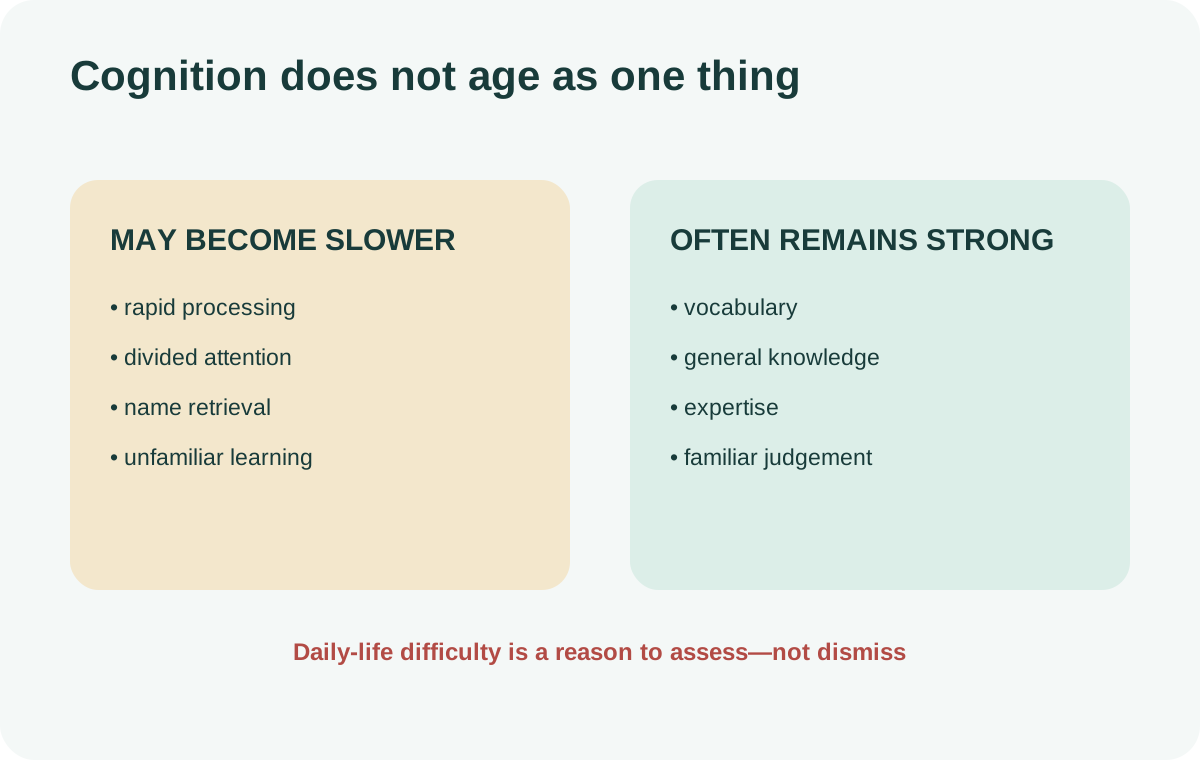
Processing speed tends to slow, especially when a task is unfamiliar or time-pressured. Working memory may hold fewer items at once, and dividing attention becomes harder. Retrieving a name can take longer even when the knowledge is still available. New learning may need more repetition and fewer distractions.
These shifts can be frustrating, but compensations work: external reminders, consistent storage places, written steps and extra time. Using support does not weaken memory; it frees capacity.
What often remains strong
Vocabulary, general knowledge and expertise developed over years are often resilient. Pattern recognition in familiar domains can support judgement. Emotional regulation and the ability to prioritise may improve for some people, although these are not universal age effects.
Knowledge is most useful when sensory access is good. Untreated hearing or vision loss can make a cognitive task look harder than it is and can increase fatigue.
Normal variability or a warning sign?
Occasionally misplacing keys, taking longer to remember a word or needing a list can occur with normal ageing. Concern rises when a person repeatedly gets lost on familiar routes, cannot manage usual bills or medicines, loses the thread of ordinary conversations, or shows marked change in judgement or personality.
The distinction is functional and contextual, not a single online quiz. Family observations can help, but respect autonomy and avoid turning every lapse into surveillance.
Look for reversible contributors
Depression, anxiety, poor sleep, pain, infection, thyroid problems, vitamin deficiencies and medication effects can impair thinking. Alcohol and other substances matter. Delirium—an abrupt fluctuating change in attention and awareness—is urgent and different from gradual dementia.
A clinical review may include history, physical examination, laboratory tests, medicine review, cognitive testing and information from someone who knows the person well.
Support cognitive health without promises
Manage blood pressure, diabetes and cholesterol with clinical guidance; move regularly; protect sleep; treat hearing and vision problems; avoid smoking; and maintain meaningful social and cognitive activity. These actions support general and brain health, but none guarantees prevention of dementia.
Choose learning that is engaging and progressively challenging: language, music, craft, digital skills or volunteering. Commercial brain games mostly train the tasks practised; transfer to everyday function is variable.
Design the environment
- Keep essentials in consistent visible places.
- Use one calendar and one medication system.
- Reduce background sound for important conversations.
- Break new instructions into steps.
- Schedule difficult tasks when energy is best.
Good design helps people of every age and reduces the shame attached to support.
When to seek help
Arrange assessment for progressive change, safety concerns or difficulty with daily tasks. Seek urgent help for sudden confusion, weakness, speech change, severe headache, fever or reduced consciousness. Do not assume acute change is dementia.