How to Evaluate a Dietary Supplement Claim
Translate a supplement promise into an ingredient, dose, population and outcome—then check the evidence, interactions, quality and cost.
 Noah WilliamsNutrition & Metabolism editor5 September 2026
Nutrition & Metabolism · Evidence guide
A persuasive label is not a clinical result. Translate the promise into an ingredient, dose, population and outcome—then check evidence, interactions, quality and cost.

In short
- Start with the exact ingredient and dose, not the product name or the word “natural”.
- Ask whether trials studied people like you and measured an outcome you actually care about.
- Independent certification can help verify identity and contamination; it does not prove that a product works.
- Supplements can cause adverse effects and interact with medicines, tests, surgery and pregnancy.
First, rewrite the claim
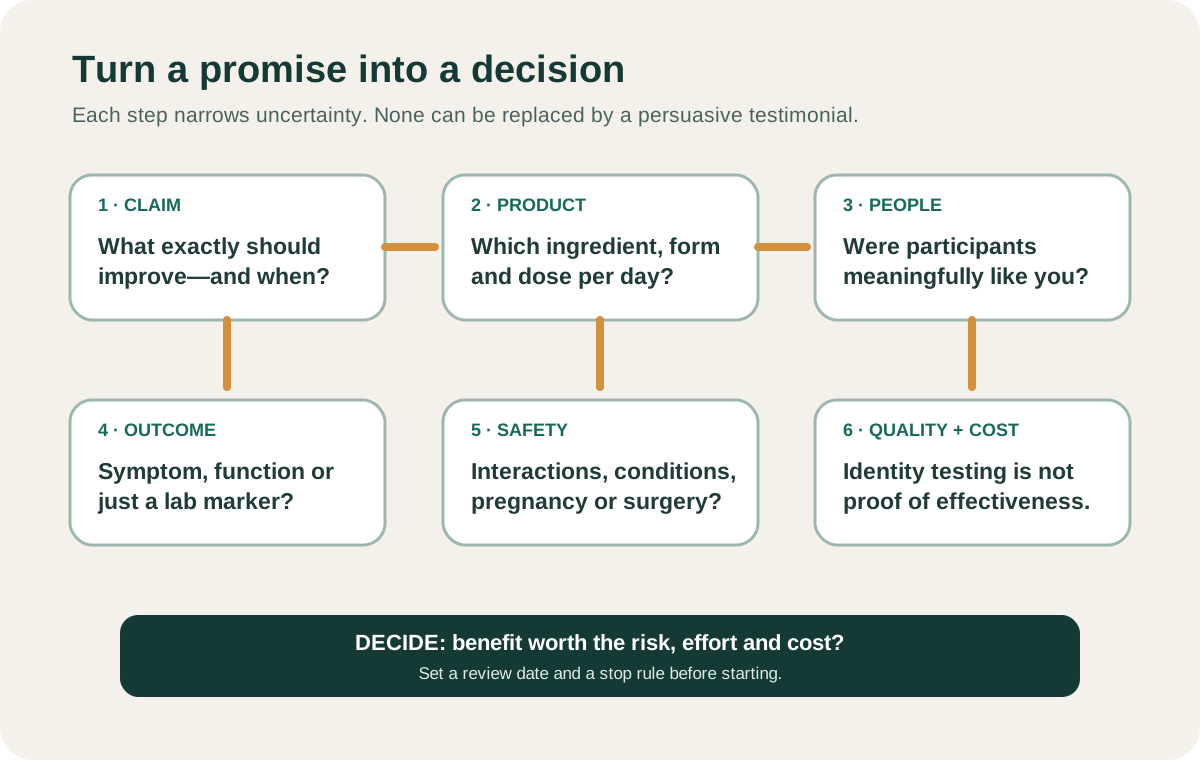
“Supports immunity”, “balances hormones” and “boosts metabolism” sound specific while leaving the outcome undefined. Rewrite the sentence as a testable question: Does this amount of this ingredient, taken for this long, improve this measured outcome in people like me compared with placebo or usual care?
This translation exposes missing information. A study of a diagnosed deficiency cannot automatically support routine use by people whose levels are adequate. A change in a laboratory marker may not improve symptoms, function or disease risk. A blend can hide whether any ingredient reaches the dose used in research.
Read the back before the front
Find the Supplement Facts panel or equivalent declaration. Record the ingredient name, chemical or botanical form, amount per serving and number of servings. “Magnesium” is not one uniform exposure; salts differ in elemental content and tolerability. Plant names should identify the species and ideally the plant part and extract. Proprietary blends that conceal individual amounts are hard to compare with trials.
Check added stimulants, allergens and overlapping nutrients from other products. More is not automatically better: some nutrients have tolerable upper intake levels, and concentrated extracts may behave differently from food. A label’s serving size is not a personalised prescription.
Match the evidence to the decision
Begin with an evidence-based monograph from a public health body, then look for systematic reviews and well-conducted randomised trials. Ask five questions: Were participants similar to you? Was the same ingredient and dose tested? Was the comparator fair? Was the outcome meaningful? Was follow-up long enough to detect benefit and harm?
A single small positive study is vulnerable to chance, selective reporting and exaggerated effects. Replication by independent groups matters. So does the total pattern: null studies and adverse events belong in the picture. Animal, cell and biochemical studies can suggest mechanisms but do not establish a useful human treatment.
Understand the regulatory gap
In the United States, dietary supplements are regulated as a category of food, not pre-approved as medicines for safety and effectiveness. Firms are responsible for the safety and labelling of their products before sale, and the Food and Drug Administration can act against adulterated or misbranded products after they reach the market. A lawful structure/function statement is not FDA approval of a therapeutic effect.
Rules differ by country, so check the regulator where the product is sold. Disease-treatment language—“cures diabetes”, “reverses arthritis” or “replaces antidepressants”—is a major warning sign. Testimonials, white coats, patent language and “clinically studied” may refer to marketing, an ingredient unlike the finished product, or a study too weak to answer the question.
Quality testing answers a narrower question
A reputable third-party programme may test whether a product contains the stated ingredients and amounts, meets limits for certain contaminants and was made under defined standards. That is valuable. It still does not show that the supplement improves sleep, prevents infection or causes weight loss.
Verify a certification in the certifier’s own database; do not rely on a copied seal. Be cautious with marketplace sellers, unusually dramatic formulations and products marketed for weight loss, sexual performance or bodybuilding, categories in which undeclared pharmaceutical ingredients have been found.
Safety belongs in the first conversation
Tell a pharmacist or clinician everything you take, including teas, powders and occasional products. Interactions can alter bleeding, sedation, blood pressure, glucose or medicine levels. Risk may change before surgery, during pregnancy or breastfeeding, with kidney or liver disease, and for children or older adults.
“Natural” does not mean harmless. US surveillance data from 2004–2013 estimated about 23,000 emergency-department visits a year related to supplement adverse events. That historical estimate is not a prediction for one individual, but it is a useful correction to the idea that this category carries no meaningful risk.
A ten-minute decision routine
- Write the exact outcome you want and the time horizon.
- Photograph the ingredient panel and serving instructions.
- Check an independent public-health fact sheet for evidence, dose and interactions.
- Compare the actual formula with the one studied.
- Ask whether a deficiency, medication effect or condition should be assessed first.
- Set a stop rule: no benefit by a reasonable date, adverse effects, or a clinician’s concern.
If you proceed, change one thing at a time and keep the rest of care stable when possible. Record benefit in observable terms. “I feel healthier” is harder to evaluate than sleep onset, symptom frequency, training performance or a clinician-ordered lab result.
When to pause the purchase
Pause if the seller promises a cure, invokes suppression by doctors, refuses to disclose amounts, sells only through urgency, or says the product cannot interact because it is natural. Also pause when the expected benefit is vague but the monthly cost is substantial. Food, sleep, activity, prescribed care and social support may address the same goal more reliably.