Exercise Timing and Sleep: What Matters Most
Regular exercise matters more than one perfect hour; evening sessions can fit good sleep when intensity, finish time and personal response are considered.
 Elena MoralesSleep & Recovery editor5 September 2026
Sleep & Recovery · Science guide
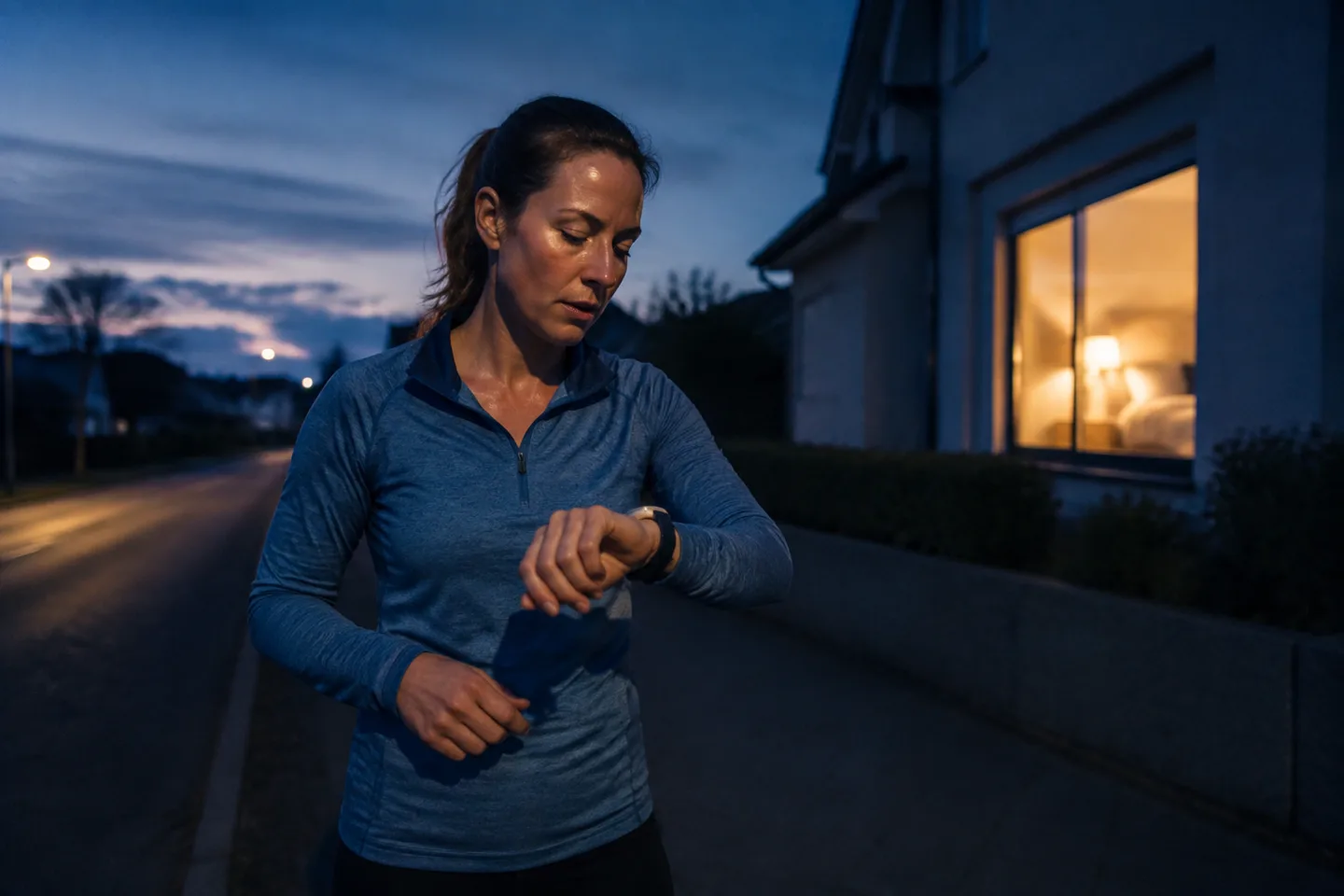
For most people, doing exercise consistently matters more than finding one perfect hour. Evening activity is not automatically bad for sleep, though hard sessions ending close to bed can be disruptive for some.
In short
- Regular exercise generally supports sleep and overall health.
- Research does not show that all evening exercise harms sleep.
- Vigorous exercise finishing within about an hour of bed may delay sleep for some people.
- The best time is one you can sustain without sacrificing sleep opportunity.
Why a universal cutoff fails
“Never exercise after 6 p.m.” ignores chronotype, work, season, fitness and bedtime. A 6 p.m. run may end five hours before sleep for one person and ten minutes before sleep for another. A gentle walk is not a maximal interval session. Research averages cannot predict every response.
Exercise changes body temperature, heart rate, alertness and sympathetic activity. Those changes can promote healthy adaptation, but a very demanding session may leave someone hot, hungry or activated at the moment they want to sleep. Other people feel pleasantly settled.
What reviews of evening exercise find
A systematic review and meta-analysis of healthy adults did not find that evening exercise generally worsened sleep. Some sleep measures improved modestly. The main caution was vigorous activity ending within roughly one hour of bedtime, which could impair sleep onset, duration or efficiency.
A later network meta-analysis comparing intensities also found no broad disruption from acute evening sessions in healthy younger and middle-aged adults. Evidence is less certain for people with insomnia, medical conditions, extreme schedules or very late competitive training.
Morning exercise
Morning activity can anchor a routine and pair movement with outdoor light, a strong circadian cue. It may be easier to protect from later interruptions. The trade-off is obvious: waking earlier to exercise is not beneficial if it reduces sleep.
Allow enough warm-up when the body feels stiff, and fuel appropriately for the session and your health needs. People using glucose-lowering medication or managing cardiovascular disease may need individual guidance.
Afternoon exercise
Body temperature and performance often rise later in the day, which can make demanding training feel easier. Afternoon sessions may fit naturally between work and evening. They also leave time to cool down and eat before bed.
This is a convenience, not a biological mandate. If afternoon is consistently unavailable, another slot you keep is better.
Evening exercise
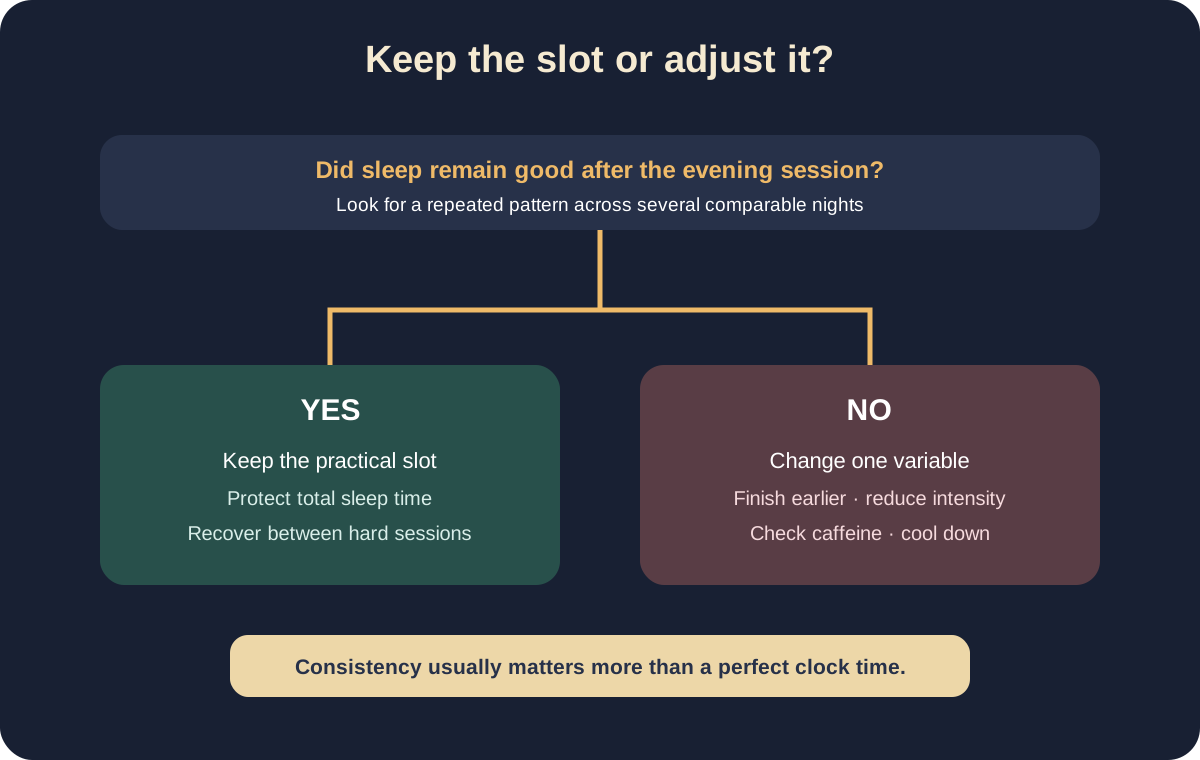
Moderate cycling, resistance training, yoga or a brisk walk can coexist with good sleep. If a late session disrupts you, change one variable at a time: finish 30–60 minutes earlier, reduce the final high-intensity work, extend the cool-down, use a cooler shower and lower bright light afterward.
Large meals, pre-workout stimulants and caffeinated gels can be the true culprit. Check ingredients and timing. Alcohol may feel sedating but can fragment sleep and should not be used as a recovery tool.
A two-week personal timing test
- Keep wake time and sleep opportunity reasonably stable.
- Record session start, finish, type and perceived intensity.
- Note caffeine, alcohol, unusual stress and late heavy meals.
- Each morning record approximate sleep onset, awakenings and refreshment.
- Look for repeated patterns, not one difficult night.
If late high-intensity sessions are the problem, preserve the exercise habit by moving only those sessions. Do not abandon all evening movement.
What matters most
- Consistency: a realistic weekly pattern.
- Total load: enough recovery between hard sessions.
- Sleep opportunity: exercise should not routinely compress time in bed.
- Comfort: cool down, hydrate and address pain.
- Individual response: chronotype and conditions matter.
When to seek advice
Exercise-related chest pain, fainting, severe breathlessness or palpitations needs medical attention. Persistent insomnia, loud snoring with pauses, marked daytime sleepiness or restless legs deserves assessment rather than endless schedule experiments.
People with bipolar disorder, epilepsy, pregnancy complications or significant heart, lung or metabolic disease may need personalised guidance on intensity and timing.