Food Labels: A Five-Minute Reading Method
A five-minute method for matching portions, choosing relevant nutrients, scanning ingredients and deciding in context.
 Noah WilliamsNutrition & Metabolism editor5 September 2026
Nutrition & Metabolism · Practical guide
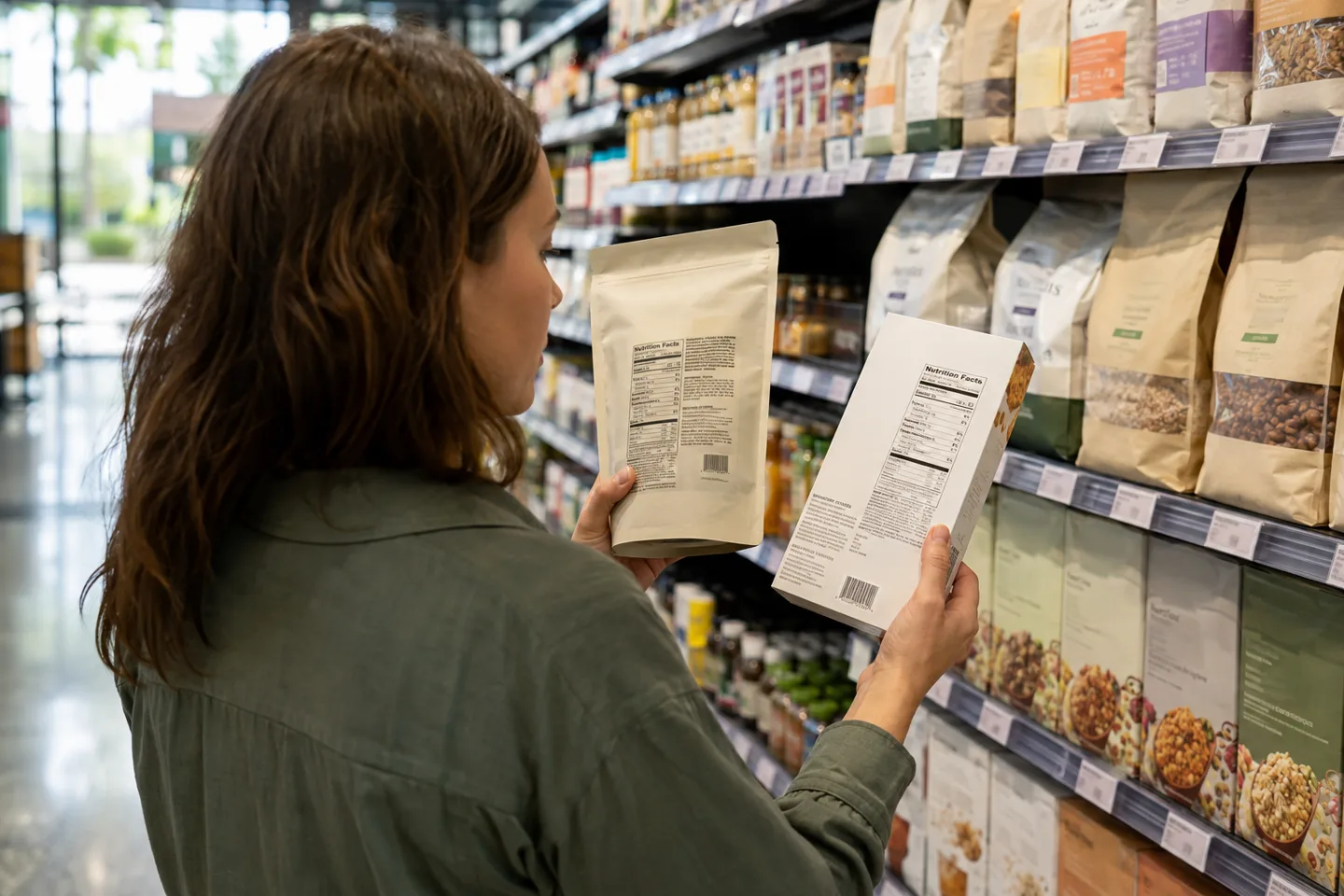
A food label is useful when it answers a specific question. This five-minute method starts with the portion, compares like with like and ignores most front-of-pack theatre.
In short
- Begin with serving size and the amount you expect to eat.
- Compare the same amount: per 100 g, per 100 ml or an equal real-world portion.
- Choose two or three nutrients relevant to the product and your goal.
- Use the ingredient list for composition, not a morality ranking.
Minute one: identify the unit
Nutrition panels may report per serving, per package and per 100 g or 100 ml. A serving is not necessarily a recommendation; in US labelling it reflects the amount people typically consume. If a bag contains three labelled servings and you eat the bag, the displayed per-serving numbers need multiplying.
For a fair comparison, align the unit. Two breakfast cereals with different serving sizes are easier to compare per 100 g. For foods normally eaten in very different quantities, compare the portion you will actually use.
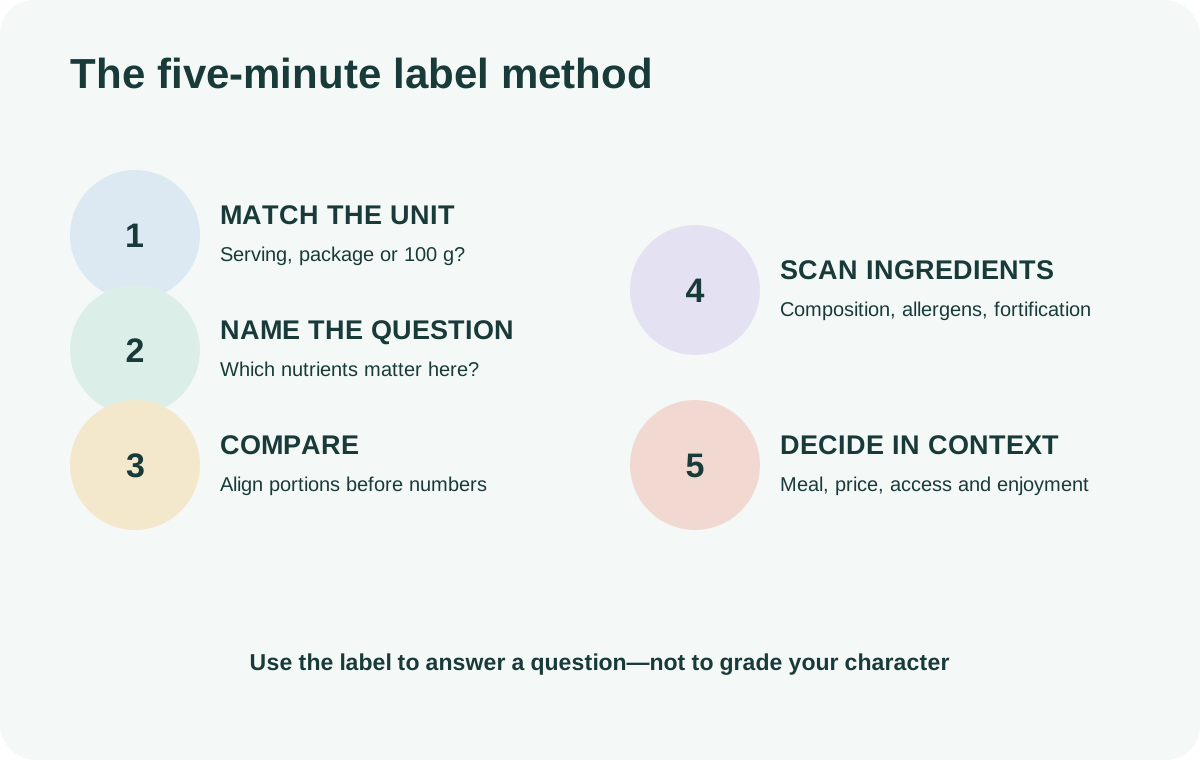
Minute two: choose the question
A label contains more data than most decisions require. For bread, you might compare fibre and sodium. For yoghurt, protein and added sugar may matter. For a plant drink, calcium fortification and protein may be relevant. For an endurance snack, carbohydrate may be the feature rather than a flaw.
Medical needs change priorities. Someone managing kidney disease, allergies, diabetes or coeliac disease needs condition-specific advice and cannot rely on a generic “healthy” score.
Minute three: use percentages carefully
Percent Daily Value on a US label shows how much one serving contributes to a reference daily amount. FDA uses 5% DV or less as a general marker of “low” and 20% or more as “high.” These are orientation tools, not personal prescriptions.
Other countries use reference intakes or traffic lights. Learn the convention where you shop. The arithmetic is less important than consistent comparison across similar products.
Minute four: scan ingredients
Ingredients are listed by weight at the time of manufacture. The list helps identify allergens, sources of added sugar, types of fat, fortification and how much of a named ingredient is actually present when percentages are supplied.
A long list does not automatically make a food harmful, and a short list does not guarantee nutritional value. Fortified foods and safe additives can have unfamiliar names. Use the list to answer a composition question, not to count syllables.
Minute five: decide in context
Ask what role the food plays. A sauce used by the spoon is different from a ready meal. A sports product is different from an everyday drink. Price, access, culture, pleasure, cooking time and waste belong in the decision too.
The better choice is one that fits the meal pattern and will actually be used. A slightly higher-fibre product that nobody enjoys does not improve anyone’s diet sitting in a cupboard.
Three common traps
The health halo
Words such as “natural,” “protein,” “multigrain” or “wellness” can dominate the front while the meaningful quantities remain modest. Verify the claim in the panel and ingredients.
The serving illusion
A small serving can make calories, sodium or sugar look small. Look at servings per container and your likely portion.
The single-nutrient verdict
Low fat, low carbohydrate or high protein is not a complete evaluation. Nutrients travel in foods and diets, not isolated scorecards.
A rapid comparison example
When comparing two soups, first match the volume. Then check sodium because soup can contribute substantially, fibre and protein because they affect the meal, and ingredients for allergens or preferences. If one has less sodium but the portion is half the size, align the units before deciding.
For breakfast cereal, compare per 100 g, then translate back to your bowl. Look at fibre, added sugar where declared and what you eat with it. Milk, yoghurt, fruit or nuts change the meal.
Labels cannot tell you everything
They do not capture taste, satiety for an individual, cooking skill, social meaning or the quality of an entire diet. Nutrient values are estimates subject to permitted variation. A label supports a decision; it does not certify virtue.
If reading labels becomes compulsive, anxiety-provoking or tied to rigid food rules, step back and seek support from an eating-disorder-informed professional.