The Gut-Brain Axis: What Is Established and What Is Emerging
Gut and brain communicate through nerves, hormones, immune signals and microbial metabolites; most personalised microbiome fixes remain ahead of the evidence.
 Noah WilliamsNutrition & Metabolism editor5 September 2026
Nutrition & Metabolism · Science guide
The gut and brain communicate in both directions through nerves, hormones, immune signals and microbial metabolites. The biology is real; most personalised “microbiome fixes” remain ahead of the clinical evidence.
In short
- Bidirectional brain–gut communication is established physiology.
- The microbiome participates, but association with a condition does not prove microbial cause.
- Probiotic effects are strain-, dose-, population- and outcome-specific.
- Commercial stool profiles cannot yet prescribe a universally “ideal” microbiome.
What the axis includes
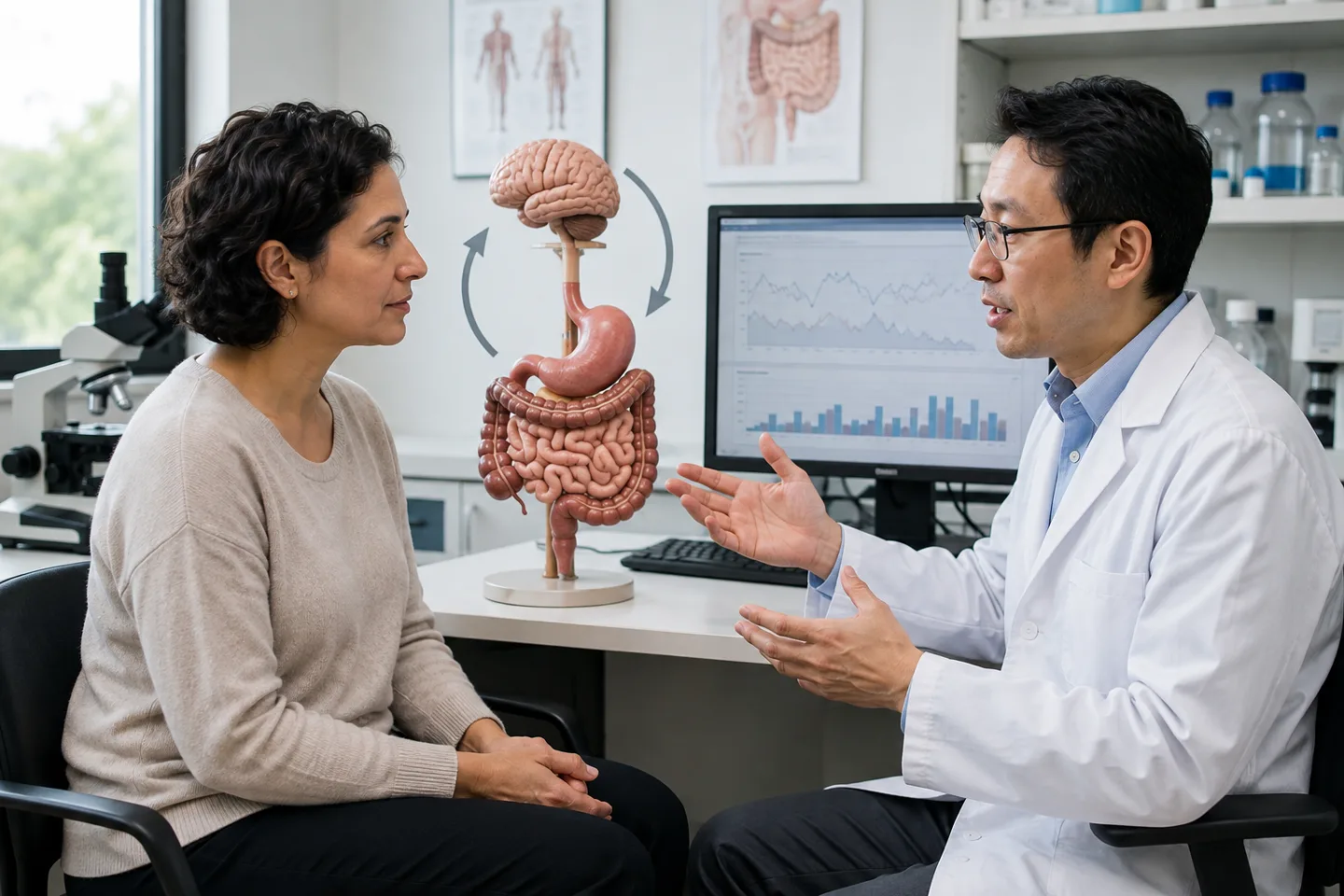
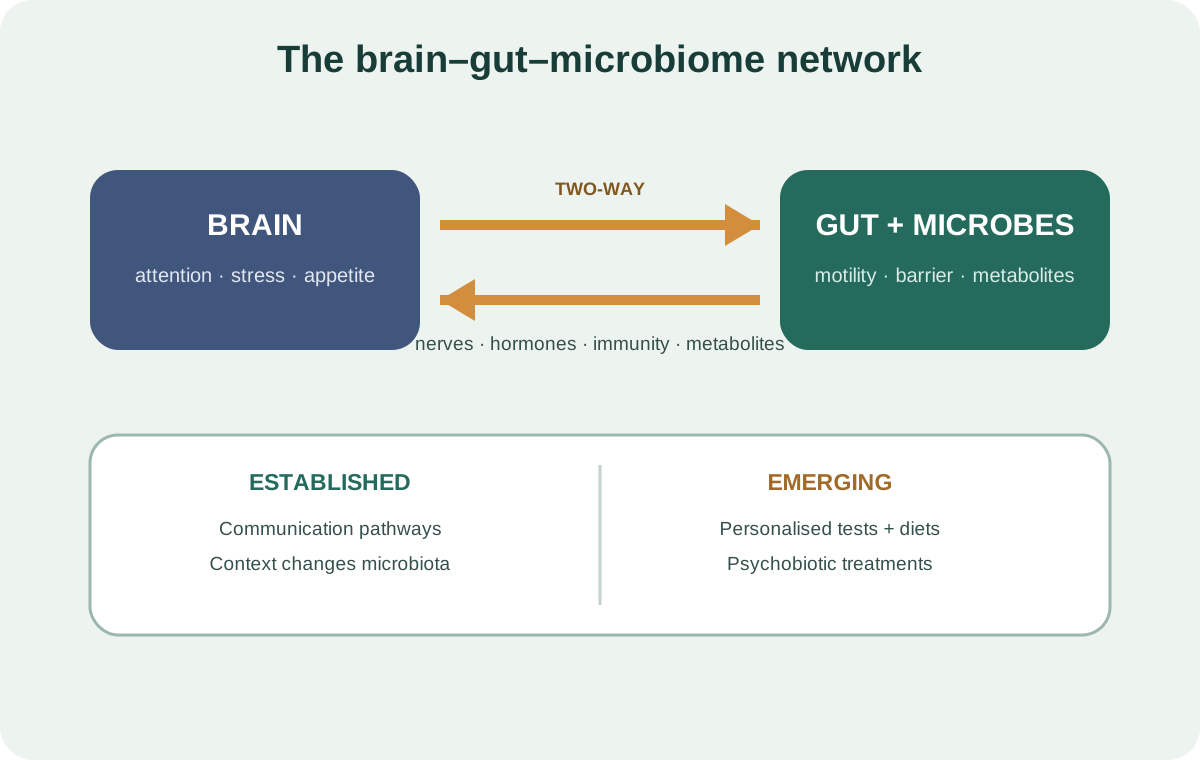
The gastrointestinal tract has its own enteric nervous system and communicates with the central nervous system through autonomic pathways, including the vagus nerve. Hormones, immune mediators and metabolites add further routes. The brain can alter motility, secretion, appetite and visceral sensitivity; gut signals can influence sensation, behaviour and physiology.
The microbiota—the community of microorganisms and their genes—joins this network by transforming food and host compounds. Short-chain fatty acids and tryptophan-related metabolites are active research areas. None of this means that one bacterial species independently controls mood.
Established: symptoms can run both ways
Stress and emotion can alter gut sensation and motility, while gastrointestinal illness can affect sleep, appetite and mood. Disorders of gut–brain interaction, including irritable bowel syndrome, reflect altered communication among motility, sensation, immunity, microbiota and central processing rather than an imaginary illness.
These conditions are heterogeneous. Similar symptoms can have different contributors, which is why bleeding, persistent vomiting, fever, unintentional weight loss, anaemia or new severe symptoms need medical assessment.
Established: microbes change with context
Diet, age, geography, medicines, infection and many other exposures shape microbial communities. Antibiotics can cause major changes. Microbial composition and function also vary within one person over time. Therefore a single stool sample is a snapshot, not a fixed identity.
Researchers can detect differences between groups with and without a condition. Those differences may contribute to disease, result from disease or treatment, or reflect a third factor such as diet. Observational association cannot resolve that direction.
Emerging: psychobiotics and precision nutrition
“Psychobiotic” is used for microorganisms or substrates proposed to influence mental health through microbial pathways. Human trials of probiotics, prebiotics and dietary patterns are growing, but formulations and outcomes vary. A positive study of one strain cannot validate every product labelled probiotic.
Neuroimaging studies are small and heterogeneous. Brain-scan changes are not automatically symptom improvements, and symptom improvements do not prove the proposed microbial mechanism. Larger replicated trials with defined products and clinically meaningful outcomes are needed.
What a probiotic label must tell you
Look for genus, species and strain; viable amount through the end of shelf life; storage conditions; and the exact outcome studied. “Ten billion CFU” does not identify what those organisms do. Multi-strain blends may be harder to match to evidence.
People who are severely immunocompromised, critically ill or have central venous catheters should discuss probiotics with a clinician because rare invasive infections can occur. For everyone, cost and opportunity cost matter.
A lower-hype way to support gut health
Eat a varied, nutritionally adequate pattern that includes fibre-rich foods you tolerate, increase fibre gradually, drink according to need, move regularly and protect sleep. Fermented foods can be enjoyable and nutritious, but they are not all probiotics and do not guarantee a mental-health effect.
If symptoms worsen with broad food restriction, seek qualified dietary support. Restrictive “microbiome cleanses” can reduce dietary adequacy and reinforce fear. Treat constipation, diarrhoea, pain or mood symptoms through an evidence-based plan rather than chasing a diversity score.
How to read the next headline
- Was the work done in cells, animals or humans?
- Does it show association, mechanism or treatment benefit?
- Was the exact strain, diet or transplant procedure defined?
- Was the outcome a symptom, diagnosis, metabolite or imaging signal?
- Were adverse events and conflicts of interest reported?
The microbiome is scientifically important precisely because it is complex. Simple certainty is usually a sign to slow down.