A Healthier Home Environment: Light Air Noise and Routine
A practical room-by-room framework for cleaner air, useful light, manageable sound and routines that make healthy choices easier.
 Claire DupontEveryday Health editor5 September 2026
Everyday Health · Practical guide
A healthier home is not a showroom. It is a set of ordinary conditions—cleaner air, useful daylight, manageable sound and repeatable routines—that make the healthy choice easier.
In short
- Control pollution sources before relying on an air cleaner.
- Seek brighter light earlier in the day and softer light before sleep.
- Reduce unpredictable noise at the source; add masking only when useful.
- Attach small environmental resets to routines you already keep.
Think in layers, not products
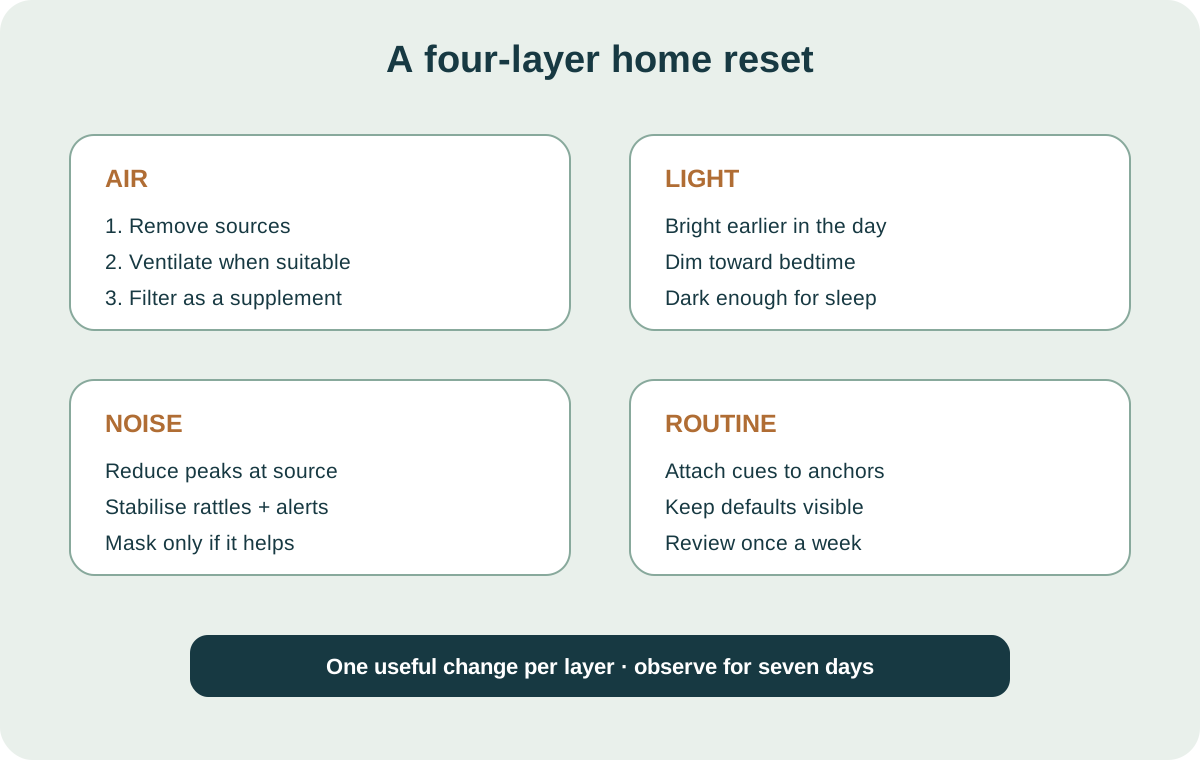
Homes influence health through exposure and behaviour. Air carries particles, gases, moisture and allergens. Light helps signal time of day. Noise can interrupt attention and sleep. Layout determines whether water, movement, cooking and rest are easy or awkward.
No single purchase fixes all four. A purifier cannot remove a pollution source that continues emitting. Blackout curtains cannot compensate for a day spent in dim light. A beautifully organised room still fails if its system is too demanding to maintain. Work from source to environment to routine.
Air: remove, ventilate, filter
The US Environmental Protection Agency describes three basic strategies: source control, ventilation and filtration. Source control comes first. Do not smoke or vape indoors. Use an extracting kitchen hood that vents outdoors when cooking if available. Address visible moisture and leaks rather than covering odours with fragrance. Store solvents and fuels safely and away from living spaces.
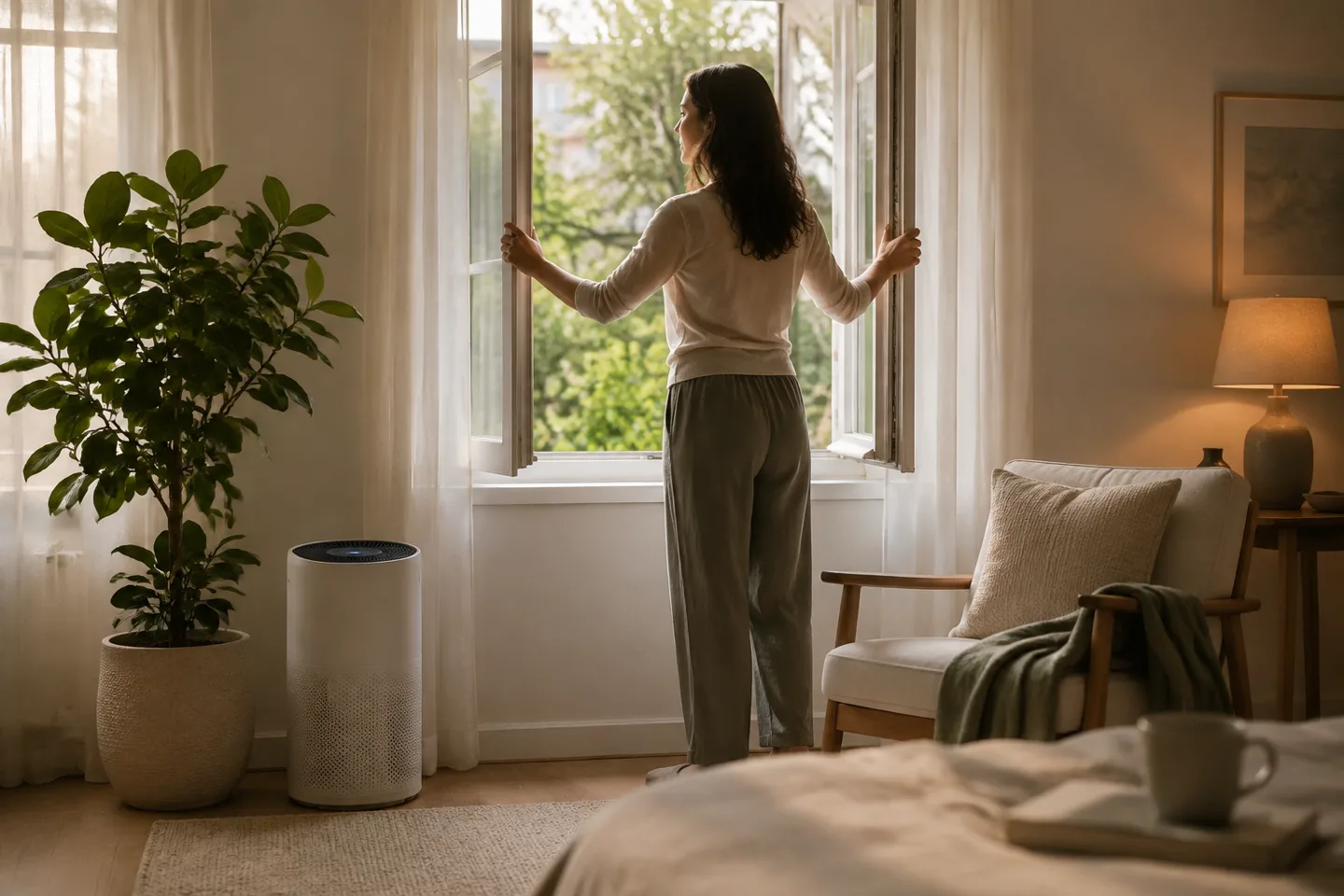
Ventilation can dilute indoor pollutants when outdoor air is suitable. Open windows briefly or use exhaust fans during cooking, showering, painting and cleaning. If outdoor smoke, pollen or pollution is high, closing windows and using appropriate filtration may be safer. Local conditions matter.
A portable air cleaner can supplement those steps. Match its clean-air delivery to the room, place it where airflow is not blocked and replace filters as directed. Avoid devices that intentionally produce ozone. Remember that filtration does not correct carbon monoxide, radon or a gas leak: use appropriate alarms and testing.
Light: brighter days, dimmer evenings
Light and dark are major time cues for circadian rhythms. Open curtains after waking, spend time outdoors when practical and place daytime activities near useful daylight. Outdoor light is typically much brighter than ordinary indoor light, even on a cloudy day.
As bedtime approaches, reduce glare and unnecessary brightness. Use a task lamp instead of lighting the whole room, lower screen brightness and let the final hour look different from the working day. This is not a ban on one colour of light; intensity, timing, duration and distance all shape exposure.
Bedrooms should be dark enough for sleep but safe to navigate. Cover intrusive streetlight, remove glowing indicators when feasible and use a low, warm night light for necessary movement. Shift workers may need stronger light control and personalised timing advice.
Noise: reduce the peaks first
Environmental noise can disturb sleep and increase annoyance; sustained exposure is also associated with broader health effects. Begin with the loudest or most unpredictable source. Add soft pads under vibrating appliances, close gaps around a rattling door, move a speaker from a shared wall, silence nonessential alerts and agree on quiet hours.
Soft furnishings can reduce reverberation inside a room, but they do not soundproof a building. Earplugs or steady background sound may help some sleepers, provided alarms remain audible and the masking sound stays comfortable. Persistent neighbour, traffic or building noise may require landlord, building-management or local-authority solutions.
Routine: design a home that remembers for you
Put cues where the action happens: a water bottle by the bag you take out, shoes by the door, medication in a safe visible place consistent with storage instructions, and the phone charger outside the bedroom if that supports sleep. Keep healthy defaults easy to reach and high-friction distractions less immediate.
Use anchors instead of ambitious schedules. After breakfast, open curtains and check the room. While dinner cooks, run the extractor. After brushing teeth, lower lights and silence alerts. Once a week, check filters, damp patches and expiring batteries.
A 20-minute home reset
- Five minutes for air: remove one fragrance or combustion source, ventilate if outdoor conditions allow, and check the kitchen extractor.
- Five minutes for light: clear one window, set an evening lamp and cover one intrusive bedroom light.
- Five minutes for sound: silence alerts, stabilise one rattling object and choose a quiet zone.
- Five minutes for routine: place one cue for tomorrow and schedule one weekly check.
Observe comfort, sleep and maintenance burden for seven days. A change that cannot be sustained is a prototype, not a failure; simplify it.
When the environment needs professional help
Do not personally disturb suspected asbestos or lead paint. Seek qualified help for persistent mould, combustion odours, gas concerns, flooding, electrical faults or structural damp. Install and test smoke and carbon-monoxide alarms according to local requirements. Radon risk varies geographically and requires testing, not guessing.
If several people or pets develop headaches, dizziness, nausea or unusual fatigue at home, move to fresh air and consider urgent assessment of combustion and air-quality hazards. Environmental improvements support health; they do not replace medical care.