Healthspan Before Hacks: The Foundations That Matter Most
Healthspan is not a score to optimise with one supplement. Start with function, major risk reduction, movement, food, sleep, relationships and preventive care—then judge any ‘hack’ against that base.
 Sofia LindbergLongevity & Prevention editor5 September 2026
Longevity & Prevention · Framework
Healthspan is the part of life spent functioning well, not a biomarker score that one supplement can optimise. The strongest starting point is a durable foundation: major risk reduction, movement, nourishing food, sleep, connection and appropriate healthcare.

In short
- Healthspan has no single universally accepted clinical measure; function and freedom from disabling disease are central ideas.
- The fundamentals are ordinary but consequential: avoid tobacco, move regularly, eat a varied minimally processed diet, protect sleep, maintain relationships and use preventive care.
- Blood pressure, symptoms, vaccination, screening and treatment of known conditions usually deserve attention before experimental supplements or devices.
- Healthy ageing also depends on housing, income, safety, access and social conditions. It is not a personal-discipline contest.
Lifespan and healthspan answer different questions
Lifespan is how long a person lives. Healthspan is an informal term for the years lived in good health or with preserved function, although research definitions vary. The World Health Organization frames healthy ageing as developing and maintaining the functional ability that enables wellbeing in older age. That shifts attention from perfect biomarkers to what a person can do and what their environment enables them to do.
A person can live well with a diagnosed condition when it is managed and function remains strong. Another person can have reassuring consumer metrics while pain, isolation or mobility loss limits daily life. Healthspan is therefore broader than “years without any diagnosis,” and it cannot be reduced to biological age from one blood sample or watch.
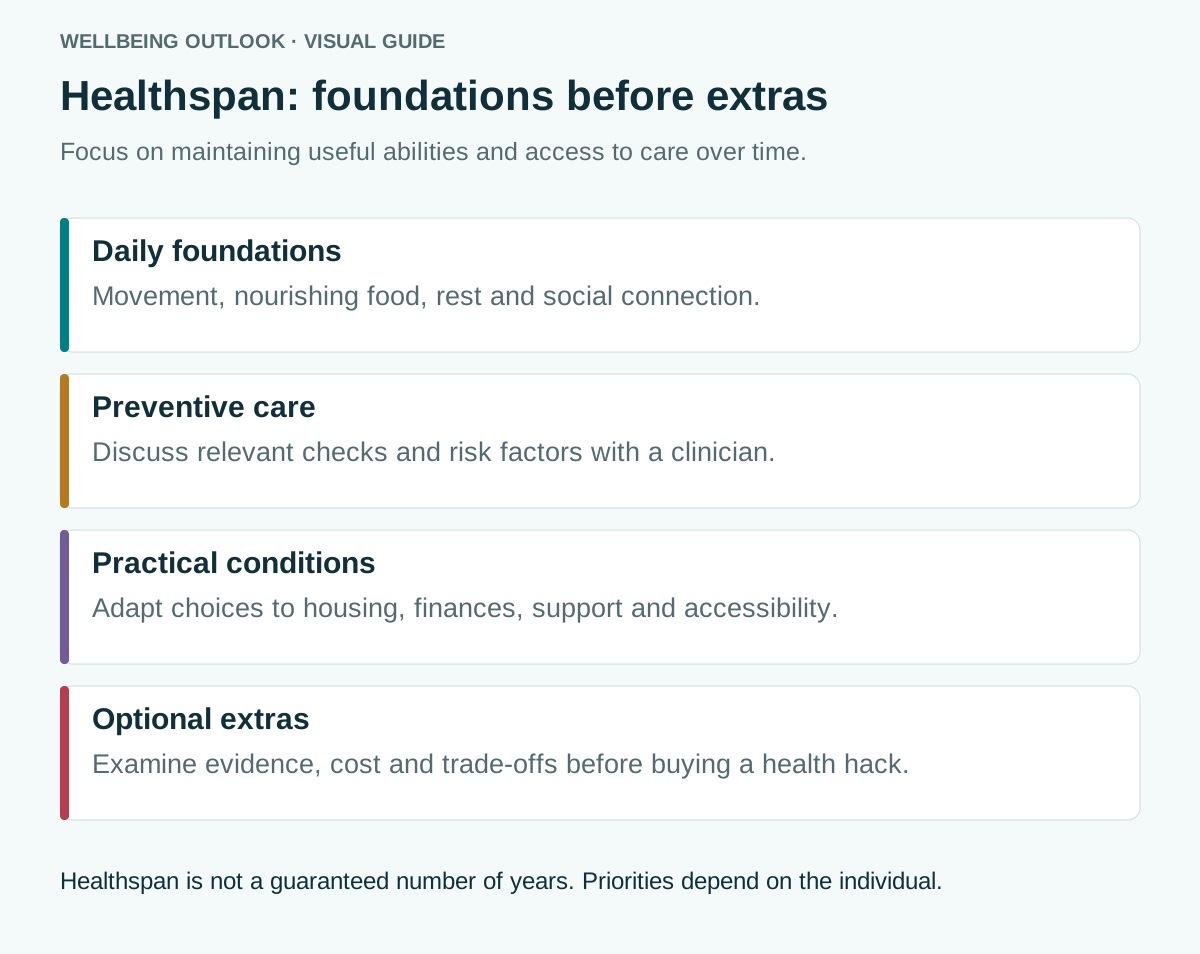
The foundation before the optimisation layer
| Foundation | Useful direction | A practical measure |
|---|---|---|
| Tobacco | Do not start; seek evidence-based help to stop | Current exposure and a supported quit plan |
| Movement | Build aerobic activity, strength and—when relevant—balance | Weekly minutes, strength sessions and everyday mobility |
| Food | Emphasise vegetables, fruit, pulses, whole grains, nuts and appropriate protein | Repeatable meal patterns, not a “perfect” day |
| Sleep | Protect regular opportunity and investigate persistent disruption | Daytime function, schedule and symptoms |
| Alcohol | Less is safer; not drinking avoids alcohol-related risk | Amount, frequency and alcohol-free days |
| Connection | Maintain reciprocal relationships and meaningful roles | Reliable contact and help available when needed |
| Healthcare | Manage known risks and use appropriate vaccination and screening | A current medication and prevention review |
These foundations interact. Pain can reduce activity; inactivity can worsen sleep; poor sleep can make food planning harder; isolation can affect all three. Choose the smallest change that improves the system rather than attempting seven perfect habits at once.
A hierarchy for healthspan decisions
1. Reduce the largest established risks
Tobacco exposure, untreated high blood pressure, hazardous alcohol use and preventable injuries generally matter more than marginal changes in a wellness score. The first useful action may be smoking-cessation support, a blood-pressure review, safer work conditions or help with substance use—not a new tracking device.
2. Treat what is already known
Take persistent symptoms and diagnosed conditions seriously. Review medication benefits, side effects and interactions with an appropriate clinician or pharmacist. Good diabetes, cardiovascular, respiratory and mental-health care can protect function; substituting an unproven longevity product can delay that care.
3. Build physical capacity
The World Health Organization recommends that adults accumulate 150–300 minutes of moderate-intensity aerobic activity a week, or 75–150 minutes at vigorous intensity, plus muscle-strengthening activity on at least two days. Some activity is better than none, and people can progress from their own baseline. Older adults with poor mobility also benefit from varied activity that emphasises balance and strength.
Walking is valuable, but healthspan is not only a step count. Carrying groceries, rising from a chair, climbing stairs and recovering balance depend on strength, power and coordination. Medical conditions, disability and pain may require adaptation rather than abandonment of the goal.
4. Make food sufficient and sustainable
A healthy dietary pattern can take many cultural forms. Common principles include a wide variety of minimally processed foods, abundant plant foods, adequate protein and fibre, and limits on free sugars, excess sodium and industrial trans fats. The relevant plan must also be affordable, accessible and compatible with allergies, medications and health conditions.
No single “longevity food” compensates for an inadequate overall pattern. In later life, aggressive weight-loss efforts can sometimes worsen undernutrition or muscle loss. Changes in weight, appetite, swallowing or strength deserve assessment rather than an automatic restriction plan.
5. Protect recovery and relationships
Sleep supports attention, metabolic regulation, mood and physical recovery. Instead of chasing a proprietary sleep score, start with adequate opportunity, a workable schedule and evaluation of symptoms such as loud snoring, breathing pauses or persistent insomnia.
Social connection is not decorative. Relationships can provide practical help, cognitive and emotional engagement, safety and reasons to stay active. A healthspan plan should include people, purpose and participation as well as exercise and meals.
What observational studies can tell us
Large cohort studies in the United States and China have associated combinations of lower-risk behaviours with more years lived without major chronic diseases. These studies are encouraging because the pattern appears across populations. They are still observational: researchers adjust for measured differences, but healthier participants can differ in income, education, healthcare access and existing illness in ways that are difficult to remove completely.
The correct conclusion is not that a checklist guarantees a disease-free decade. It is that several modifiable behaviours align with longer healthy life and already have wider evidence for reducing risk. Modern guidance also avoids presenting alcohol as a required “healthy” habit; less alcohol is safer, and none carries no alcohol-related risk.
Preventive care is individual, not a universal calendar
Screening and vaccination recommendations depend on age, sex, anatomy, pregnancy, family history, previous results, occupation, country and health status. More testing is not always better: false positives, overdiagnosis and procedure risks matter. Use the guidance for your health system and make decisions with a clinician who knows your context.
A useful review can include blood pressure, cardiovascular and diabetes risk, dental and vision care, vaccinations, bone health where relevant, cancer screening when eligible, mental health and medication safety. New symptoms belong in diagnosis, not in a generic screening checklist.
Where supplements and “hacks” fit
A supplement can be appropriate for a diagnosed deficiency, a life stage or a clinical indication. That is different from assuming that a high dose slows ageing in everyone. Products may interact with medicines, vary in quality and improve a biomarker without improving function or reducing disease.
Before paying for an intervention, ask: Is the evidence in humans? Was the outcome a meaningful health event or only a laboratory marker? Were harms tracked? Is there independent replication? Does the intervention add benefit after the basics are addressed? If the answers are unclear, treat the claim as experimental.
A 12-week foundation audit
- Weeks 1–2: establish the baseline. Note movement, sleep opportunity, tobacco and alcohol exposure, regular meals, social contact and overdue care without scoring yourself.
- Weeks 3–6: choose one bottleneck. Examples include a supported quit attempt, two short strength sessions, a repeatable lunch or booking a medication review.
- Weeks 7–10: make the change easier. Adjust the environment, schedule, transport, cost or social support instead of relying on motivation alone.
- Weeks 11–12: review function. Ask what changed in energy, mobility, symptoms, confidence and participation. Keep what helps and revise what does not.
This is a planning framework, not a treatment protocol. Rapid loss of function, chest symptoms, unexplained weight change, new neurological symptoms or severe mental-health symptoms require timely clinical assessment.
Healthspan is partly collective
Safe streets, clean air, stable housing, accessible food, paid time, healthcare and freedom from discrimination shape the choices people can make. Advice that ignores those conditions can turn unequal opportunity into personal blame. Individual habits matter, but communities, employers and public policy also determine whether healthy ageing is possible.