Hearing Health: Prevention Signs and Testing
Reduce harmful sound exposure, notice communication clues and test persistent changes early; sudden hearing loss is urgent.
 Sofia LindbergLongevity & Prevention editor5 September 2026
Longevity & Prevention · Health literacy
Hearing changes can be gradual and easy to normalise. Protecting exposure, noticing communication clues and testing early can preserve participation and point to treatable causes.
In short
- Difficulty in noisy rooms is often an early clue.
- Noise risk depends on loudness and duration; reduce both.
- Earwax, infection, medicines, ageing and noise are among many possible causes.
- Sudden hearing loss in one or both ears is urgent.
Hearing loss is not always obvious
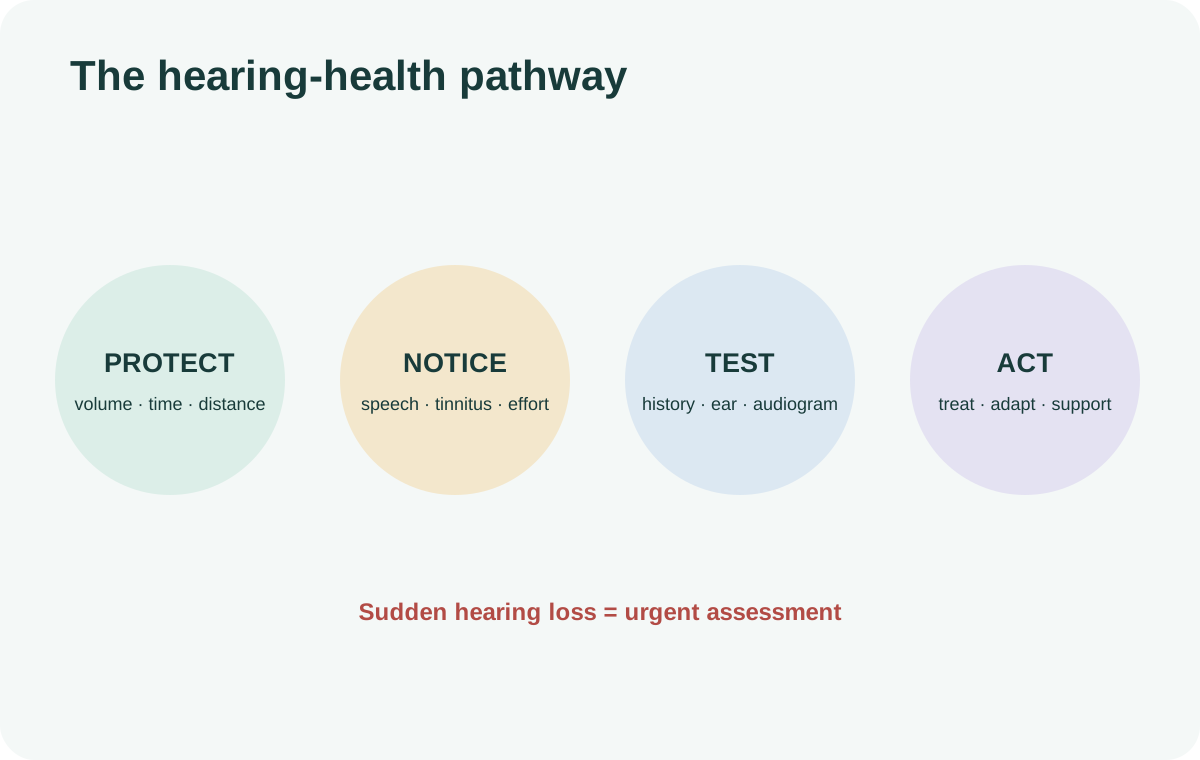
The brain adapts and other people may notice first. Common clues include turning up the television, asking for repetition, struggling with higher-pitched voices, missing doorbells, following lips or withdrawing from restaurants and group conversations. Tinnitus can accompany hearing change but also has other causes.
Communication difficulty deserves assessment even if an online screen looks normal. Hearing in quiet headphones is not the same as understanding speech amid competing sound.
Loudness and time trade off
Sound dose rises with level and duration. WHO safe-listening guidance gives a simple example: around 80 dB may be listened to for much longer than 90 dB. Personal risk still varies, and phone estimates are not laboratory instruments.
Turn volume down, move away from speakers, take quiet breaks and use well-fitted hearing protection in loud venues or work. Noise-cancelling headphones can reduce the temptation to overpower background noise, but they do not make unlimited high volume safe.
Protection must fit the setting
Foam plugs can work when inserted correctly; reusable musician plugs aim for flatter sound reduction; earmuffs may be easier for intermittent industrial noise. Very high exposures may require a formal hearing-conservation programme and correctly selected dual protection.
Protection should not create another hazard by blocking alarms or communication. Occupational risks require employer controls—reducing noise at source, isolating equipment and managing exposure—not only personal equipment.
What happens in a hearing assessment
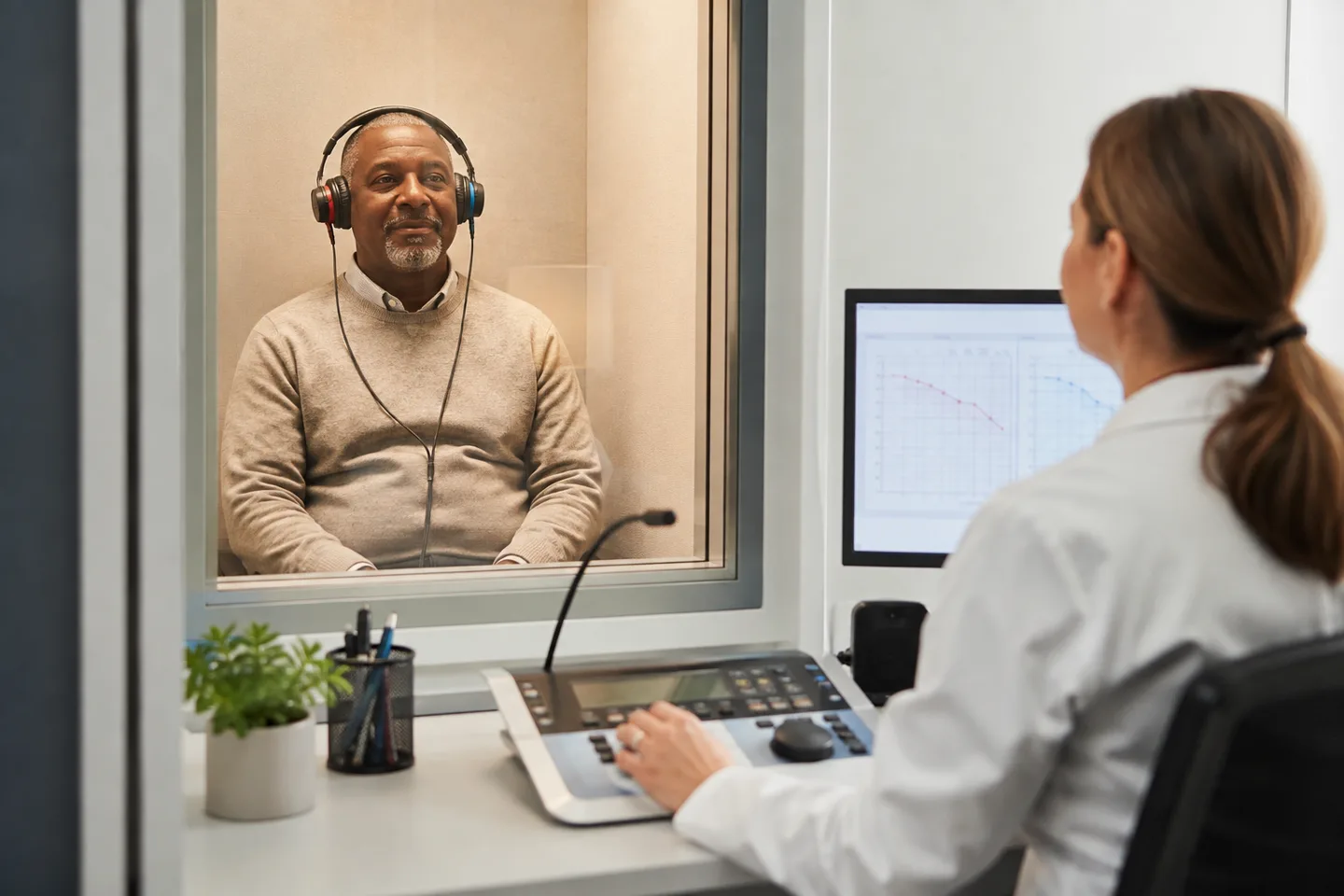
A professional asks about symptoms, noise, medicines, infections and family history, then examines the ear. Pure-tone audiometry measures the quietest tones detected at different frequencies. Speech testing and middle-ear measurements may add information. Results are plotted on an audiogram.
The result guides next steps: wax management, medical review, communication strategies, hearing aids or other rehabilitation. A test is not a pass/fail judgement and hearing aids are not the only possible outcome.
Testing timing
There is no single screening schedule for every adult worldwide. Test when you or others notice difficulty, after relevant occupational exposure, or according to local age- and risk-based guidance. Establishing a baseline can be useful for people exposed to noise or medicines known to affect hearing.
Consumer apps may prompt action but do not replace diagnostic assessment, especially with one-sided symptoms, ear pain or dizziness.
Red flags
Sudden hearing loss developing over hours or a few days is a medical emergency; urgent treatment can affect outcome. Seek prompt care for hearing change with facial weakness, severe vertigo, neurological symptoms, head injury or discharge. One-sided persistent tinnitus or asymmetric loss also needs assessment.
Do not put cotton swabs, candles or tools into the ear canal. These can push wax deeper or injure the ear.
Communication helps now
Face the person, gain attention before speaking, reduce background noise and provide good lighting. Speak clearly at a normal pace rather than shouting, which distorts speech. Captions, written keywords and better seating can reduce effort while assessment is arranged.
Untreated communication difficulty can contribute to fatigue and withdrawal. Supporting access is worthwhile at any age.
Your hearing checklist
- Notice where communication is hardest.
- Review leisure and work noise.
- Use suitable protection before exposure.
- Book testing for persistent change.
- Treat sudden loss as urgent.