A Practical Home First-Aid Kit and When It Is Not Enough
Build a simple maintained kit for minor injuries while knowing which signs require emergency help.
 Claire DupontEveryday Health editor5 September 2026
Everyday Health · Safety guide
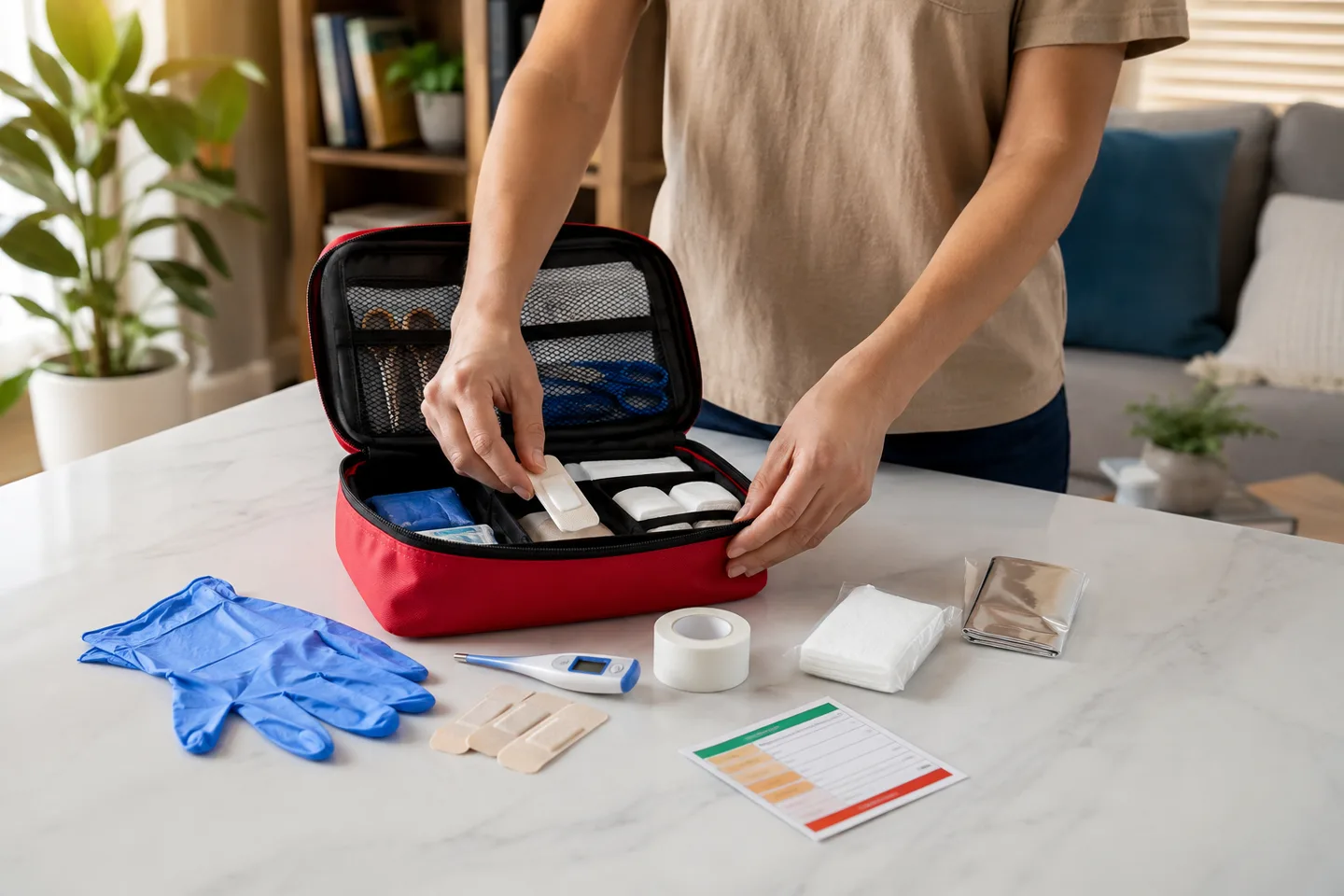
A first-aid kit should make small injuries easier to manage and urgent decisions faster. It is a bridge to care, not a miniature emergency department.
In short
- Build for likely minor injuries and household-specific needs.
- Include instructions and emergency information, not only supplies.
- Check contents and expiry dates twice a year.
- Severe bleeding, breathing difficulty, unconsciousness and stroke signs need emergency services.
Start with the container
Choose a clean, water-resistant container with compartments. Store it where adults can reach it quickly but children cannot. Everyone who may use it should know the location. Add a small travel version for the car or outings, accounting for heat-sensitive items.
Label the kit clearly and place emergency numbers, allergies, medicines and household address inside. In stress, written information reduces searching.
The practical core
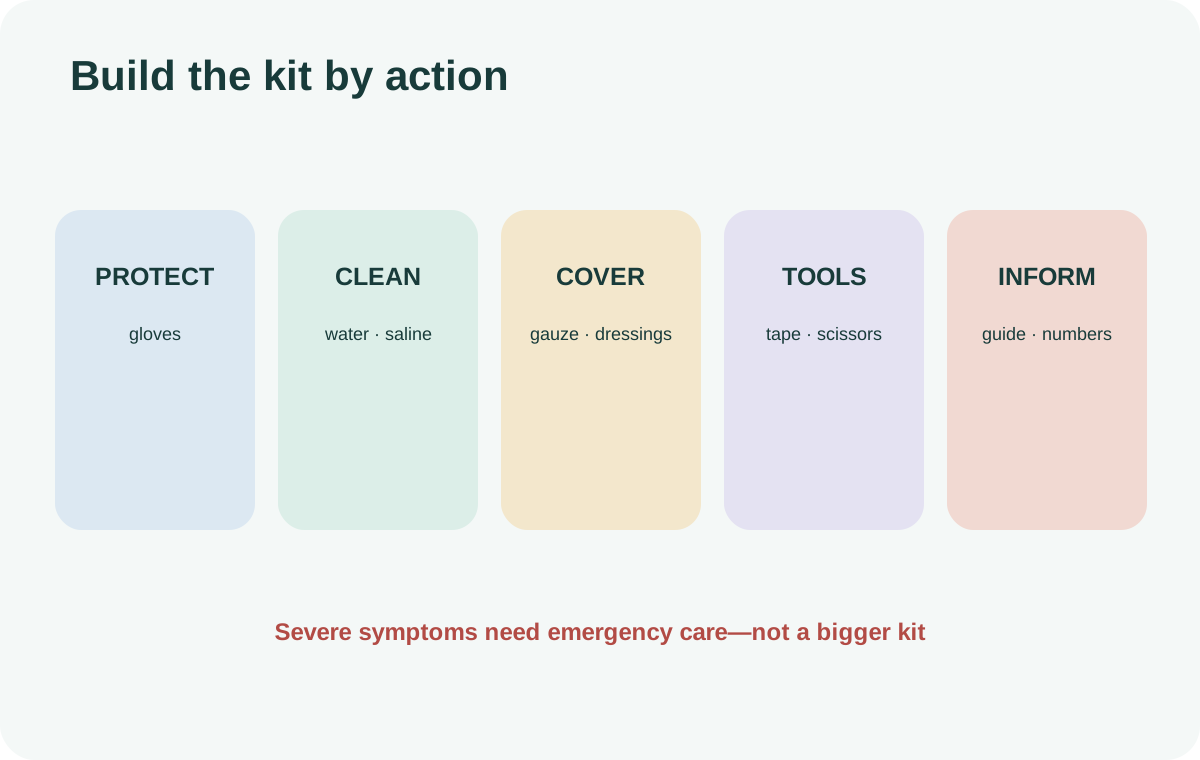
- Nitrile gloves in several pairs.
- Assorted sterile gauze pads and adhesive dressings.
- Roller bandage, medical tape and a triangular bandage.
- Antiseptic wipes for hands or intact surrounding skin and clean water or saline for irrigation.
- Blunt-ended scissors, tweezers and a digital thermometer.
- Instant cold pack and a simple first-aid guide.
Contents vary by local guidance. Avoid stocking tools you are not trained to use.
Medicines need a separate plan
Common pain or allergy medicines may be useful, but contraindications, dose, age and interactions matter. Keep original packaging and leaflets. Do not share prescriptions, and do not give aspirin to children unless a clinician instructs it.
Household-specific rescue medicines—such as an adrenaline auto-injector—require a current prescription, training and an expiry check. The kit does not replace an action plan.
For a small cut
Wash hands, use gloves, apply direct pressure, rinse the wound with clean running water and cover it. Do not pour harsh chemicals into tissue. Seek care for deep or gaping wounds, embedded objects, bites, contaminated punctures, loss of sensation, uncontrolled bleeding or tetanus concerns.
If blood soaks through, add material and maintain firm pressure rather than repeatedly lifting the first dressing.
For a minor burn
Move away from the source and cool the burn under cool running water. Remove jewellery near swelling if easy to do. Do not use ice, butter or adhesive material on the burn. Cover loosely with a sterile non-stick dressing.
Urgent assessment is needed for large, deep, electrical or chemical burns and burns involving the face, airway, hands, genitals or major joints.
Know when the kit is not enough
Call emergency services for severe bleeding, breathing difficulty, choking that does not clear, unconsciousness, seizure lasting beyond local emergency guidance, suspected stroke or heart attack, major trauma or anaphylaxis. Follow dispatcher instructions and use only skills you know.
Poisoning requires a poison information service or emergency guidance; do not induce vomiting unless instructed.
Maintain it
- Check after every use and restock.
- Twice yearly, inspect seals, batteries and expiry dates.
- Replace damaged or heat-exposed supplies.
- Refresh first-aid and CPR training.
- Update emergency and medical information.
Training is the most valuable item because it helps you recognise priorities and limits.