Joint-Friendly Cardio: Options Impact and Progression
Low-impact cardio can challenge heart and lungs while managing joint load through mode, fit and gradual progression.
 Priya ShahMovement & Mobility editor5 September 2026
Movement & Mobility · Practical guide
Joint-friendly cardio changes impact, support and dose—not the right to exercise. Walking, cycling, water exercise and machines can all be progressed around symptoms.

In short
- Low impact means less collision force, not zero joint load.
- Choose a mode with little or manageable pain that you can access repeatedly.
- Progress duration before intensity for many beginners.
- Hot swollen joints, locking, instability or rapidly worsening pain need assessment.
Separate impact from effort
Cycling can feel hard to the cardiovascular system while the seat supports body weight. Swimming removes much weight-bearing but uses repeated shoulder motion. Walking is weight-bearing yet adaptable. “Joint-friendly” describes the match between activity, person and dose, not a permanent ranking.
Arthritis guidance supports physical activity because it can improve pain, function and mood. Inactivity can reduce capacity and make ordinary tasks relatively harder.
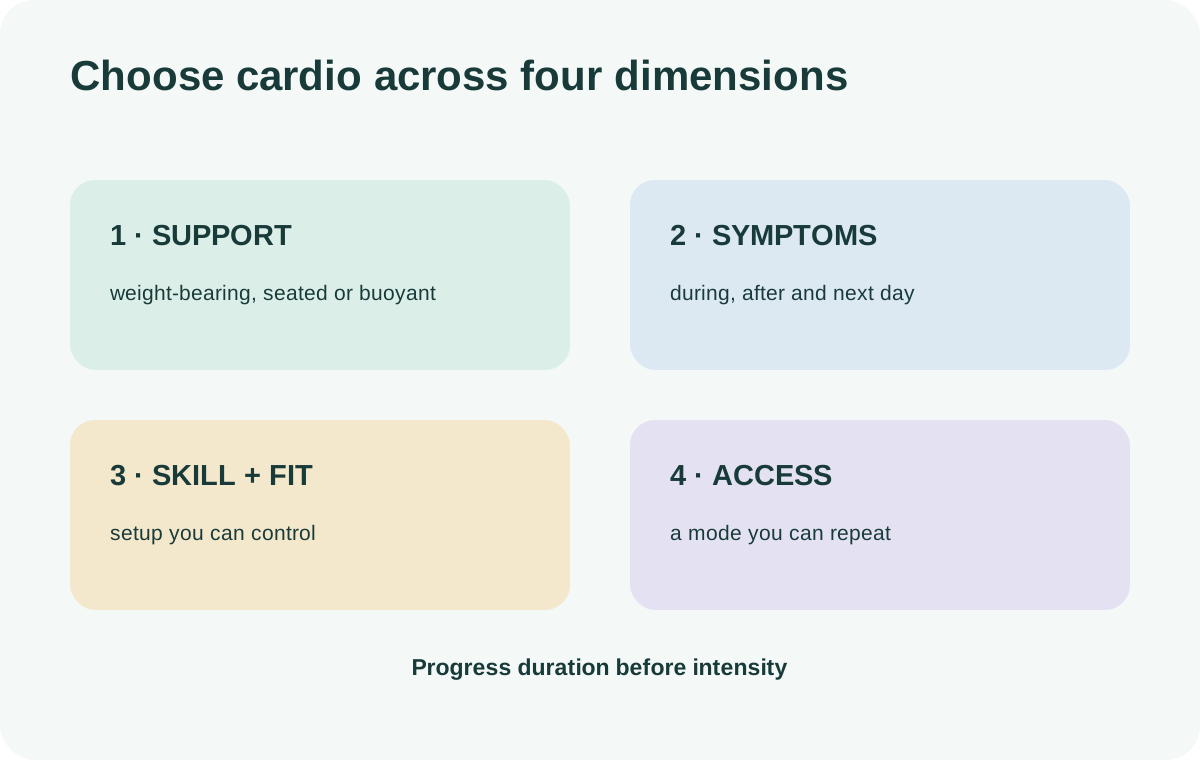
Compare common options
Walking: accessible and weight-bearing; change surface, slope, poles or intervals. Cycling: supported and smooth; adjust saddle to avoid excessive knee compression. Water exercise: buoyant and cool; entry, infection risk and swimming skill matter. Elliptical: continuous and supported by handles; the fixed path may suit some joints and not others.
Rowing, dancing and seated cardio are additional options. Variety can distribute repetitive load.
Use a symptom traffic light
Green: mild familiar discomfort that settles and no meaningful next-day loss of function. Amber: pain changes movement, lingers or increases swelling—reduce time, resistance or frequency. Red: sharp pain, locking, giving way, marked swelling, redness or inability to bear weight—stop and seek advice.
The exact acceptable response is individual. A clinician can adapt thresholds for inflammatory arthritis, recent surgery or joint replacement.
A low-impact starting plan
- Warm up easily for five minutes.
- Continue at a conversational pace for ten minutes.
- Cool down for five minutes.
- Repeat three times in the week.
- If symptoms are stable, add two to five minutes to one session.
Short five-minute bouts count. Build frequency and duration before harder resistance or speed.
Fit matters
On a bike, start with the saddle high enough that the knee remains slightly bent at the bottom of the pedal stroke. Keep resistance low while learning. On an elliptical, use the rails for balance without hanging body weight through the shoulders.
Shoes should be comfortable and appropriate to the surface; there is no universal corrective model. Pool footwear can reduce slip risk.
Strength supports cardio
Resistance training improves the capacity of muscles that absorb and produce force. Include tolerable strengthening for legs, hips and trunk, plus balance where relevant. It does not need to be done in the same session.
Mobility work can make setup more comfortable but does not need to force painful range.
Flare days
During a flare, reduce intensity, shorten the session, choose water or supported cycling, or move unaffected regions. Complete rest may be appropriate for an acutely injured or severely inflamed joint, but prolonged inactivity can worsen capacity. Follow the condition-specific plan.
Medication changes should be discussed with the prescriber, not used to mask escalating pain for training.
When to get help
Seek assessment after trauma, for a hot red joint with fever, inability to bear weight, progressive swelling, locking, instability or neurological symptoms. Chest pain, faintness or severe breathlessness are emergency stop signs regardless of joint comfort.