Morning Light Evening Light and the Timing of Sleep
Morning and evening light can shift circadian timing in different directions, making whole-day light contrast a practical sleep tool.
 Elena MoralesSleep & Recovery editor5 September 2026
Sleep & Recovery · Science guide
Light is the strongest environmental time cue for the body clock. Morning and evening exposure can shift sleep timing in opposite directions, but dose, timing and eye health matter.

In short
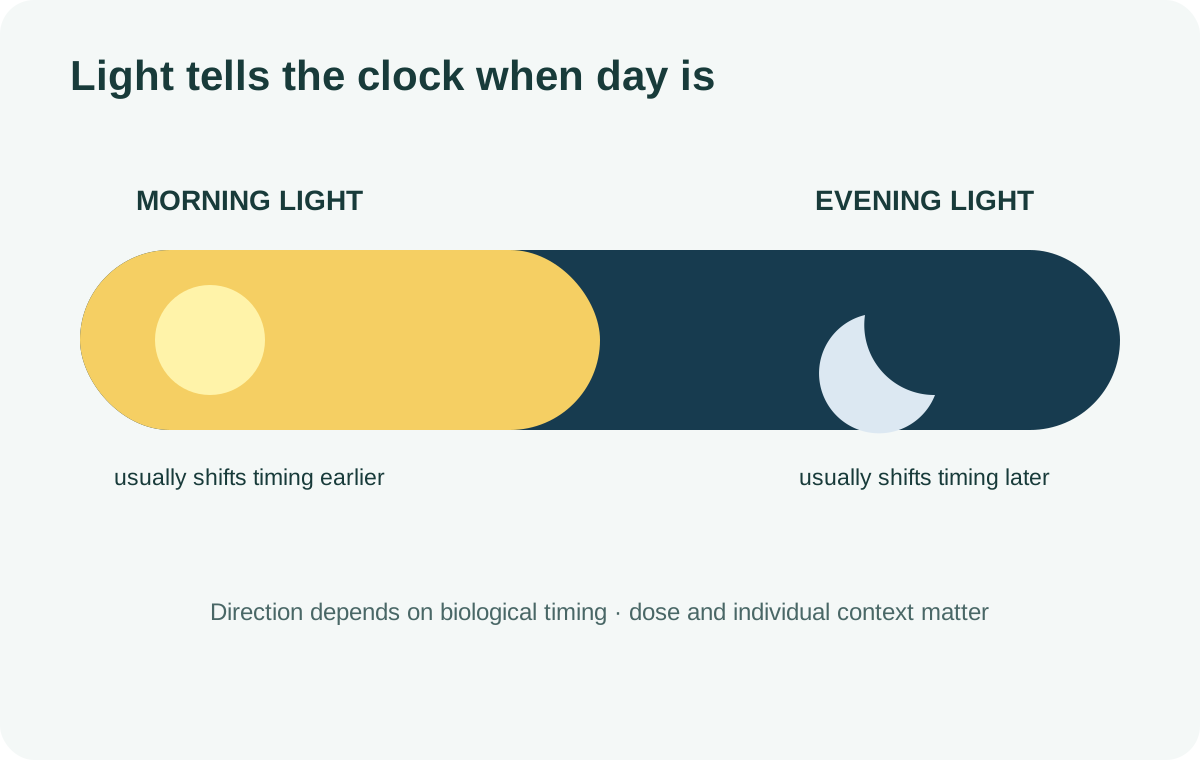
- Morning light tends to move the circadian clock earlier.
- Bright evening light tends to move it later.
- Outdoor light is usually much brighter than indoor lighting, even on cloudy days.
- Light treatment for a sleep disorder should be timed with professional guidance.
Sleep pressure meets the body clock
Sleep timing reflects at least two processes: pressure that builds with time awake and a circadian rhythm that organises alertness across roughly 24 hours. Light reaching specialised retinal cells helps align that clock with the external day. Melatonin is one output of this system, not an on/off sleep switch.
The same light can have different effects depending on biological time. This “phase response” is why generic advice to get more light can backfire if the goal and timing are unclear.
Morning light for an earlier pattern
For someone drifting too late, light soon after the intended wake time can reinforce an earlier schedule. Go outdoors after waking, combine light with a short walk and keep wake time reasonably consistent. Window glass and indoor distance reduce intensity; outdoor exposure is usually more effective.
Season, latitude, cloud, shade and eye physiology change the dose. There is no universal number of minutes that works for every person.
Evening light and delayed sleep
Bright light in the hours before bed can delay the clock and increase alertness. Screens contribute, but room lighting and proximity matter too. Reducing brightness, choosing warmer lower lighting and moving bright tasks earlier can help create contrast.
Blue-enriched light has strong circadian effects, yet “blue light” is not the entire story. Intensity, duration, timing and prior daylight exposure matter. Night mode is not permission for unlimited stimulating use.
Start with a whole-day plan
- Anchor wake time within a realistic range.
- Seek outdoor light and movement early in the day.
- Keep daytime spaces adequately bright.
- Dim the environment during the last one to two hours before bed.
- Keep overnight light low and brief when safe.
Behavioural content matters too. Work, conflict and endless novelty can delay sleep even on a dim screen.
Night work and early shifts
Shift workers face a conflict between work timing, daylight and social life. Strategic bright light, sunglasses during the commute, a dark sleep room and carefully timed naps can help, but plans differ by roster. Safety during the drive home comes first; do not wear very dark lenses if they impair vision.
People who rotate shifts may not fully adapt before the schedule changes again. Occupational scheduling and protected recovery are part of the solution.
Light boxes are treatment devices
Bright-light devices can be useful for some circadian rhythm disorders and seasonal depression, but timing determines effect. Adverse effects can include headache, eye strain, agitation or sleep disruption. Bipolar disorder, retinal disease, photosensitising medicines and some eye conditions require clinical advice.
Do not stare directly at a light box unless its instructions specifically require it. Choose a device with appropriate safety standards and discuss timing with a sleep or mental-health professional.
Track timing, not perfection
For two weeks, record wake time, first outdoor light, evening dimming, estimated sleep onset and daytime sleepiness. Look for trends rather than one bad night. Change one variable at a time.
Persistent insomnia, extreme sleep timing, loud snoring, breathing pauses or dangerous sleepiness need assessment. Light cannot correct every sleep disorder.