Listening to the Body: A Gentle Somatic Practice
A choice-led somatic practice that moves from the room to a neutral body anchor and back outside—without forcing sensation, diagnosing its cause or pushing through distress.
 Daniel OkaforStress & Emotional Health editor5 September 2026
Stress & Emotional Health · Somatic guide
Listening to the body can mean noticing one sensation without forcing it to change or treating it as a diagnosis. A gentle practice moves between the external room and a neutral internal anchor, with choice at every step.

In short
- Interoception is the sensing and interpretation of signals from inside the body.
- Accuracy, attention and meaning are different; a sensation does not diagnose its cause.
- Neutral sensations are valid anchors, and external orientation is always available.
- Stop if attention to the body sharply increases panic, pain, flashbacks or dissociation.
What “listening” can and cannot mean
The nervous system tracks breathing, heartbeat, temperature, fullness, pain, muscle tension and other internal signals. Awareness of those signals is shaped by context, expectation and past learning. This can support self-regulation, but it does not make every interpretation accurate. Tightness in the chest may relate to anxiety, exertion, reflux or a medical problem; body awareness cannot safely decide which on its own.
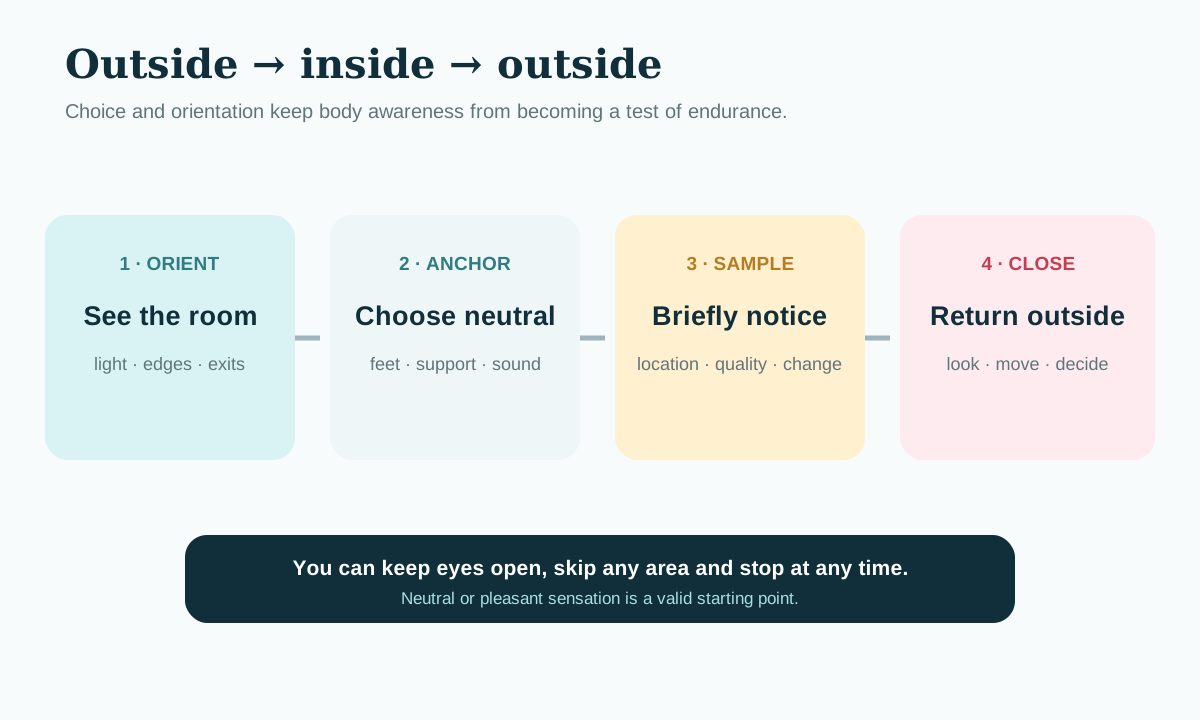
A four-minute choice-led practice
- Orient. Keep the eyes open. Name colours, edges, light and exits. Feel the chair or floor supporting you.
- Choose neutral. Pick the hands, feet, contact with clothing or an external sound. Avoid the most intense area.
- Sample. For one or two breaths, notice location, temperature, pressure or movement. Use ordinary words rather than searching for a hidden message.
- Return. Look around, move fingers and toes, and decide whether to stop or sample once more.
Use a volume dial, not an on/off switch
If a sensation feels like 7 out of 10, shift attention to something at 2 or 3: feet on the floor, fabric texture, or sound in the room. Move between them briefly. You can shorten the internal contact, widen the gaze, stand up or end the practice. The aim is flexible attention, not endurance.
Research on body-scan meditation alone is cautious. A 2022 review found a small effect on mindfulness versus passive control but insufficient evidence for broad health outcomes, with low-quality heterogeneous studies. Newer reviews find small associations between mindfulness and measures of interoception, but measurement uncertainty remains substantial.
Adaptations that preserve choice
| If this is difficult | Try |
|---|---|
| Breath focus increases panic | Use feet, hands, sound or visual orientation |
| Closing eyes feels unsafe | Keep a soft gaze and name objects |
| Pain dominates attention | Choose a neutral area or external anchor |
| Stillness increases agitation | Walk slowly or press feet gently into the floor |
| You feel unreal or far away | Stop, move, speak aloud and contact support |
When sensation needs care
New chest pain, severe breathing difficulty, fainting, sudden weakness, neurological symptoms or rapidly worsening pain need medical assessment rather than observation practice. Persistent body-based fear, trauma responses or dissociation may benefit from a qualified trauma-informed clinician who can pace interoceptive work.