Meal Timing: Useful Signal or Another Rule to Worry About
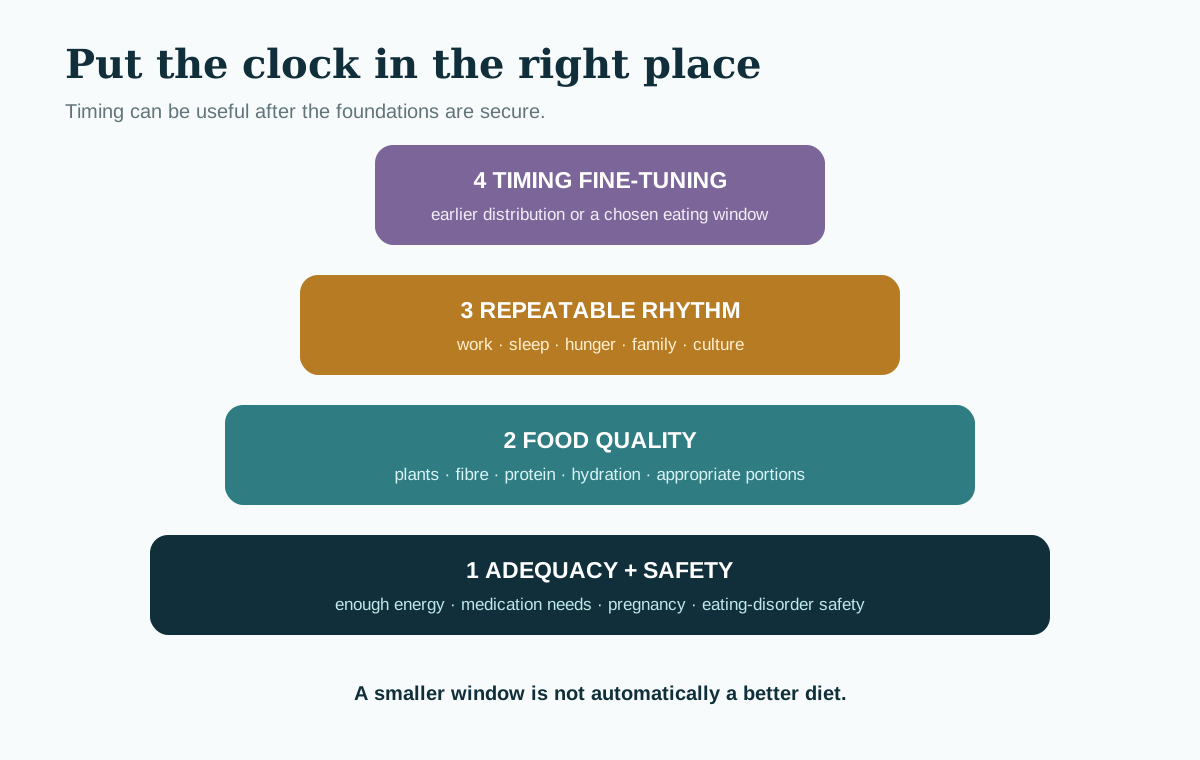
Meal timing may modestly help some outcomes, but adequacy, food quality, safety and a repeatable rhythm come before fine-tuning the clock.
 Noah WilliamsNutrition & Metabolism editor5 September 2026
Nutrition & Metabolism · Science guide
When you eat can influence hunger, sleep and metabolic responses. It is usually a fine-tuning lever, not a rule that outranks adequate nutrition, food quality or a schedule you can sustain.

In short
- Metabolism follows circadian rhythms, so the same meal can produce different responses at different times.
- Trials suggest modest benefits from some time-restricted or earlier eating patterns, especially for weight and glycaemic measures.
- Part of the effect may come from eating less, changing food choices or reducing late-night intake.
- A narrow window is not automatically better and can be inappropriate during pregnancy, growth, eating-disorder recovery or with some medications.
Why timing could matter
Glucose handling, hormones, digestion, alertness and sleep vary across the day under circadian control. Eating is itself a timing cue for peripheral clocks in organs and tissues. These mechanisms make meal timing biologically plausible, but plausibility does not tell us the best schedule for every person.
“Meal timing” covers several different strategies: eating more energy earlier in the day, reducing meal frequency, avoiding late-night eating or limiting food to a daily window. Trials often combine these changes, so headlines can make one intervention sound more uniform than it is.
What recent reviews find
A 2024 systematic review and meta-analysis of 29 randomised trials involving 2,485 adults found that time-restricted eating, lower meal frequency and earlier calorie distribution were associated with modest additional weight loss over at least twelve weeks. The authors emphasised that longer-term benefits remain uncertain and that the certainty of evidence varied.
Other meta-analyses report improvements in some glucose and insulin measures, with earlier time-restricted eating sometimes performing better than later windows. Results differ by population, intervention length, whether calories were restricted and the comparator diet. The evidence supports an option, not a universal prescription.
Timing versus eating less
When people shorten the eating window, they may remove a snack or meal without counting calories. They may also change alcohol intake, sleep timing or food quality. Some analyses suggest both energy deficit and circadian alignment contribute. It is difficult to assign every benefit to the clock alone.
This distinction matters because someone can follow a precise eight-hour window while eating an inadequate or monotonous diet. Another person can eat across a longer window with high-quality foods, stable energy and good metabolic health. The label does not decide the outcome by itself.
A low-anxiety experiment
| Question | Practical option |
|---|---|
| Late meals disrupt sleep or reflux | Move the last substantial meal earlier by 30–60 minutes. |
| Long gaps lead to evening overeating | Add a planned meal or protein-and-fibre snack earlier. |
| Morning medication requires food | Build timing around the prescription, not a fasting target. |
| Shift work changes weekly | Prioritise a repeatable anchor meal and avoid rigid perfection. |
| You want to try a window | Choose one that preserves enough nutrition and social flexibility. |
Observe hunger, energy, sleep, training, mood and gastrointestinal symptoms for two to four weeks. Do not judge the experiment only by daily weight, which varies for many reasons.
Earlier is not always practical
Family meals, religious practice, cultural norms and work schedules shape eating. A theoretically earlier dinner that isolates someone or causes chronic under-fuelling may not be an improvement. Benefits seen under supervised research conditions depend on adherence and context outside the study.
Athletes and active people may need food around training and enough opportunities to meet energy and protein needs. Older adults with low appetite may struggle to fit adequate nutrition into a short window. Personalisation is not failure to follow the science; it is part of applying it.
Who should avoid unsupervised restriction
Get clinical advice before time-restricted eating if you are pregnant or breastfeeding, under 18, frail, underweight, managing diabetes with glucose-lowering medication, taking medicine that must be taken with food or living with kidney, liver or gastrointestinal disease. A history of an eating disorder is a strong reason to avoid rigid fasting without specialist support.
Stop if the pattern produces dizziness, fainting, recurrent hypoglycaemia, binge eating, menstrual disruption or significant anxiety around food. Meal timing should make health more workable, not shrink life around a clock.
Sources and further reading
- Meal timing and anthropometric and metabolic outcomes: systematic review and meta-analysis
- Circadian alignment of food intake and glycaemic control: meta-analysis
- Time-restricted eating, energy deficit and circadian rhythm: systematic review
- Time-restricted eating and sleep: systematic review of randomised trials
- World Health Organization: Healthy diet