Focused Attention and Open Monitoring Meditation Compared
Focused attention returns to one object; open monitoring notices changing experience without selecting one target.
 Maya ChenMind & Brain editor5 September 2026
Mind & Brain · Comparison
Focused attention repeatedly returns to one object. Open monitoring notices changing experience without selecting one object. They train related but distinguishable skills.
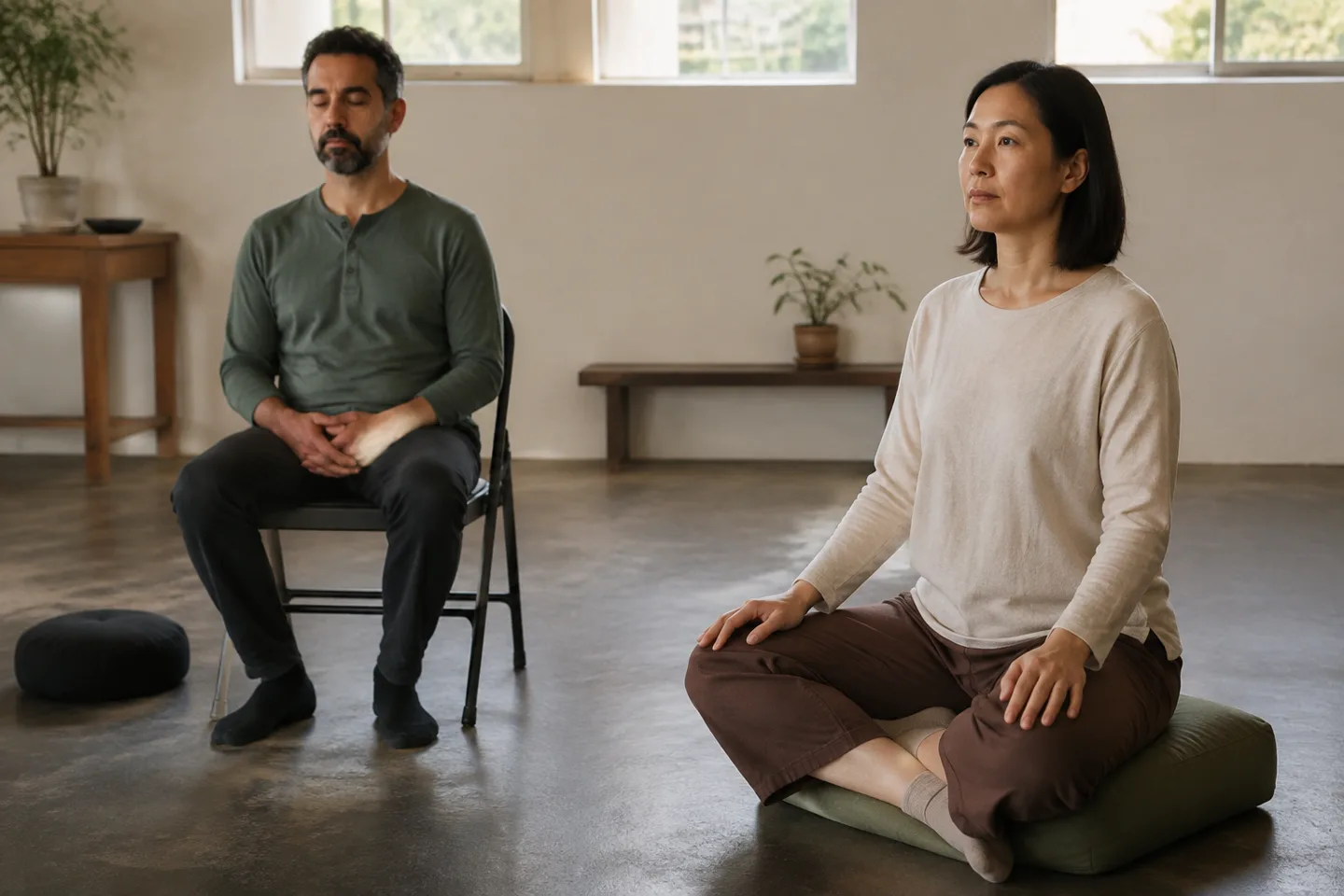
In short
- Focused attention uses a chosen anchor and returns after distraction.
- Open monitoring receives thoughts, sensations and sounds without sustaining one target.
- Many courses teach focused attention first and expand toward monitoring.
- Neither style requires a blank mind, special posture or brainwave target.
Focused attention
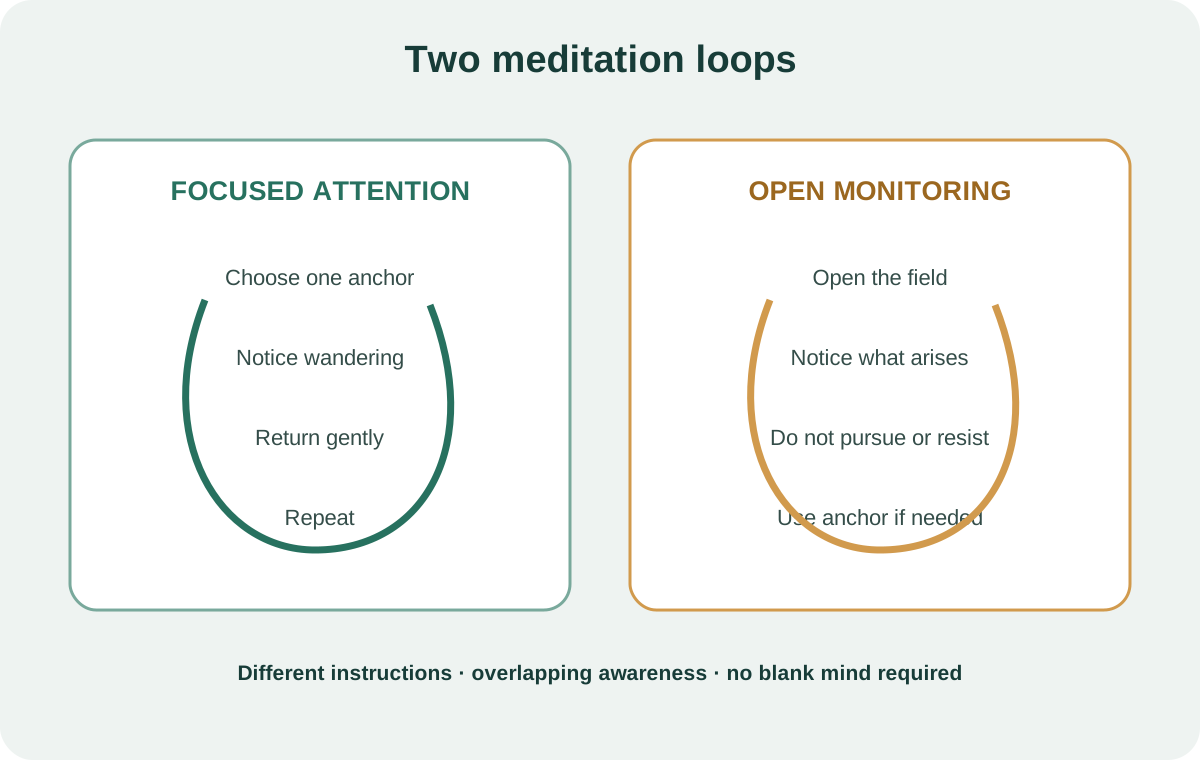
Choose the breath, a sound, body contact or visual point. Notice when attention leaves, release the distraction and return. The repetition is the training; wandering is not failure. A narrow, clear anchor can be helpful when attention feels scattered.
Start with two minutes. Label the departure lightly—thinking, hearing, planning—then return. Too much force produces tension, so use interest rather than suppression.
Open monitoring
Let experience change without selecting one continuing object. Sounds, sensations, emotions and thoughts arise and pass within awareness. The instruction is not to analyse everything or drift into fantasy; it is to notice events without automatically pursuing or resisting them.
This can feel spacious, but beginners may find it vague or overwhelming. Use an anchor as a home base whenever clarity drops. Open eyes and orient to the room if internal experience becomes destabilising.
What research suggests
Reviews distinguish neural and cognitive patterns across meditation types, supporting the idea that technique matters. But studies vary in definitions, teacher traditions, participant experience and control conditions. Small imaging samples and many analytic choices limit confident claims about a unique “meditation brain”.
A dismantling trial comparing eight-week trainings found some different subjective and EEG outcomes, but one study cannot rank the practices universally. The relevant question is which instruction helps which person and outcome under which conditions.
Choose by current need
| If you need… | Try… | Adjustment |
|---|---|---|
| A clear starting structure | Focused attention | Use an external sound if breath focus is uncomfortable. |
| Less automatic pursuit of thoughts | Open monitoring | Return to body contact when overwhelmed. |
| A transition between styles | Anchor, then open | Three minutes focused, two minutes receptive. |
| Grounding during high activation | Eyes-open external anchor | Meditation may not be the first tool; movement can help. |
A six-minute comparison
On day one, spend six minutes returning to one anchor. On day two, spend two minutes anchored and four minutes allowing the field to open. Repeat each condition three times. Afterward, record steadiness, strain, clarity and willingness to repeat.
Do not decide from whether thoughts occurred. Compare your relationship to them and your ability to finish the practice safely.
Common mistakes
Focused attention is not forced concentration, and open monitoring is not passive zoning out. Switching styles every thirty seconds prevents either instruction from becoming clear. Chasing unusual sensations or EEG bands turns practice into performance.
Guided audio can teach structure, but increasingly complex language can also crowd attention. Choose the minimum guidance needed.
Safety and support
Meditation can sometimes increase anxiety, traumatic recall, dissociation or agitation. Shorten the practice, keep eyes open, use external grounding or stop. People with severe symptoms, mania, psychosis or significant trauma may benefit from a trained, trauma-aware clinician or teacher.