The Mediterranean Eating Pattern Beyond the Headlines
A Mediterranean-style diet is a flexible pattern of plant foods, whole grains, pulses and unsaturated fats—not a branded menu or one superfood.
 Noah WilliamsNutrition & Metabolism editor5 September 2026
Nutrition & Metabolism · Science guide
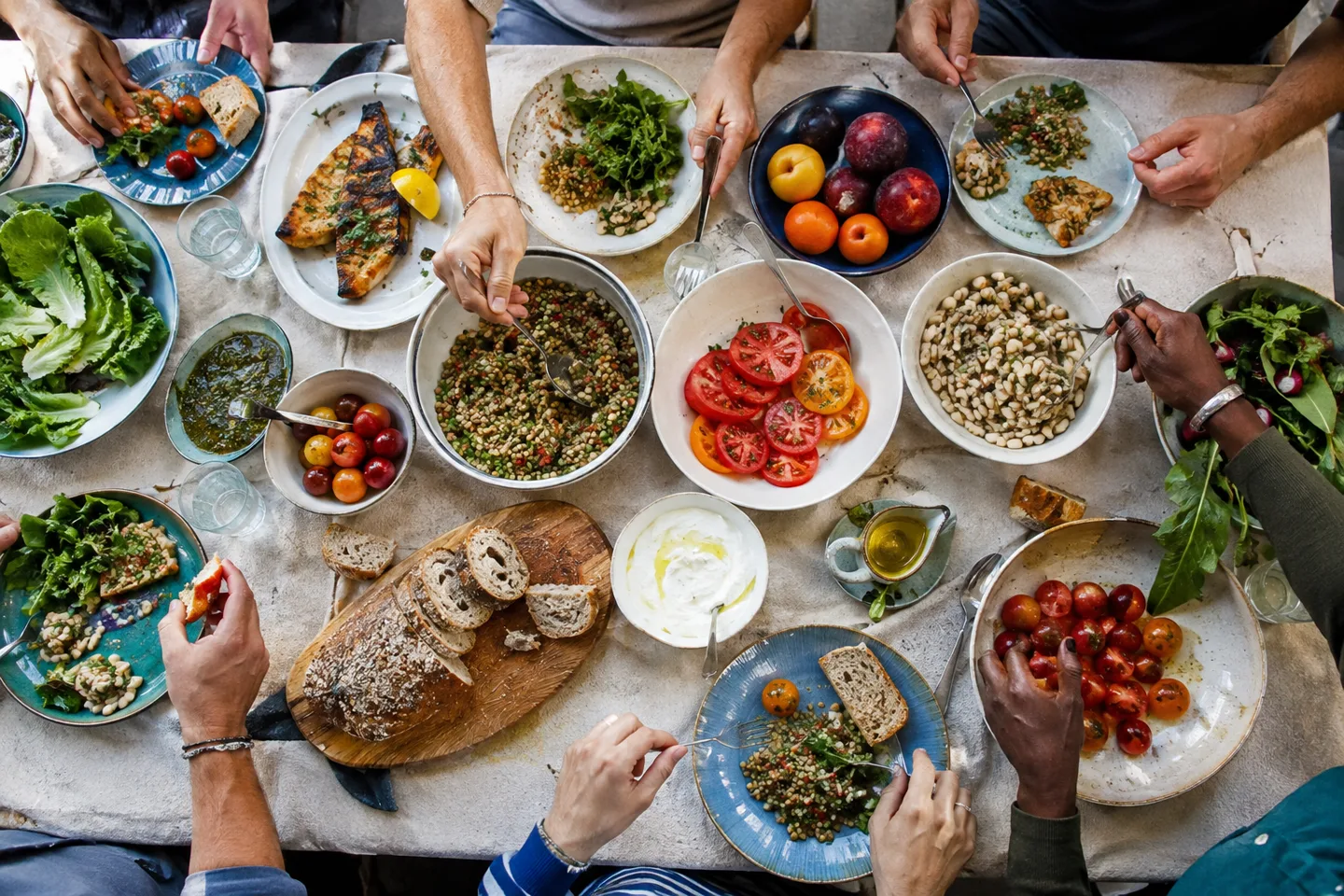
The Mediterranean diet is a flexible eating pattern, not a branded menu or permission to pour unlimited olive oil. Its strength lies in repeated food choices, meals and culture—not one superfood.
In short
- Build most meals around vegetables, pulses, whole grains, fruit, nuts and olive oil or another suitable unsaturated fat.
- Include fish and modest dairy according to preference and access; eat less processed meat and highly processed food.
- Health evidence applies to the overall pattern, not to isolated foods or supplements.
- Wine is optional and should not be started for health.
There is no single Mediterranean plate
The Mediterranean spans many countries, climates, religions and cuisines. Traditional patterns vary in grains, legumes, vegetables, seafood, dairy and fat. The research label describes overlapping features rather than one historical menu.
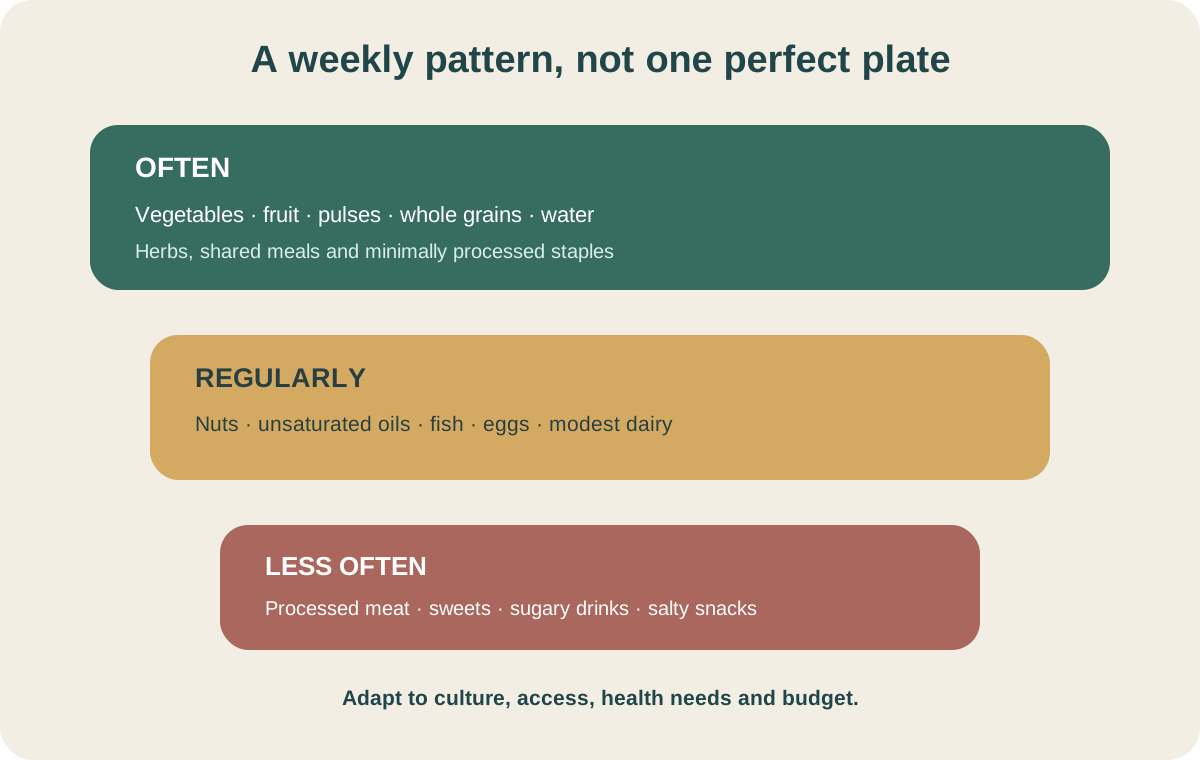
Those features generally include abundant plant foods, minimally processed staples, unsaturated fats, herbs and shared meals; animal foods and sweets are usually less dominant. A healthy adaptation in another region might use beans, oats, cabbage, rapeseed oil and local fish rather than importing expensive ingredients.
What the evidence can say
Observational studies consistently associate greater adherence to Mediterranean-style patterns with lower cardiovascular risk and other favourable outcomes, though such studies cannot eliminate all differences in lifestyle and income. Randomised evidence is smaller and more complicated.
The large PREDIMED trial tested Mediterranean-diet advice supplemented with extra-virgin olive oil or nuts in adults at high cardiovascular risk. Its original report was retracted and republished after irregularities in randomisation were identified. The corrected analysis still reported fewer major cardiovascular events in the intervention groups, but the history matters when describing certainty.
A Cochrane review found considerable heterogeneity and judged much of the trial evidence low or moderate quality. “Supported by evidence” is not the same as “settled in every population.”
The foods behind the headline
Vegetables and fruit provide fibre, micronutrients and variety. Frozen and canned options can be practical; choose lower-salt or no-added-sugar products when possible.
Pulses and whole grains supply fibre and affordable protein or energy. Lentils, chickpeas, beans, barley, oats and whole-grain breads are ordinary foundations.
Nuts and seeds are nutrient-dense; portions matter because energy is concentrated. Olive oil is rich in unsaturated fat, but it is still energy-dense. Use it to replace butter or other saturated fats, not as a medicine added without limit.
Fish, eggs and dairy can fit in different proportions. Plant-focused versions are possible if nutrients such as vitamin B12, iodine, calcium and protein are planned. Local dietary advice may differ.
What “less often” means
Highly processed meats, sugary drinks, sweets and salty snack foods are not forbidden, but they should not form the default. “Traditional” does not automatically mean healthy, and a Mediterranean label on packaged food says little about its sodium, sugar or overall composition.
Alcohol is not required. People who do not drink should not start for cardiovascular benefit. Alcohol raises cancer and other health risks; pregnancy, certain medication, liver disease, addiction history and many activities require avoidance.
A practical shopping formula
- Two or three vegetables that work across meals.
- Fresh or frozen fruit.
- Two pulses, canned or dried.
- One or two whole-grain staples.
- Nuts or seeds in a manageable portion.
- A source of unsaturated fat.
- Protein choices that fit culture, ethics, health and budget.
- Herbs, spices, garlic, lemon or vinegar for flavour.
Three adaptable meals
Bean-and-grain bowl: lentils or beans, a whole grain, two vegetables, herbs and an oil-and-lemon dressing. Tray meal: seasonal vegetables, chickpeas or fish, olive oil and spices, served with yogurt or a plant alternative. Fast pantry pasta: whole-grain pasta, tomatoes, greens and beans, finished with nuts or a modest amount of cheese.
The pattern can accommodate allergies, vegetarian diets and different cuisines. A registered dietitian can help with kidney disease, diabetes medication, gastrointestinal disease, eating disorders or complex nutrient needs.
How to start without a total overhaul
- Add a vegetable or pulse to one meal you already make.
- Replace one refined grain with a whole-grain option you enjoy.
- Use nuts, fruit or yogurt as a planned snack.
- Choose fish or legumes instead of processed meat once this week.
- Repeat the easiest change before adding another.
Adherence grows through taste, access and household agreement. A less “perfect” pattern sustained for years is more meaningful than an expensive two-week reset.