Memory Habits That Help Information Stick
Durable memory grows through retrieval, spacing, useful cues, variation and correction—not familiarity from rereading alone.
 Maya ChenMind & Brain editor5 September 2026
Mind & Brain · Practical guide
Information sticks when you repeatedly try to retrieve it, revisit it after some forgetting and connect it to useful cues. Familiarity from rereading is not the same as durable recall.

In short
- Recall first, then check: testing is a learning method, not only an assessment.
- Space sessions across days instead of repeating everything in one sitting.
- Mix related problem types once the basics are understood.
- Sleep, attention and meaningful organisation support the process.
Why rereading feels better than it works
When a page becomes familiar, the words are easier to recognise. That fluency can create the impression that you could produce the idea without the page. Often you cannot. Recognition supplies the cue; real life may not.
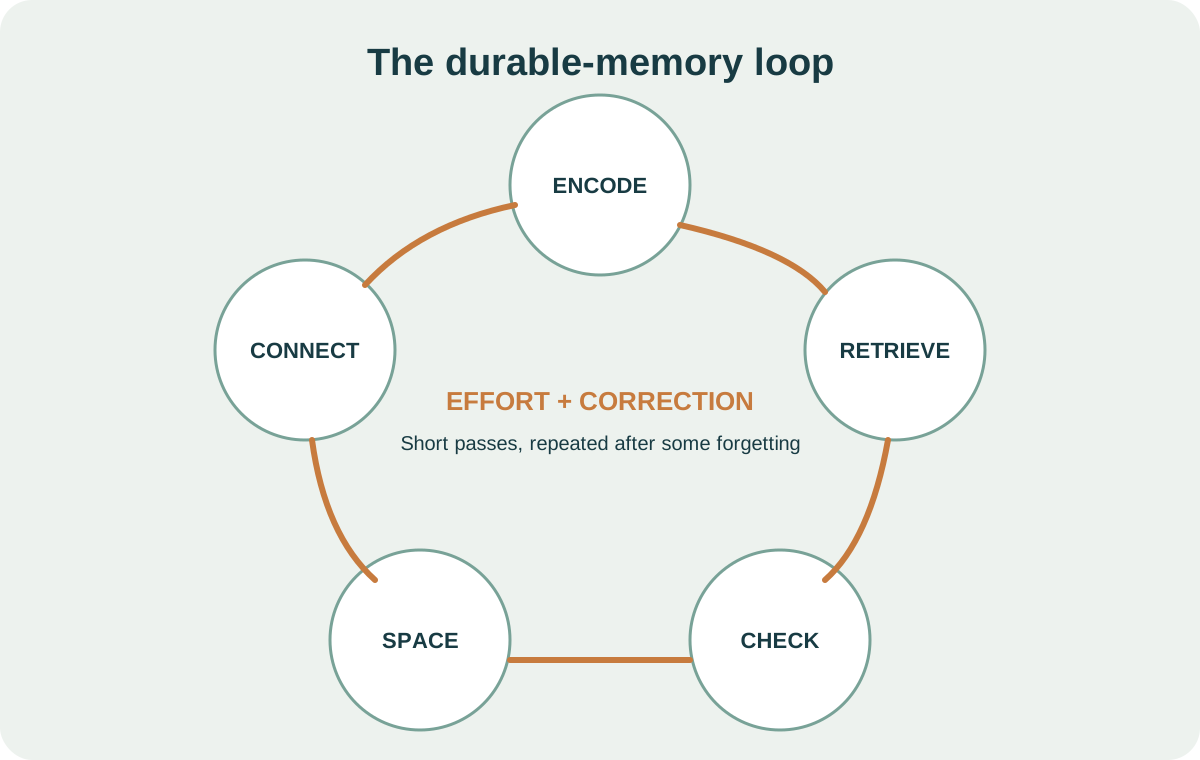
A better study loop alternates input and output. Read a short section, close it, write or say the central idea from memory, then compare. The gap between your answer and the source tells you what to study next. Highlighting can help mark structure, but colour alone does not create retrieval.
Habit one: retrieve before you review
Turn headings into questions. After a lesson, list the main points without notes. Explain a concept to an imagined beginner. Solve a problem from a blank page. Use flashcards that require an answer rather than cards that merely invite recognition.
Retrieval should be challenging but possible. If every attempt fails, reduce the unit, add a cue or study an example. If every answer is instant, expand the delay or ask for application. Always correct errors promptly; confident mistakes should not become rehearsed.
Habit two: let some forgetting happen
Spacing means returning after time has passed. A simple sequence might be later the same day, two days later, one week later and several weeks later. The ideal gap depends on how long you need to remember and how difficult the material is. There is no universal calendar.
Do not restart every review from zero. Begin with a short brain dump or quiz, focus on weak areas, and finish with another retrieval. Several brief sessions usually create more durable access than one equal-length cram.
Habit three: build cues and connections
Memory is cue-dependent. Ask how a fact relates to something you already know, when you would use it and how it differs from a nearby concept. Create one concrete example and one counterexample. For sequences, group steps into meaningful chunks rather than memorising isolated words.
Images, stories and locations can be powerful mnemonic cues, but they must point reliably to the target. An elaborate picture that you remember without remembering what it represents adds entertainment, not access.
Habit four: mix, compare and vary
Blocked practice repeats one problem type until the procedure feels smooth. Interleaving mixes related types so you must identify which method applies. It can feel slower while studying, yet the discrimination is often what a real test or workplace situation requires.
Use variation after an initial example is understood. Compare two diagnoses, grammatical forms or equations. Change the numbers, setting or wording. Ask what feature should trigger one response rather than another.
Habit five: protect attention and sleep
Encoding suffers when attention is repeatedly switched. Put the phone out of reach, define a small target and use a realistic focus interval. A 25-minute session with active recall can outperform a much longer session fragmented by notifications.
Sleep supports memory consolidation, but it does not replace learning. Preserve a consistent opportunity for sleep, especially after demanding study. Avoid using late-night cramming as a routine; fatigue can make both encoding and self-evaluation less reliable.
A 30-minute study template
- 3 minutes: retrieve yesterday’s central ideas without notes.
- 10 minutes: study one bounded section with a purpose.
- 7 minutes: close the source and answer questions or solve a problem.
- 5 minutes: check, correct and explain the error.
- 3 minutes: connect the material to an example or comparison.
- 2 minutes: schedule the next short retrieval.
Measure access, not hours
Track whether you can produce the answer after a delay, explain it in new words and use it in a new problem. A study log can record date, topic, retrieval score and next review. Do not turn the system into a second subject; a few marks are enough.
Memory changes, medication effects or concentration problems that disrupt daily life deserve professional assessment. Study tactics cannot diagnose or treat cognitive illness.