Micro-Recovery: What a Two-Minute Pause Can Realistically Do
Two minutes can modestly interrupt strain and clarify the next action. A practical reset that does not pretend to replace sleep, workload change or care.
 Daniel OkaforStress & Emotional Health editor5 September 2026
Stress & Emotional Health · Practical guide
Two minutes will not repay sleep debt or repair an impossible workload. It can, however, interrupt accumulated strain, create a little distance from a task and make the next action more deliberate.

In short
- Studies usually define micro-breaks as short pauses of ten minutes or less.
- A meta-analysis found small improvements in vigour and fatigue, but no clear overall performance gain.
- Break content and context matter: detachment, choice and a change of posture or attention may help.
- Micro-recovery cannot compensate for chronic overload, harassment, unsafe staffing or inadequate sleep.
What the evidence actually says
A 2022 systematic review and meta-analysis combined 22 independent samples with 2,335 participants. Micro-breaks produced small, statistically significant improvements in vigour and fatigue. The pooled effect on overall performance was not statistically significant, although performance benefits were more apparent for less cognitively demanding tasks and tended to increase with longer breaks.
That is a modest result, not a productivity miracle. Studies varied in break length, activity, work task and outcome. A separate review of 83 studies emphasised five features: who initiates the break, its duration, frequency, activity and subjective experience. There is no single recipe that fits every job.
A realistic two-minute practice
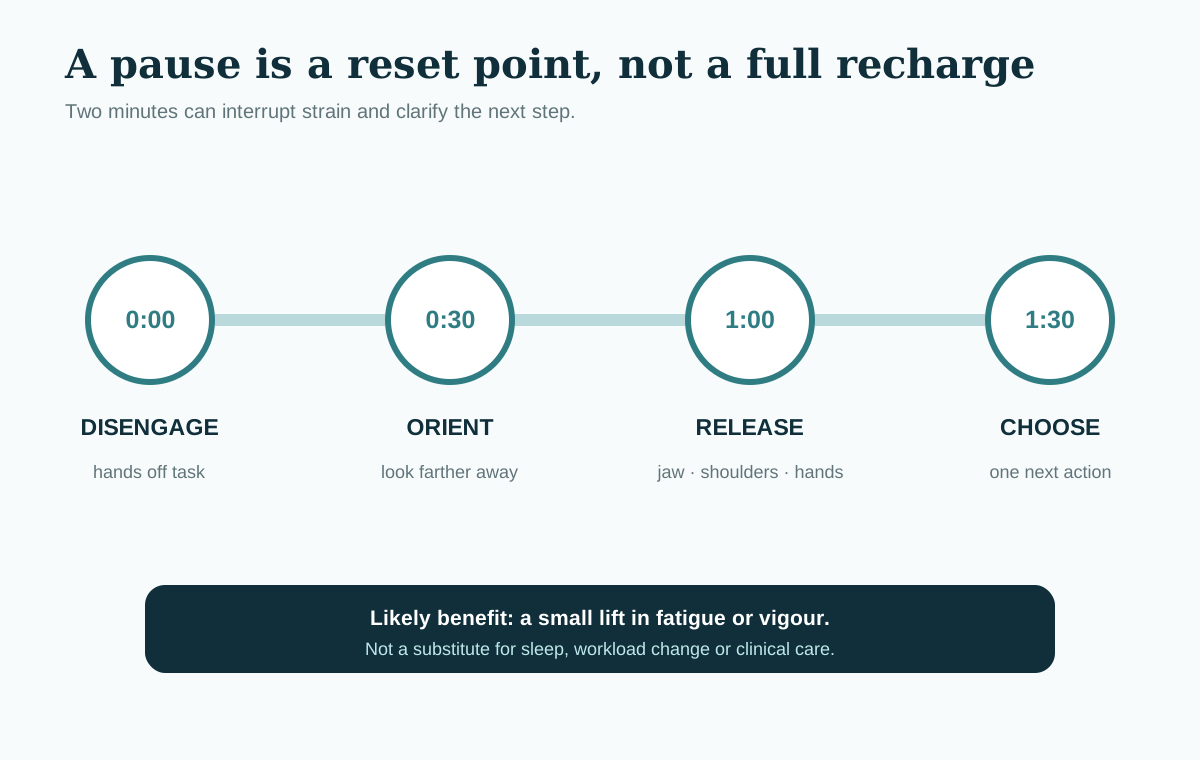
- 0:00–0:30 · Disengage. Stop typing or handling the task. Put both feet somewhere supported. Let the exhale happen without turning breathing into a test.
- 0:30–1:00 · Orient. Look at a more distant point, notice three ordinary objects or check where your body meets the chair. If closing your eyes feels unsafe, keep them open.
- 1:00–1:30 · Release avoidable effort. Unclench the jaw, lower the shoulders and soften the hands. Move gently if remaining still is uncomfortable.
- 1:30–2:00 · Choose. Name one next action: finish one paragraph, ask for clarification, drink water or move a task to a later block.
This is not a special nervous-system sequence. It is a convenient way to stop, shift attention, reduce unnecessary muscle tension and re-enter work intentionally.
Match the break to the strain
| If the strain is… | A brief change might be… |
|---|---|
| Visual concentration | Look farther away and blink normally rather than switching to a phone. |
| Static posture | Stand, walk a short distance or change position comfortably. |
| Emotional friction | Delay the reply, label the issue and decide whether support is needed. |
| Decision overload | Write the next concrete action and remove one non-essential choice. |
| Social isolation | Use the pause to send a simple, low-pressure check-in. |
A break that adds stimulation may not restore attention. Scrolling alarming news or continuing the same work conversation on another screen can preserve the load under a new label. Choose an activity that genuinely changes the demand for a moment.
When two minutes are not enough
Recovery depends on the dose of demand. The meta-analysis found that longer breaks were more likely to support performance, and highly depleting work may require more than ten minutes. Meals, sleep, time off, control over workload and psychologically safe management cannot be compressed into a breathing exercise.
In healthcare and other safety-critical fields, evidence about work breaks is still methodologically mixed. Responsibility should not be shifted entirely onto workers. A system that permits no safe break, relies on chronic overtime or rewards working while impaired has an organisational problem.
Make the pause easier to repeat
Tie it to a natural transition: after a call, before opening the next case, when a kettle boils or after completing one focused block. Use a quiet reminder rather than an alarm that creates urgency. If two minutes feels unrealistic, begin with thirty seconds of standing and looking away.
Do not score the pause by how calm you feel. A useful break may simply reveal that you are hungry, angry, in pain or need a longer stop. The information is part of recovery.
Safety and support
If pausing brings panic, dissociation or traumatic memories closer, orient to the room, keep your eyes open and choose external movement or contact rather than inward focus. Seek professional support when stress is persistent, disabling or accompanied by hopelessness, substance use or thoughts of self-harm.
Chest pain, fainting, new neurological symptoms or severe breathing difficulty require urgent assessment. A “reset” routine is not a way to explain away medical warning signs.