Mindful Eating Without Turning Lunch Into Homework
Mindful eating can be a brief non-judgemental check-in, not a rigid ritual or disguised weight-loss rule.
 Noah WilliamsNutrition & Metabolism editor5 September 2026
Nutrition & Metabolism · Practical guide
Mindful eating can be as small as noticing the first three bites. It is a way to gather information—not a test of purity, slowness or perfect hunger cues.

In short
- Mindful eating means bringing non-judgemental attention to eating experience.
- Evidence is more consistent for awareness and some problematic eating behaviours than for weight loss.
- Hunger and fullness are information, not rules.
- Structure and clinical care may be more important for eating disorders or unreliable appetite cues.
Remove the performance test
Online advice can turn lunch into homework: chew a fixed number of times, eliminate all distraction, rate hunger precisely and stop at a prescribed number. That rigidity conflicts with the point of mindfulness, which is to notice experience with curiosity.
A busy parent, shift worker or person with sensory needs may not have a quiet table. The practice should adapt to life, culture and disability.
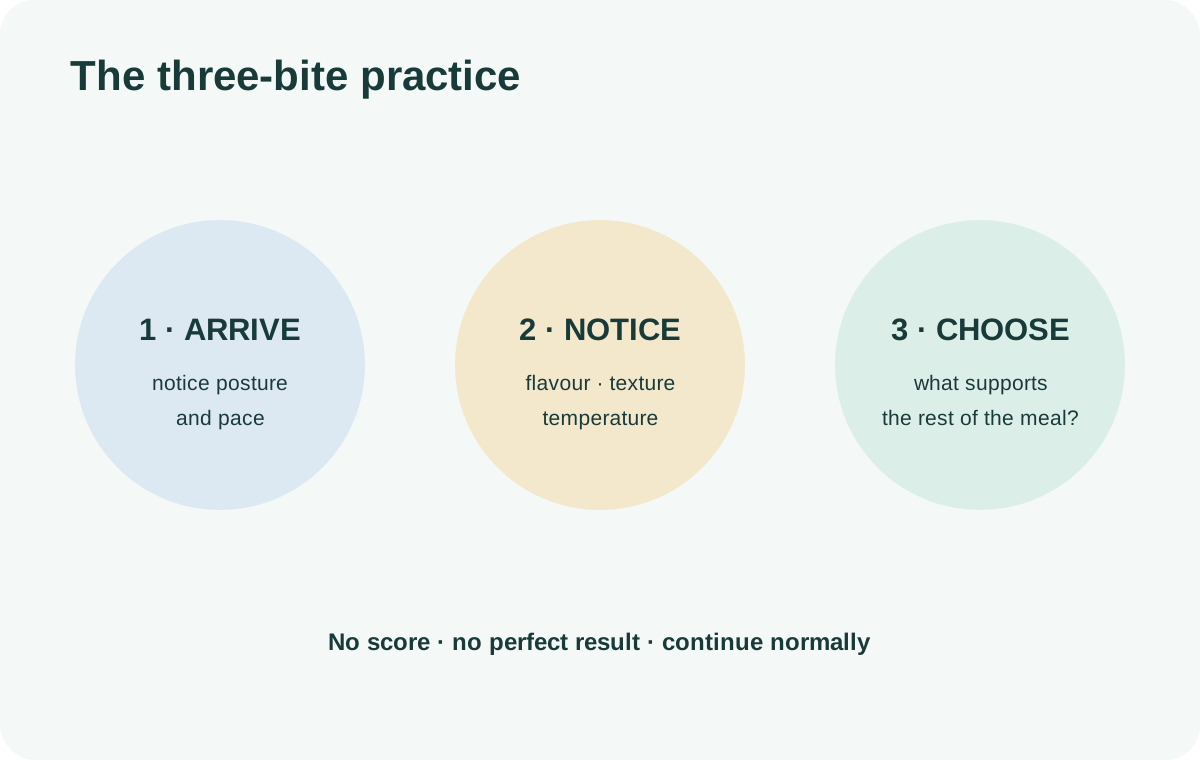
The three-bite practice
- Arrive: before the first bite, notice posture and pace.
- Notice: for three bites, attend to flavour, texture, temperature and chewing.
- Choose: ask what would make the rest of the meal satisfying and comfortable.
The answer may be to keep eating, add food, slow down, have water or enjoy conversation. There is no morally correct result.
What research supports
Reviews suggest mindfulness-based approaches may help binge eating, emotional eating and eating in response to external cues. Effects and study quality vary. Evidence for weight loss is not compelling or consistent, and mindful eating should not be marketed as a hidden calorie-control technique.
A recent meta-analysis found small reductions in intake in controlled settings but no clear effect on reported appetite, with larger effects in laboratory studies. Real-world benefit and mechanisms still require better research.
Hunger is multidimensional
Physical signals include stomach sensations, energy, concentration and irritability. Appetite is also shaped by time, availability, medication, stress, habit, culture and pleasure. A person may appropriately eat without strong hunger because the next opportunity is hours away.
Fullness can lag behind eating, but slowing down is not always feasible or therapeutic. Some people have muted or confusing interoceptive cues. Regular meals may provide needed reliability.
Use curiosity after difficult eating
Replace “I failed” with observation: What happened before? Was I underfed, stressed, distracted, restricted or seeking comfort? What would make the next meal more supportive? This turns an episode into information rather than evidence about character.
Compensation through skipping meals or excessive exercise can perpetuate a restrict–overeat cycle. Return to a regular pattern and seek help if the cycle persists.
Distraction is not automatically bad
Company, music or a familiar programme can make eating possible or pleasant. The useful question is whether the distraction disconnects you from needs or supports them. Try reducing only the distraction that creates a problem—perhaps work email—rather than enforcing silent meals.
Practise one dimension
Choose sensory attention, pace, satisfaction or emotion for a week. At one meal a day, notice that dimension for a minute. A small repeated practice is more informative than trying to monitor everything.
If the food is unsatisfying, that matters. Nutrition includes adequacy and enjoyment, not only restraint.
When mindful eating is not enough
Eating disorders require specialist assessment and treatment. Mindfulness can be part of care for some people, but unstructured attention to bodily cues may increase distress. Diabetes, gastrointestinal disease, pregnancy, medication effects and nutritional rehabilitation can require planned intake regardless of momentary appetite.
Seek help for recurrent bingeing, purging, significant restriction, rapid weight change, fainting, obsessive rules or fear that disrupts life.