Why Short Movement Breaks Matter During a Sitting Day
Frequent light movement can interrupt prolonged sitting and improve some short-term responses. A practical, accessible menu that complements regular exercise.
 Priya ShahMovement & Mobility editor5 September 2026
Movement & Mobility · Practical guide
A workout later does not make every hour of sitting irrelevant. Brief bouts of standing and light walking can interrupt prolonged sitting, change muscular demand and improve some short-term cardiometabolic responses.

In short
- Sedentary behaviour means waking time spent sitting, reclining or lying with low energy expenditure.
- Experimental studies find that frequent light walking breaks can improve post-meal glucose, insulin and some blood-pressure or vascular measures.
- There is no single proven break interval for everyone; feasibility and total movement matter.
- Breaking up sitting complements aerobic and strength exercise—it does not replace them.
Why the pattern matters
Two people can each sit eight hours but accumulate it differently. One may remain seated for four-hour blocks; the other stands for calls, walks to lunch and changes position often. Research asks whether those interruptions alter short-term physiology or long-term health beyond total sitting time.
In controlled crossover studies, participants complete days of uninterrupted sitting and days with planned standing or walking breaks. Frequent light walking generally produces more consistent improvements in post-meal glucose and insulin than standing alone. Reviews also report changes in blood pressure and vascular function, although protocols and populations vary.
What a break can look like
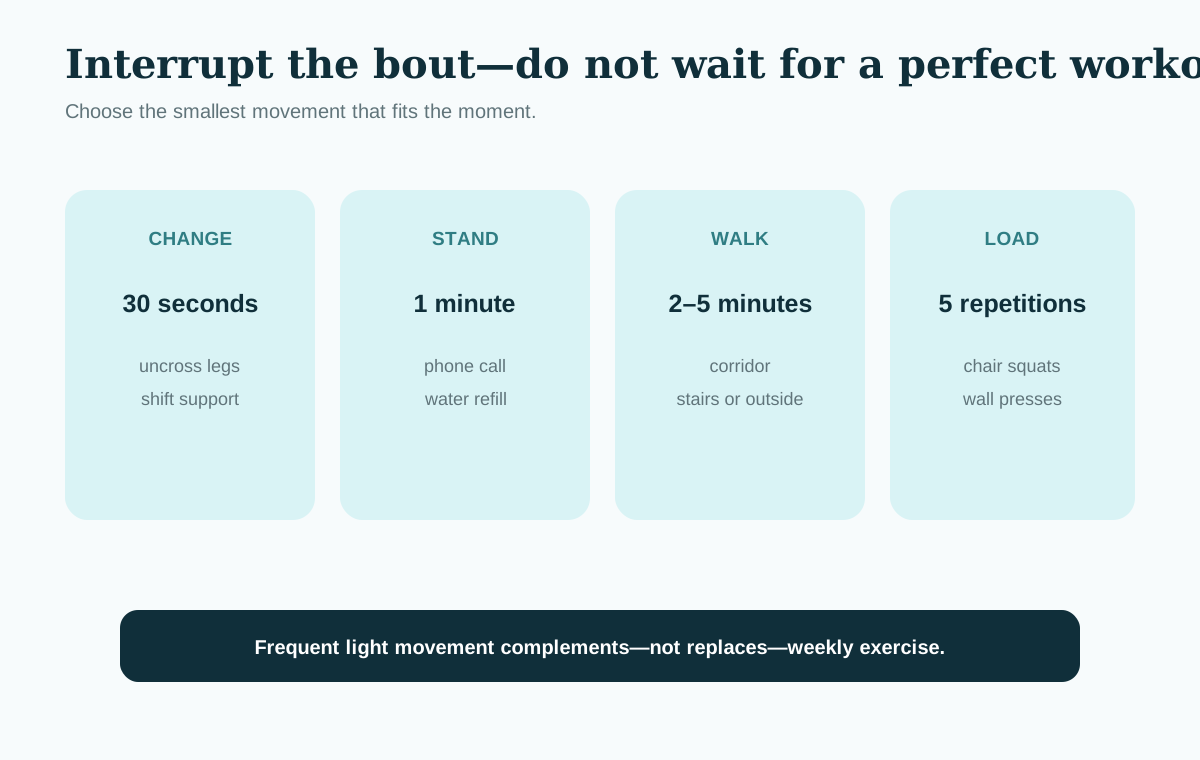
A break does not have to be exercise clothing and elevated heart rate. Stand while a file loads, walk during an audio call, refill water, use a farther bathroom or perform five controlled chair squats. Wheelchair users might change propulsion, perform pressure relief as individually advised, reach through comfortable ranges or use upper-body movement.
The best option changes the demand without creating pain or workplace risk. If standing is difficult, seated calf raises, marching, trunk turns or repeated sit-to-stand with support may fit. The evidence base is stronger for some strategies than others, but accessibility determines whether a plan can happen.
How often?
Laboratory studies have tested breaks as frequent as every 20–30 minutes and as long as several minutes. That does not establish a universal timer. Start with a natural transition every 30–60 minutes, or after one focused work block, and observe whether stiffness, concentration and energy improve.
If the reminder is constantly ignored, lower the friction. Put the printer or water away from the desk, stand for the first minute of a meeting or pair movement with saving and closing a task. A schedule that survives busy days is more valuable than an ideal interval used twice.
A menu for different constraints
| Constraint | Possible interruption |
|---|---|
| Camera-on meeting | Change foot position, stand at a raised surface or move immediately after. |
| Limited space | March gently, calf-raise or sit-to-stand beside the chair. |
| Pain with standing | Use a comfortable seated movement and seek individual advice. |
| Deep-focus task | Move at a planned transition rather than breaking every few minutes. |
| Long travel | Walk when safe, change position and follow clot-prevention advice for your risk. |
What movement breaks cannot do
They do not cancel an otherwise inactive week. The World Health Organization recommends regular moderate-to-vigorous activity and muscle strengthening while also limiting sedentary time. Light interruptions, purposeful exercise and sleep each solve different problems.
They also cannot fix workstation design, insufficient staffing or a job that denies basic breaks. Employers can support movement through autonomy, accessible routes, meeting norms and task design rather than making workers individually responsible for an immovable system.
Safety boundaries
Use support if balance is uncertain and keep walkways clear. After surgery, during pregnancy or with cardiovascular, neurological or musculoskeletal conditions, adapt frequency and movement with professional guidance. Stop for chest pain, fainting, new severe breathlessness, sudden weakness or escalating pain.
Leg swelling, warmth and pain—especially on one side—or sudden shortness of breath require prompt medical assessment. Movement reminders are not treatment for a suspected blood clot.