Multitasking Is Usually Task Switching: Here Is the Difference
Most demanding multitasking is rapid task switching, with hidden costs in reorientation, interference, error and context recovery.
 Maya ChenMind & Brain editor5 September 2026
Mind & Brain · Debunk
When two tasks require thought, we usually do not perform them at the same instant. Attention switches between task sets, and each switch brings reorientation, interference and a greater chance of error.

In short
- Routine actions can overlap, but two demanding tasks compete for limited control.
- Responses are typically slower and more error-prone after a switch.
- Preparation reduces switch cost but does not erase it.
- Batching, protected focus and clear handoff notes make switching less expensive.
What task switching means
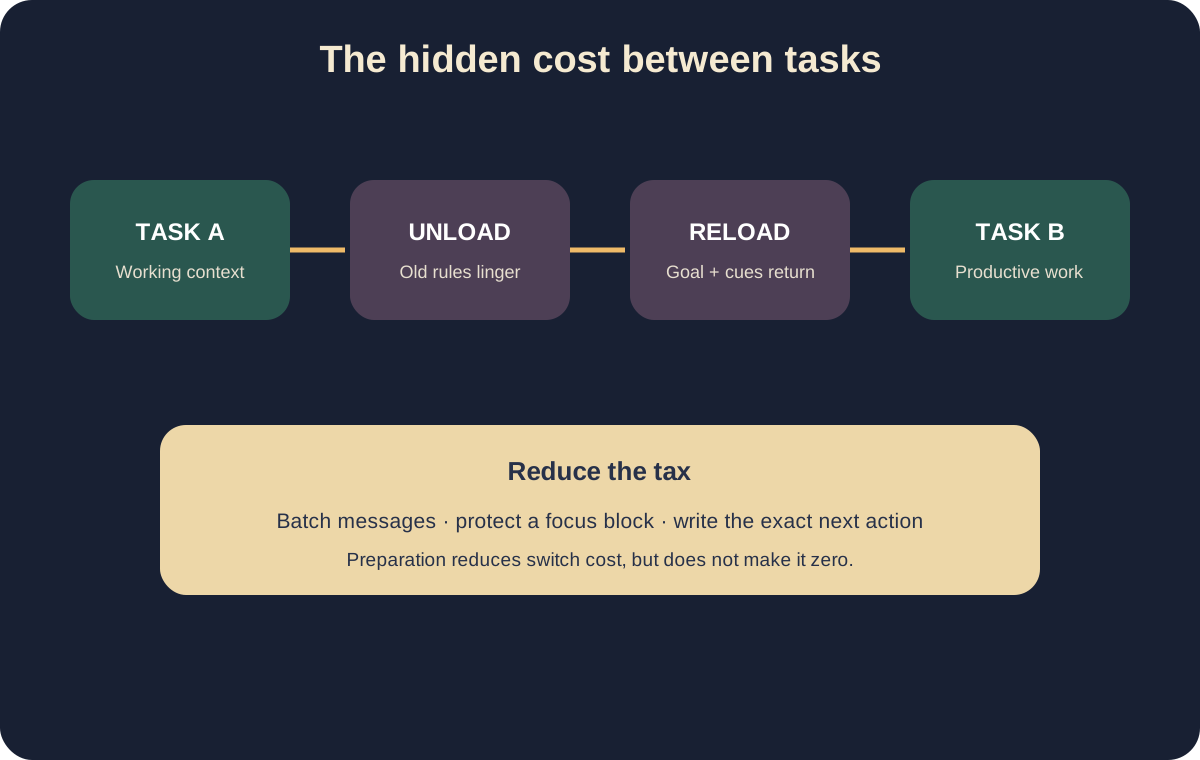
A task set is the current bundle of goals, rules and relevant information. Replying to an email uses one set; calculating a budget uses another. When you change, the brain must activate the new rules while the old ones still carry some momentum.
Laboratory studies find a switch cost: performance immediately after a change is slower and often less accurate. The effect is small in a single trial but can accumulate across a day of fragmented work.
When simultaneous activity is possible
You can walk while talking because well-practised motor control leaves room for conversation—until the terrain becomes difficult. You can fold laundry while listening to familiar music. These examples combine an automated or low-demand activity with another task.
Performance changes when both tasks need language, working memory, visual attention or rapid decisions. Writing while following a meeting, driving while typing and solving two novel problems are not efficient parallel processing.
Why it can feel productive
Switching creates visible activity: more tabs, messages and partially advanced tasks. Novelty also relieves boredom. The subjective feeling of speed does not reveal error rate, depth or time required to resume.
Some roles genuinely require monitoring several streams. Expertise helps people prioritise and recover, but it does not remove cognitive limits. The answer is better triage, interfaces and procedures—not blaming the operator.
Four costs to notice
- Orientation: deciding what matters now.
- Reloading: reconstructing the problem and next step.
- Interference: rules or details from the previous task intrude.
- Residue: attention remains partly attached to unfinished work.
A two-second notification can cost more than two seconds if it changes the task set.
Design a lower-switch work block
- Choose one concrete output for the next 25–50 minutes.
- Close unrelated tabs and silence nonessential alerts.
- Keep a capture note for thoughts that belong elsewhere.
- Stop at a natural boundary or write the exact next action.
- Batch messages at a defined time unless the role requires immediate response.
Use handoff notes
When interruption is unavoidable, spend ten seconds recording where you are: “Reviewed rows 1–40; next check missing values in column C.” This external cue reduces the reconstruction load. For complex work, note the goal, current hypothesis, evidence and next test.
Keep the note specific. “Continue project” is not a useful reload point.
Match communication to urgency
Teams create switching through norms. Mark what is urgent, define expected response windows and use asynchronous channels for information that does not need an immediate answer. Protect shared focus periods. Avoid sending many small messages when one structured update will do.
People with caregiving duties, service work or accessibility needs may not control interruptions. Improvements should address workload and system design, not present uninterrupted concentration as a personal virtue.
Do you need more stimulation?
A second low-demand stimulus can sometimes help arousal or persistence. Instrumental music, standing or a fidget may support focus for some people. Test the effect on output and comprehension. If lyrics compete with language work or video reduces recall, the combination is not helping.
A practical experiment
Compare two 30-minute sessions on similar work. In one, leave notifications on and alternate tasks. In the other, protect a single goal and batch messages afterward. Record completed units, errors, stress and how much context you remember. Your environment may reveal the cost more clearly than a productivity slogan.