Muscle Mass and Healthy Ageing: Why Strength Matters
Muscle supports independence, recovery and balance; progressive resistance training improves strength and function throughout older age.
 Sofia LindbergLongevity & Prevention editor5 September 2026
Longevity & Prevention · Science guide
Muscle supports far more than appearance. It helps people rise, carry, recover from illness and stay independent. Strength and function often matter more than chasing one body-composition number.
In short
- Age-related loss involves muscle quantity, strength and physical performance.
- Progressive resistance training improves strength and function in older adults.
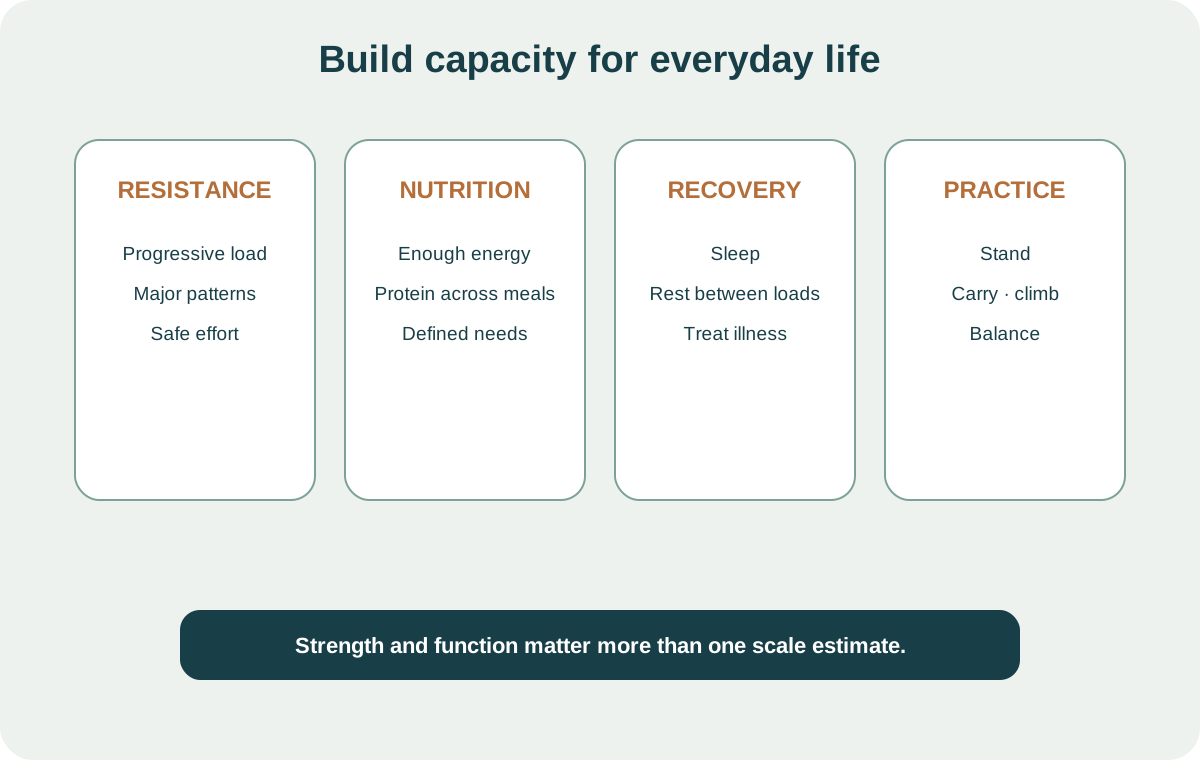
- Protein, total energy, sleep and treatment of illness support adaptation.
- Start from current ability and progress; frailty is a reason to individualise, not to abandon movement.
Mass, strength and function are not identical
Two people with similar measured muscle mass may differ in strength, balance and walking ability. Sarcopenia frameworks increasingly emphasise low strength and performance alongside low muscle quantity or quality. A consumer scale cannot diagnose the condition.
Function is the reason muscle matters: getting out of a chair, carrying groceries, using stairs, recovering from a stumble and tolerating a period of illness. Training should connect measurement to life.
Why muscle tends to decline
Biological ageing contributes, but inactivity, insufficient protein or energy, chronic disease, inflammation, medication effects and hospitalisation also matter. Loss accelerates during bed rest. The trajectory is not fixed: older muscle still responds to training.
A 2024 meta-analysis found supervised resistance training increased lower-extremity muscle size and fibre area in adults aged 65 and older. Other reviews in sarcopenia show meaningful improvements in strength and physical performance, often larger than changes on body-composition measures.
The basic training ingredients
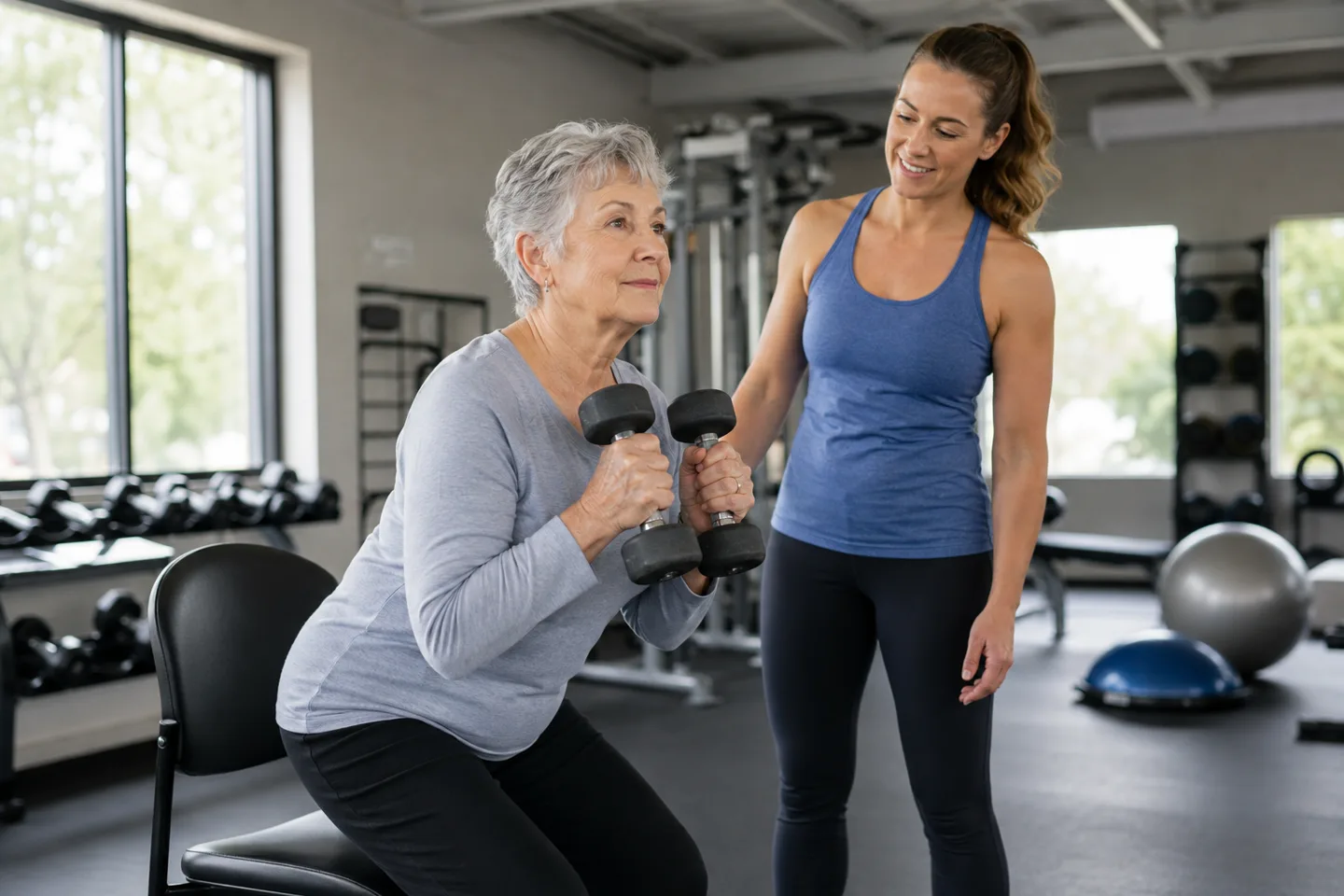
Train major movement patterns two or more days per week when appropriate: sit or squat, hinge, push, pull, carry, calf raise and step. Begin with a range that feels controlled. Machines, bands, body weight and household objects can all provide resistance.
Progress one variable at a time: repetitions, range, load, sets or exercise complexity. The final repetitions should require effort while technique remains acceptable. Pain, balance risk and medical conditions may call for supervision.
Power and balance
Power is the ability to produce force quickly—for example, standing promptly or catching balance. Once a movement is safe and controlled, some older adults benefit from performing the lifting phase with deliberate speed under guidance.
Balance work should also be challenging enough to adapt while staying safe: reducing hand support, changing stance or stepping in several directions near stable support. The exact programme depends on fall risk.
Protein and energy
Muscle cannot adapt without sufficient food. Include a protein source across meals—dairy, eggs, fish, meat, soy, pulses or suitable alternatives—and enough overall energy. Needs vary with body size, kidney function, illness, appetite and training.
Supplements are convenient, not mandatory. A clinician or dietitian should guide intake in kidney disease, swallowing difficulty, unintentional weight loss or complex medical care. Vitamin D or other supplements should correct a defined need, not replace training.
A practical starting week
- Choose four supported movements you can perform safely.
- Do one or two sets of six to twelve controlled repetitions.
- Leave at least a day before repeating hard work for the same muscles.
- Walk or move on other days according to ability.
- Record what you did and one functional marker, such as chair-rise ease.
Increase slowly after the current dose feels repeatable. Consistency over months matters more than one punishing session.
Measure what matters
Useful measures include repeated chair stands, walking speed, grip strength, load carried and confidence on stairs. Body weight or a smart-scale muscle estimate can fluctuate with hydration and algorithms. Trends require the same method and conditions.
If strength falls rapidly, daily tasks become harder or weight is lost unintentionally, seek assessment. Causes may include illness, malnutrition, neurological disease or medication effects.
Safety
Stop and seek urgent help for chest pain, fainting, new severe breathlessness or stroke symptoms. New focal weakness, repeated falls and persistent bone or joint pain deserve clinical review. People with osteoporosis may need technique advice to avoid risky loaded spinal movements.