Napping Well: Timing Duration and Trade-Offs
Choose a nap around the next task, actual sleep opportunity, wake-up buffer and the coming night—not a universal magic duration.
 Elena MoralesSleep & Recovery editor5 September 2026
Sleep & Recovery · Practical guide
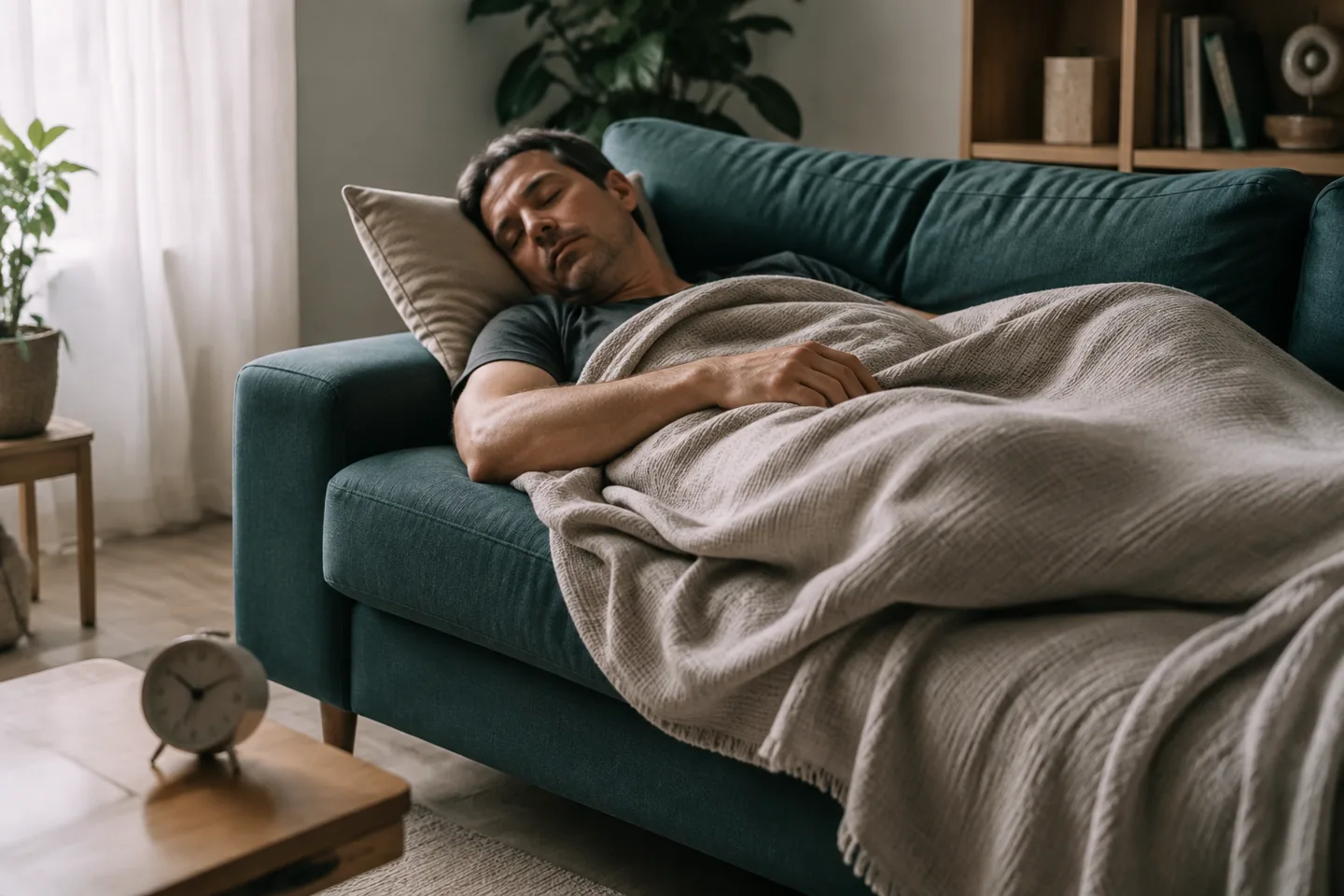
A nap can improve alertness and performance, especially after short sleep. Its value depends on timing, actual sleep, wake-up buffer and whether it protects or disrupts the next night.
In short
- Brief daytime naps can improve alertness and some cognitive or physical performance.
- Short naps do not guarantee avoidance of deep sleep or sleep inertia.
- Earlier afternoon timing is less likely to interfere with night sleep than late-evening napping.
- Persistent need for long or frequent naps can signal insufficient sleep, medication effects or a sleep disorder.
Start with the purpose
A preventive nap before a night shift, a recovery nap after a short night and an unplanned evening doze solve different problems. Ask what comes next. If you need to drive or make a critical decision immediately on waking, include a larger buffer or choose quiet rest instead.
Napping cannot replace a consistently adequate main sleep period. It can redistribute some sleep and reduce pressure temporarily, which is useful when night sleep is constrained. Whether it helps depends on the whole 24-hour pattern.
The short-nap rule is useful but imperfect
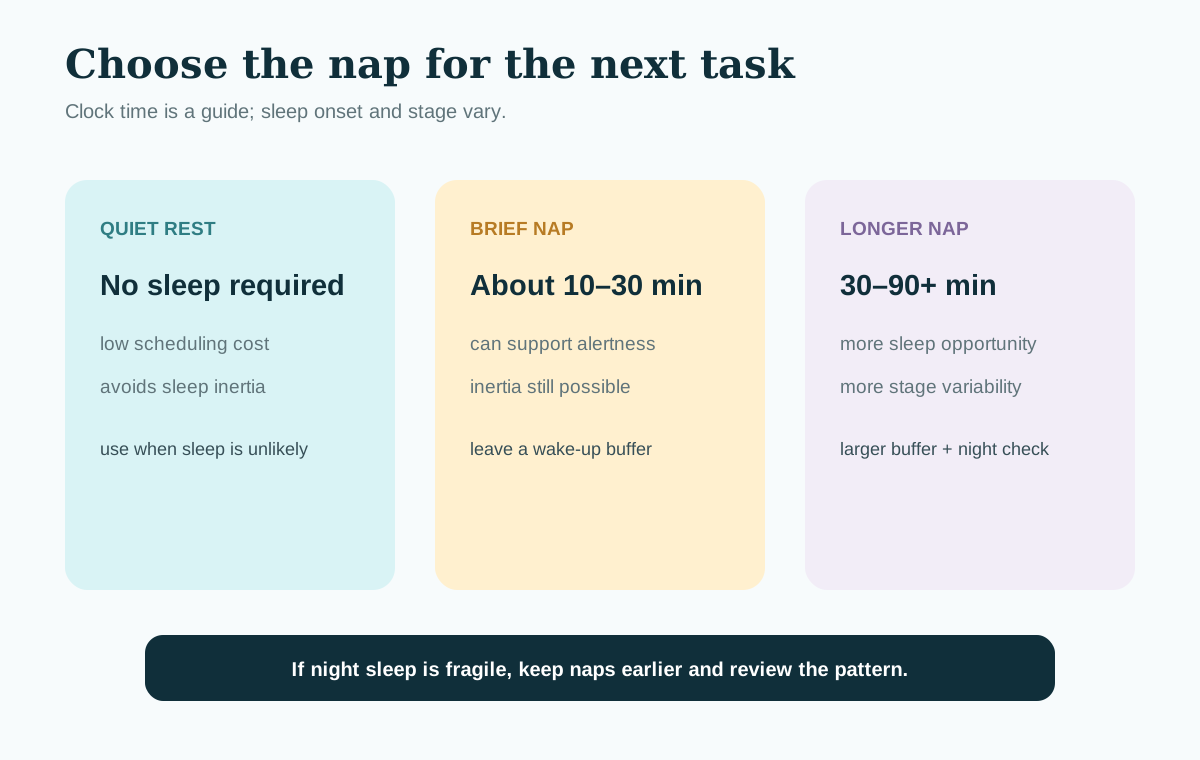
Advice often recommends 10–20 minutes to obtain light sleep and avoid grogginess. In practice, a timer measures time in bed, not time asleep. A sleep-deprived person may enter deeper sleep faster, while another may not sleep at all. Reviews of naps under 30 minutes find mixed evidence about slow-wave sleep and sleep inertia.
Use a brief window when scheduling cost must stay low. Set an alarm, make the environment safe and allow at least several minutes to reorient. If you repeatedly sleep through alarms, the underlying sleep need may be larger than the plan admits.
When a longer nap makes sense
A 30–90 minute nap offers more sleep opportunity and may support performance or recovery, particularly after restriction. A meta-analysis in young male athletes and active adults found benefits from naps of 30 to under 60 minutes, but the narrow population limits generalisation.
Longer naps increase the chance of waking from deeper sleep and taking substantial time from the day. They may also reduce sleep pressure at night. Use them deliberately, with a wake-up buffer and a check on later bedtime.
Timing trade-offs
| Timing | Likely trade-off |
|---|---|
| Late morning | May help after very early waking but can be difficult to initiate after adequate sleep. |
| Early afternoon | Often aligns with a circadian dip and is less close to bedtime. |
| Late afternoon | Can help some shift schedules but may delay night sleep. |
| Evening | May become part of split sleep, or may worsen insomnia in others. |
| Before night work | Can be preventive; plan for inertia before safety-critical duties. |
A practical nap setup
- Choose the wake time first and include the expected time to fall asleep.
- Use a darkened, quiet, comfortably cool place where you can wake safely.
- Set an alarm and a backup for high-stakes schedules.
- On waking, sit up, orient, use light and move normally.
- Delay driving or hazardous work until alertness is genuinely back.
- Notice the effect on night sleep and adjust future timing.
Napping with insomnia
People receiving cognitive behavioural therapy for insomnia are often advised to limit naps to rebuild sleep pressure and stabilise the sleep window. Follow the individual plan rather than generic nap advice. Quiet rest without trying to sleep can offer a break while protecting night-time pressure.
If pain, caregiving or shift work makes a consolidated night unrealistic, a clinician can help build a workable pattern rather than treating every nap as a mistake.
When daytime sleepiness needs assessment
Seek advice if you unintentionally doze during conversations, meals or driving; need long naps despite adequate opportunity at night; snore loudly with breathing pauses; or have sudden muscle weakness with emotion, sleep paralysis or vivid sleep-onset experiences. Medicines, alcohol and other substances can also increase sleepiness.
Do not drive when sleepy. A short nap and caffeine may be used in some fatigue strategies, but neither guarantees safe performance. Arrange another driver or stop in a safe place.