Nature and Attention: What Time Outdoors May Change
Nature exposure may support some aspects of attention and mental fatigue, with effects shaped by setting, access, movement and expectation.
 Maya ChenMind & Brain editor5 September 2026
Mind & Brain · Science guide
Time in a park, garden or tree-lined street may ease mental fatigue and support some aspects of attention. The effects are modest, variable and shaped by safety, access, movement and expectation.
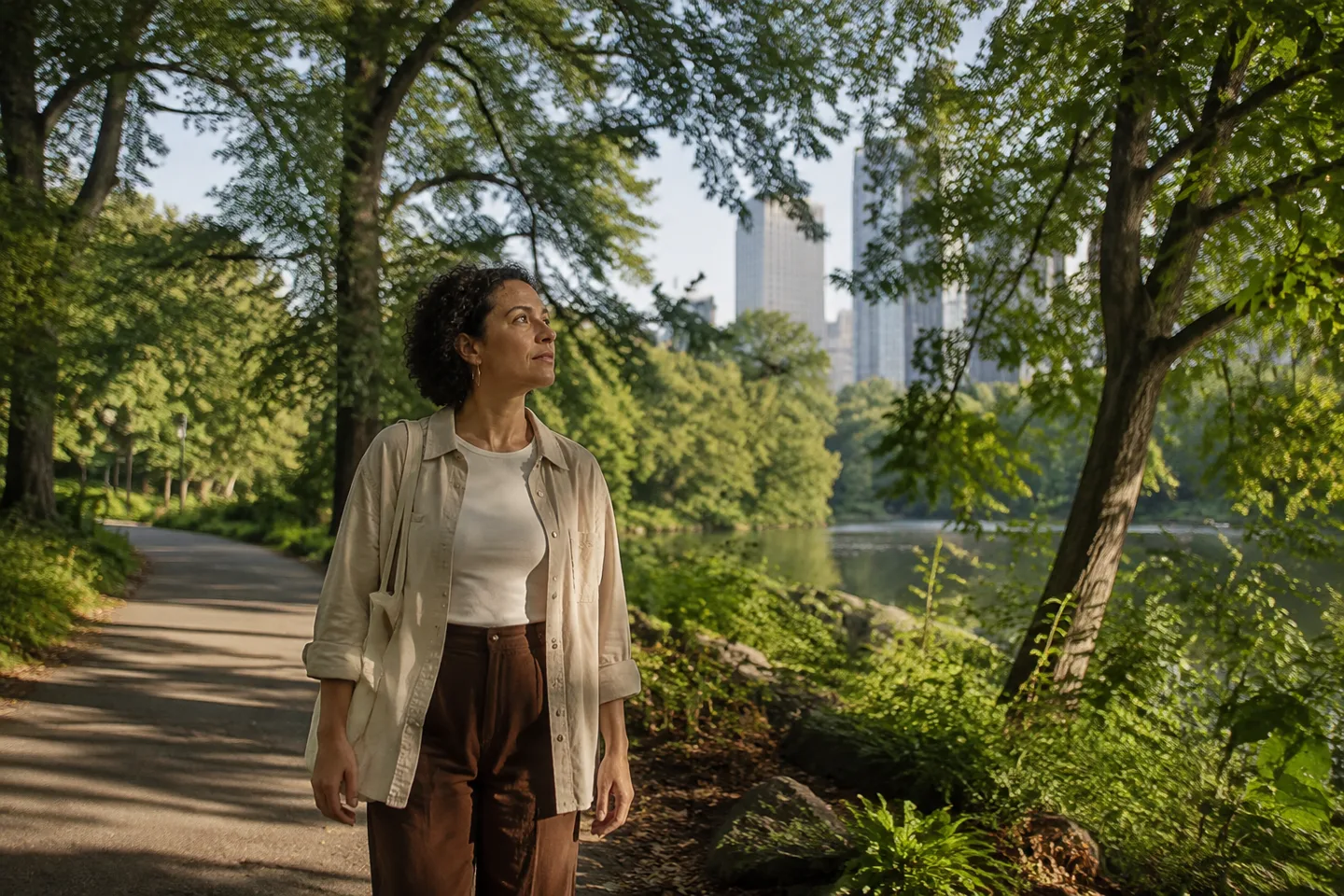
In short
- Experimental reviews find small improvements in some attention and working-memory measures after nature exposure.
- Many outcomes show no clear effect, and study methods vary.
- Real environments may add movement, daylight, quiet and distance from demands.
- Access and safety determine whether a setting is restorative.
The attention-restoration idea
Attention Restoration Theory proposes that sustained directed attention becomes fatigued. Natural settings may engage interest in a gentler, less effortful way, allowing some control processes to recover. Leaves moving, water and layered sound can hold attention without demanding a response.
The theory is influential, but evidence is not uniform. A systematic review found positive effects for three objective attention measures and no marked benefit in ten other meta-analyses. A later review reported low-to-moderate improvements in working memory, cognitive flexibility and, less reliably, attentional control.
What “nature exposure” includes
Studies use walks in parks or forests, sitting in green space, window views, photographs and virtual environments. These are not equivalent doses. A real walk adds physical activity and changing daylight; a window view may be accessible during work; a photograph isolates visual content.
Comparison settings also matter. A quiet attractive street is different from heavy traffic. If a green route is unsafe, inaccessible or crowded, it may not restore attention.
Attention is not one ability
Working memory, inhibition, vigilance, task switching and subjective mental fatigue are related but distinct. A study that improves digit span does not prove that every kind of concentration improves. Practice effects and participant expectations can influence test results.
Use precise language: nature exposure may support some cognitive outcomes in some contexts. It is not a treatment for ADHD, dementia or brain injury.
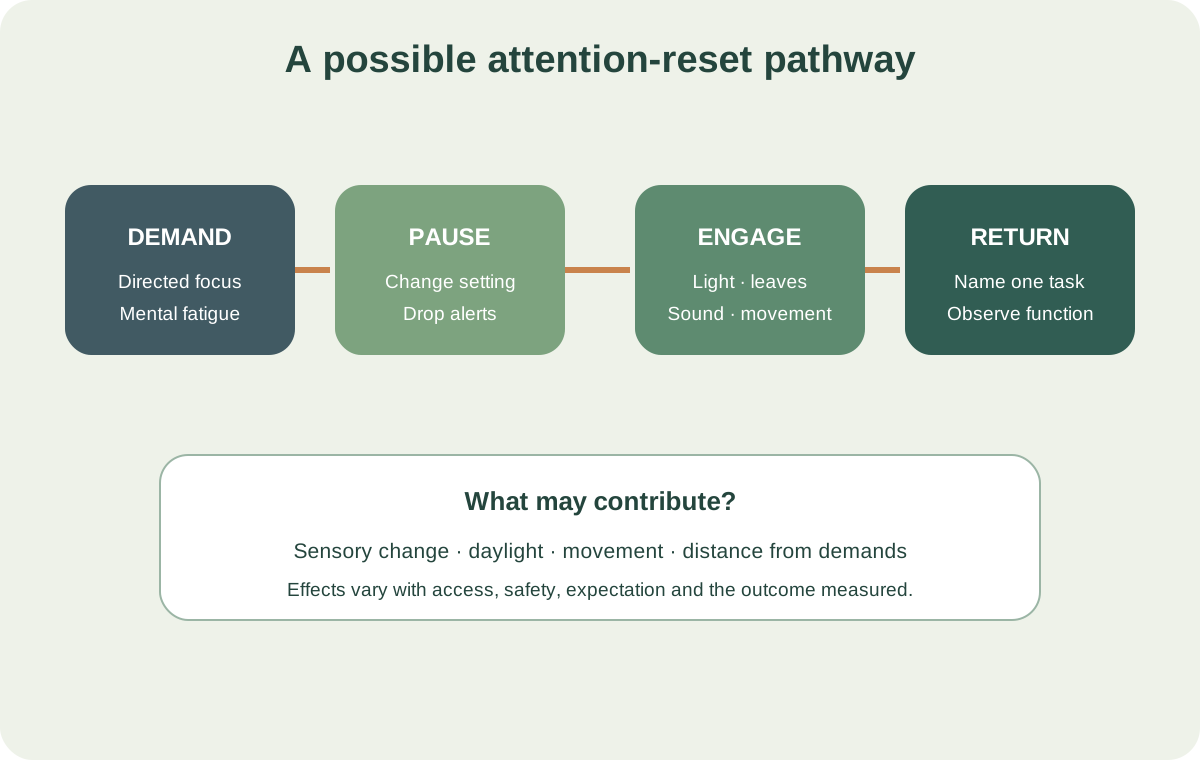
A practical 15-minute reset
- Choose the closest safe green or blue route.
- Leave audio and messages off if safe to do so.
- Walk or sit at an easy pace.
- Notice three changing sensory details without trying to clear the mind.
- Before returning, name the next single task.
The useful mechanism may be the combination of movement, daylight, sensory variety and a boundary from work. It does not need to be mysterious.
If outdoor access is limited
Try a courtyard, balcony, window view, indoor plants, recorded natural sound or high-quality images. Evidence for substitutes is still developing, but the goal is a feasible change in attentional demand. Libraries, community gardens and tree-lined public routes can be more realistic than travel to wilderness.
People with allergies, heat sensitivity, mobility limitations, trauma or safety concerns need adapted settings and timing. Restoration should not require discomfort or risk.
Do not turn restoration into performance
A step target, photography challenge or mindfulness score can make the break another task. If structure helps, keep it light: one lap, one bench, one observable detail. The sign of value is whether returning feels a little easier.
Combine nature with known basics: sleep, breaks, manageable workload and treatment when attention difficulties are persistent.
What the evidence cannot separate easily
People who spend more time in green areas may differ in income, air quality, housing, exercise and social connection. Randomised short exposures reduce some confounding but cannot answer every long-term question. Researchers also struggle to blind participants to whether they are in a park.
These limitations do not make the experience unreal; they define what can be claimed.