Posture Is Not a Single Perfect Position
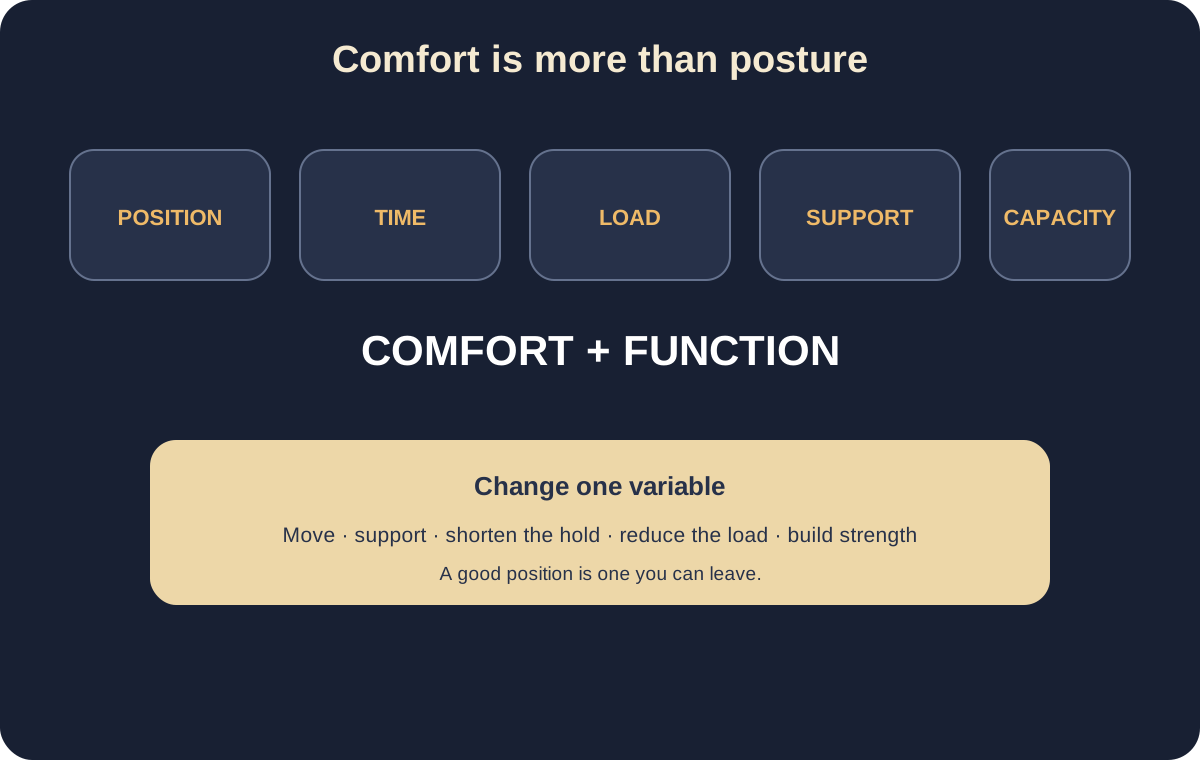
Comfort depends on position, time, load, support and capacity; variation is usually more useful than rigid posture correction.
 Priya ShahMovement & Mobility editor5 September 2026
Movement & Mobility · Debunk
There is no single posture that every body must hold all day. Comfort depends on task, capacity, support, symptoms and time. Variation is usually more useful than rigid correction.
In short
- Posture and pain are related in complex ways; one shape does not explain every symptom.
- Any position can become uncomfortable when held too long or under too much load.
- Ergonomics should support the task and enable variation.
- Strength, movement options, workload and recovery matter alongside position.
Why the perfect-posture story persists
Posture is visible, so it offers an appealing cause for pain. A photograph can be measured and corrected. Pain, however, reflects tissue sensitivity, load, sleep, stress, health, previous injury and expectations as well as position.
An umbrella review found no consensus that particular spinal postures cause low-back pain. Associations appear in some studies, but an association does not prove that a curve or slouch created the symptom.
Neutral is a range
Ergonomic guidance often uses neutral positions to reduce extreme joint angles and muscular effort during repeated tasks. That is useful as a starting point, not a command to freeze. Bodies differ in proportions, mobility, disability, pregnancy, pain and equipment.
A relaxed slouch may be comfortable for a short period. Upright unsupported sitting may become tiring. Standing all day can also hurt. The question is whether the position fits the current demand and can be changed.
What to adjust at a desk
- Place frequently used objects within easy reach.
- Raise or lower the work so shoulders can relax.
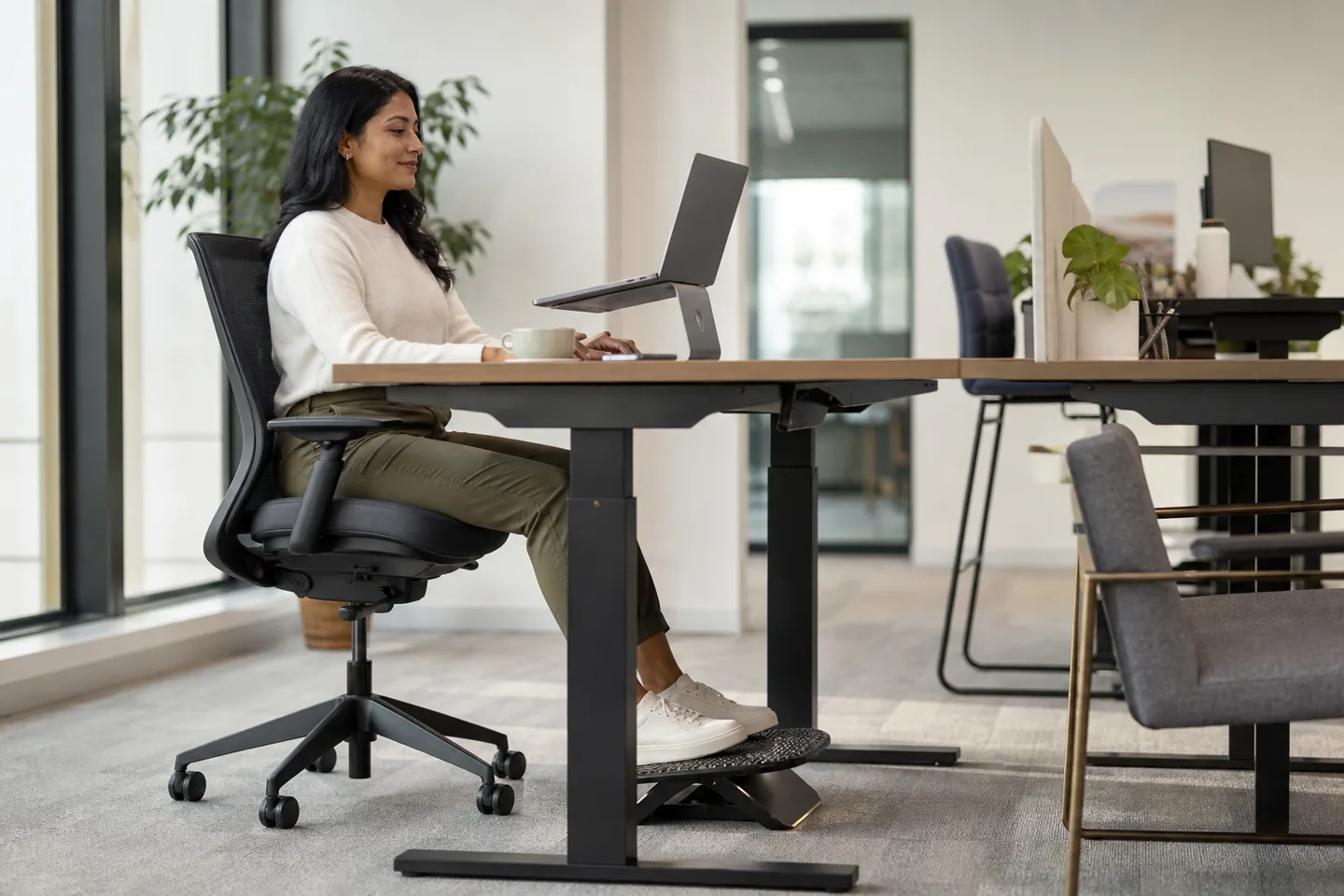
- Support feet on the floor or a stable footrest.
- Bring the screen close enough to read without craning.
- Use forearm support where it reduces effort.
- Choose more than one workable position.
A perfect setup cannot remove a workload that requires hours without a break. Organisational changes are part of ergonomics.
Movement snacks, not posture policing
Change position when you notice effort, stiffness or fading attention. Stand during a call, walk to refill water, lean back for reading or move the keyboard for a different task. Short frequent changes can be easier than a large corrective routine.
There is no mandatory interval. Use task boundaries and symptoms as cues. Timers can help until the habit becomes natural.
Strength and capacity
Strengthening can expand the positions and loads you tolerate. A 2024 review found strengthening changed some measured spinal postures in healthy participants, while stretching alone did not. But changing posture is not automatically the same as reducing pain.
Train the functions your life requires: pulling, pushing, carrying, standing, reaching and sustained work. Progress gradually and adapt around symptoms.
What about braces and posture shirts?
Wearables may provide a cue or temporary support, but evidence does not support posture-correcting shirts as a general treatment for musculoskeletal pain. A device that forces one position can create dependence or discomfort.
Use prescribed supports for a specific condition as directed. Marketing phrases such as “realigns the spine” or “fixes tech neck” need clinical evidence.
A one-week experiment
- Choose the task that reliably becomes uncomfortable.
- Record when symptoms begin, not just your posture.
- Change one factor: screen height, support, load or break pattern.
- Add two alternative positions.
- Review comfort and output after several days.
Keep the change if it helps. If not, revert and test another variable.
When posture is clinically relevant
Some conditions, injuries and neurological changes make alignment or support important. New weakness, numbness, bladder or bowel changes, major trauma, fever with severe back pain or progressive symptoms need prompt assessment. Persistent pain deserves a clinician who considers the whole picture.