The Difference Between Rest Distraction and Recovery
Rest lowers demand, distraction shifts attention and recovery restores capacity. A framework for judging activities by their after-effect, not their label.
 Daniel OkaforStress & Emotional Health editor5 September 2026
Stress & Emotional Health · Framework
Rest lowers demand. Distraction shifts attention. Recovery restores some capacity. One activity can do all three—or provide quick relief while leaving the underlying load untouched.

In short
- Rest is reduced demand; it can be physical, cognitive, sensory, emotional or social.
- Distraction can interrupt rumination and pain, but it may also postpone a needed response.
- Recovery is an outcome: some capacity is restored over time.
- Detachment, relaxation, mastery and control are useful lenses for choosing off-work activity.
Why “I rested” can still feel unrecovering
You can lie on a sofa while answering work messages, scroll while comparing yourself with others or watch a gripping series until sleep is shortened. The body may be still, yet cognitive, emotional or sensory demand remains high. Calling an activity rest describes its surface, not its effect.
Recovery research often studies psychological detachment from work: mentally switching off during non-work time. A meta-analysis across employee samples linked greater detachment with better self-reported well-being, sleep and lower fatigue, although much of the evidence is correlational and effects vary.
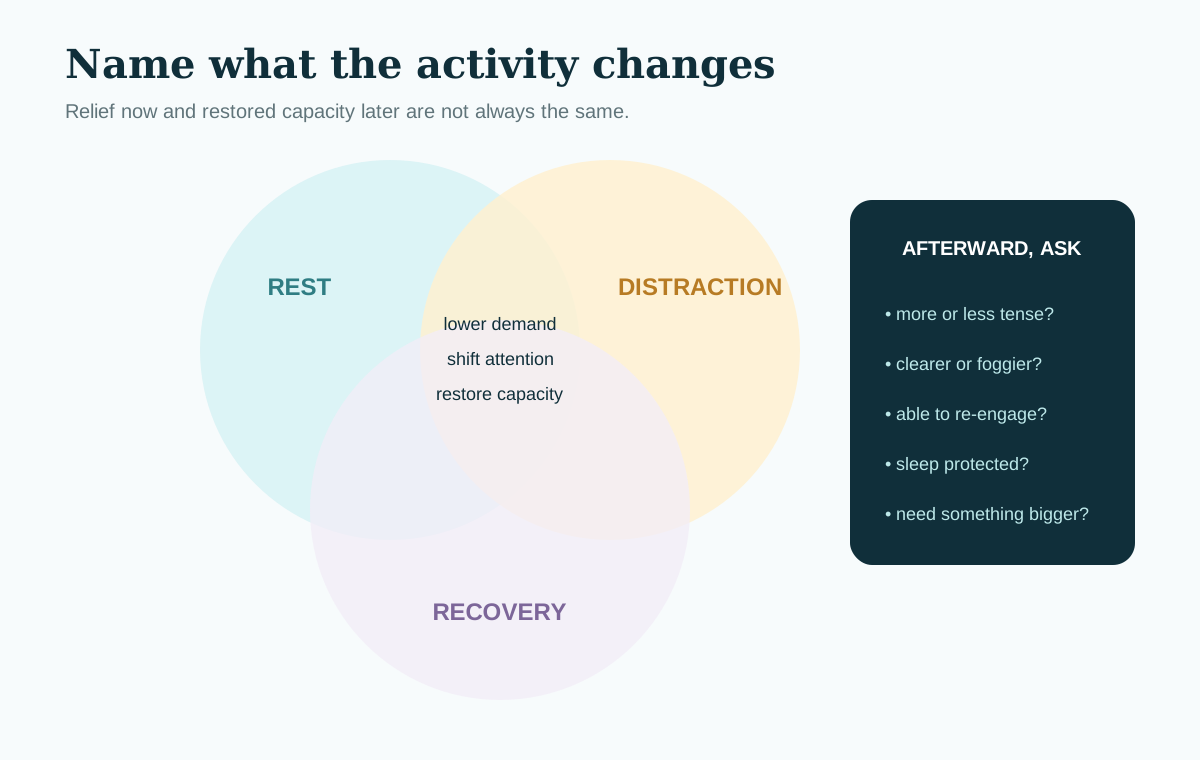
Rest: reduce the demand that is tired
If the strain is muscular, change position or stop loading it. If it is visual, look away from near screens. If it is social, seek quiet or a low-demand person. If it is decision fatigue, choose something familiar. Matching the rest to the demand is more precise than assuming stillness helps everything.
Rest can also be active. A gentle walk may rest sustained attention; cooking may rest abstract work; conversation may rest loneliness. The same activity can be restorative one day and demanding the next.
Distraction: a tool with two edges
Distraction redirects attention. That can be adaptive during acute pain, a wave of anxiety or repetitive thought, buying enough time for arousal to fall. Games, stories, music or conversation can create safe distance. Relief is real even if the original issue remains.
The trade-off appears when distraction repeatedly delays sleep, medication, a boundary, a difficult conversation or professional help. Compulsive design can keep attention captured after the benefit has passed. Ask whether you chose the activity and whether you can stop.
Recovery: look for restored capacity
Recovery is not necessarily feeling blissful. It may mean being able to focus again, respond less sharply, move with less stiffness or sleep at the intended time. Outcomes unfold on different timescales: a two-minute pause can reduce immediate strain, while recovery from burnout, illness or sleep loss needs more.
Work-recovery models often describe four experiences: detachment from demands, relaxation, mastery through a satisfying challenge and control over how non-work time is spent. An evening can contain all four in small amounts.
A simple audit
| Before | During | After |
|---|---|---|
| What demand am I recovering from? | Is this chosen, safe and time-bounded? | Am I more able to do the next valued thing? |
| What do I need: quiet, movement, food, contact or sleep? | Has the activity become another source of demand? | Did it protect or displace sleep? |
| Is there a problem that needs action, not soothing? | Can I stop without a fight? | What would I change next time? |
Build a recovery sequence
Try a short bridge after work: write the unfinished next step, close the workspace, change light or clothing and choose one activity matched to the day’s strain. Put a boundary around high-capture distraction—one episode, a timer or a device outside the bedroom.
Include basic needs before optimising leisure: food, hydration, medication, pain management and enough sleep opportunity. Recovery is easier when demands are finite and resources are available.
Do not individualise a structural problem
No evening routine can fully compensate for chronic overwork, unsafe staffing, harassment, poverty or caregiving without support. Reviews of detachment interventions find small positive effects, but higher job demands make detachment harder. Reducing or redesigning the stressor is also a recovery intervention.
Seek professional support if exhaustion persists despite opportunity to rest, if pleasure and function are markedly reduced, or if distraction involves escalating substance use, gambling, self-harm or loss of control. Immediate safety concerns require crisis or emergency help.