Sacred Music: Culture Experience and What Sound May Support
Sacred music carries culture, memory, place and participation. It may support attention and meaning without becoming medical proof.
 Jonas ReedCalm Signal editor5 September 2026
Calm Signal · Feature
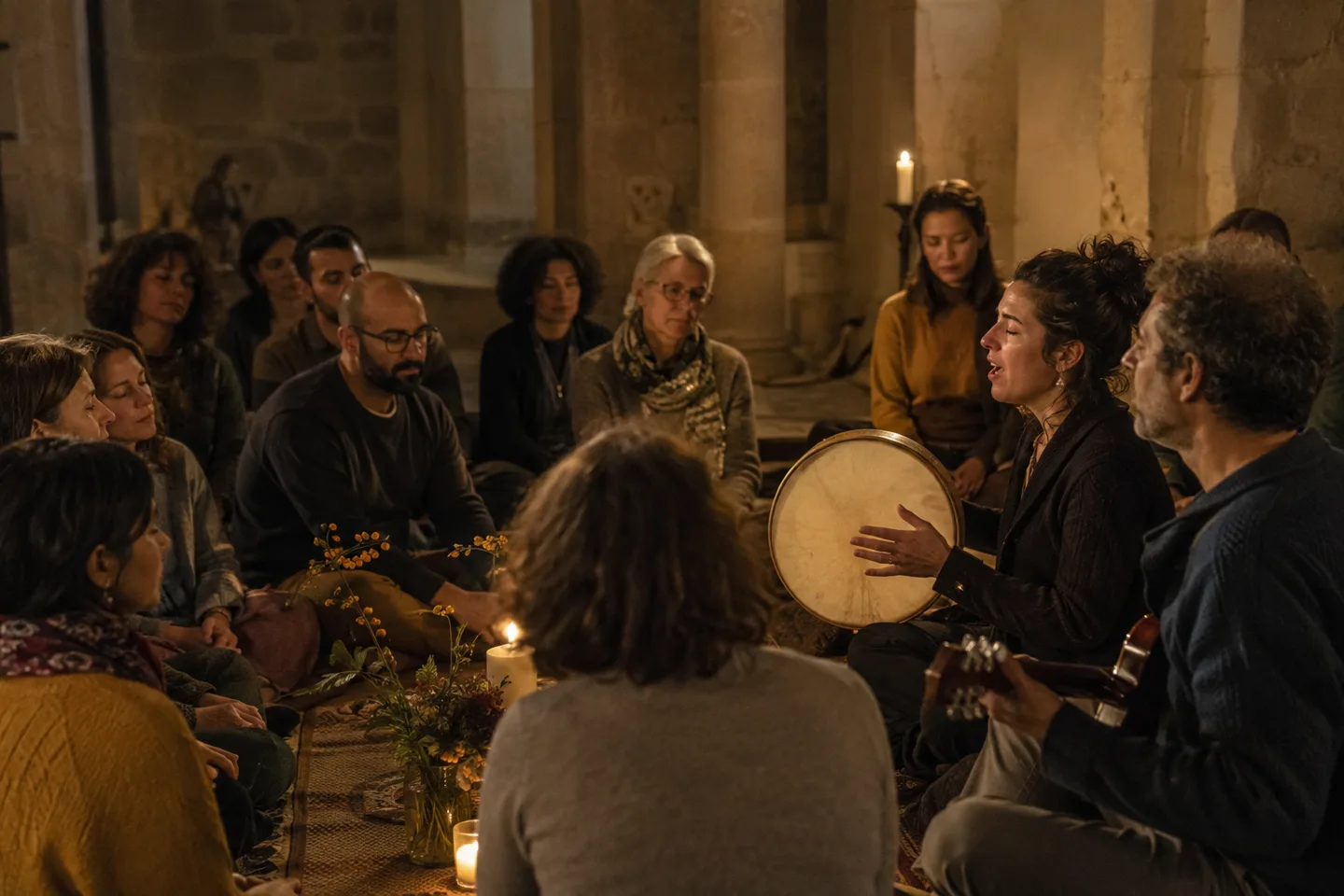
Sacred music is never only a waveform. It is sound held by language, memory, place, ritual and community. That context can support attention and meaning—without turning every moving experience into medical proof.
In short
- “Sacred” describes a cultural or ritual function, not one acoustic recipe.
- Music may support attention, emotion, belonging and spiritual wellbeing for some people.
- Effects vary with familiarity, identity, setting, volume and choice.
- Respect means naming traditions carefully and avoiding universal healing claims.
More than a genre
Sacred music may carry prayer, scripture, remembrance, mourning, celebration, pilgrimage or communal timing. It can be monophonic chant, polyphonic choir, drumming, organ, bells, recitation, call-and-response or silence framed by sound. Some traditions separate sacred and secular repertoires; others do not use that division in the same way.
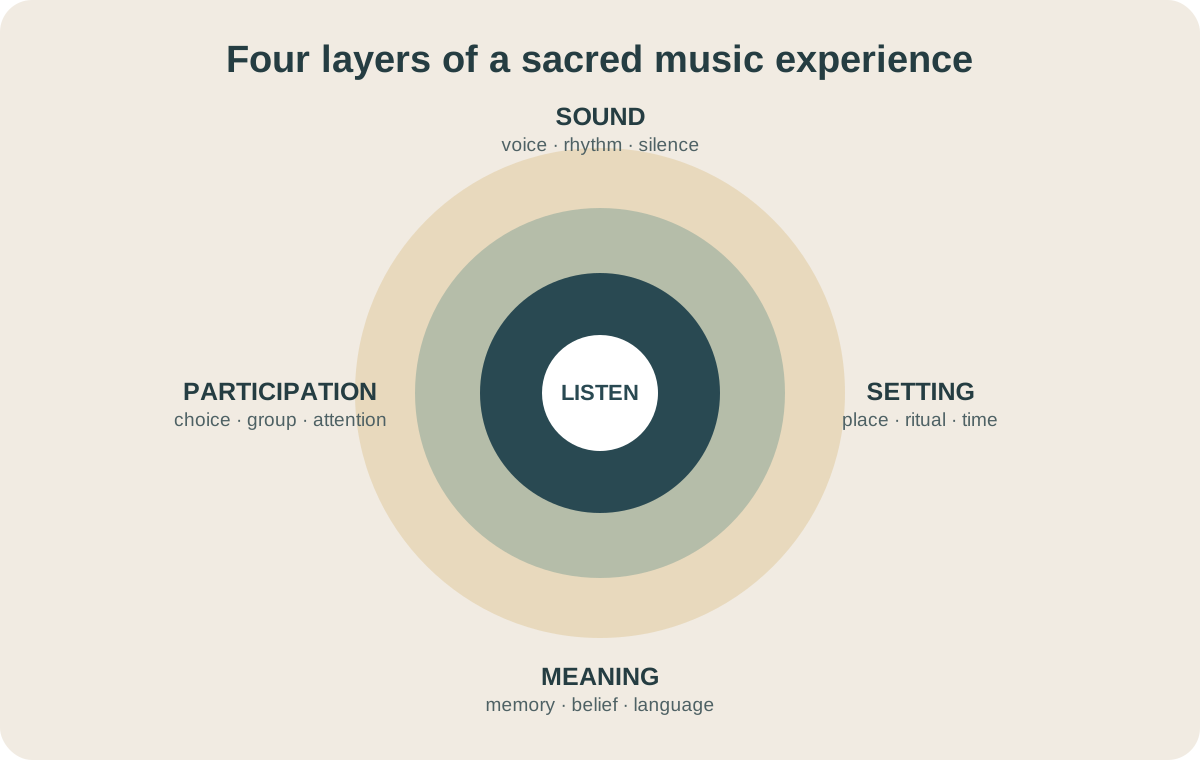
The label therefore cannot tell us what a piece sounds like or what it means to every listener. The same recording may evoke devotion for an insider, aesthetic curiosity for a visitor, grief for someone with a difficult history, or nothing in particular. Listening is relational.
What sound may support
Music can organise attention over time. Repetition makes the next phrase more predictable; sustained tones reduce rapid novelty; group pulse coordinates breathing and movement; familiar words can cue memory and belonging. These are plausible pathways for calm, absorption or connection.
Research on music and wellbeing reports benefits in some settings, including reduced anxiety or improved mood, but methods and outcomes vary. A systematic review of music interventions and spirituality found too few heterogeneous studies to establish a clear positive effect. A review of Sufi music trials reported short-term anxiety reductions in medical settings, yet rated the evidence very low quality.
The balanced conclusion is neither “music does nothing” nor “sacred sound heals.” Music may support an experience. The response depends on the person, intervention and context, and supportive effects do not equal treatment of disease.
Why context cannot be stripped away
A chant sung by a community in its own ceremonial setting carries relationships, obligations, language and history. Moving it into a wellness playlist changes the frame. The sound may remain beautiful, but its function is not identical.
Good editorial practice asks: What is the tradition? Who performs it? What words are being used? Is the recording shared with permission? Does the description reduce a living practice to an exotic technology? If provenance is unclear, choose neutral language such as contemplative vocal music rather than assigning a sacred identity.
Sacred, religious, spiritual and contemplative
Religious music belongs to the life of a faith community. Sacred music has a consecrated or ritual role, though usage varies. Spiritual music is a broader modern label for music associated with transcendence or inner life. Contemplative music describes a listening quality or purpose without making a religious claim.
These categories overlap, but they are not interchangeable. Precision protects both the reader and the tradition.
A respectful listening practice
- Choose with context. Read the performer’s notes and learn the tradition’s name and purpose.
- Prepare the space. Lower interruptions and use a comfortable, not immersive, volume.
- Ask permission inwardly. Stay free to stop if words or associations feel distressing.
- Listen through one full arc. Notice repetition, breath, silence and your own memories.
- Close deliberately. Sit quietly, write one line or return to an ordinary task.
The aim is not to force transcendence. It is to make room for attention.
When music does not calm
Music can intensify emotion, trigger grief or trauma, produce sensory overload or conflict with belief. Volume and duration also affect hearing safety. A person who dislikes a piece is not “resistant” or spiritually blocked.
In clinical care, a credentialed music therapist adapts the intervention to the person and therapeutic goal. A self-guided playlist is different. If sound reliably triggers panic, dissociation, intrusive memories or worsening tinnitus, pause and seek appropriate support.
Evidence boundaries for creators and partners
A creator can describe instrumentation, tradition, duration and intended listening conditions. They can say a piece was composed for contemplation or that listeners report feeling grounded. They should not claim that one tuning activates a spiritual organ, moves every brain into alpha or cures pain.
Commercial links should be clearly marked, and cultural source material should be licensed and credited. Sacred language deserves more care—not less—when it is used to sell.
A wider way to understand “benefit”
Benefit does not have to mean a lower symptom score. Music may give form to mourning, help a group breathe together, carry language across generations or create a protected interval of attention. Those outcomes are meaningful even when they are not medical treatments.
This wider view also keeps science in its proper role. Research can test defined outcomes and mechanisms. It cannot decide the theological truth of a tradition or fully measure the meaning of participation.