Sleep Debt: What Can Be Recovered and What Cannot
Extra sleep can ease pressure and improve some functions, but recovery is not an hour-for-hour refund and a repeating short-sleep week still needs redesign.
 Elena MoralesSleep & Recovery editor5 September 2026
Sleep & Recovery · Explainer
Extra sleep after short nights can reduce sleep pressure and improve some functions. Recovery is not a neat hour-for-hour refund, and a weekend lie-in does not make repeated restriction harmless.

In short
- Sleep debt is a useful metaphor for accumulated insufficient sleep, not a literal single account in the brain.
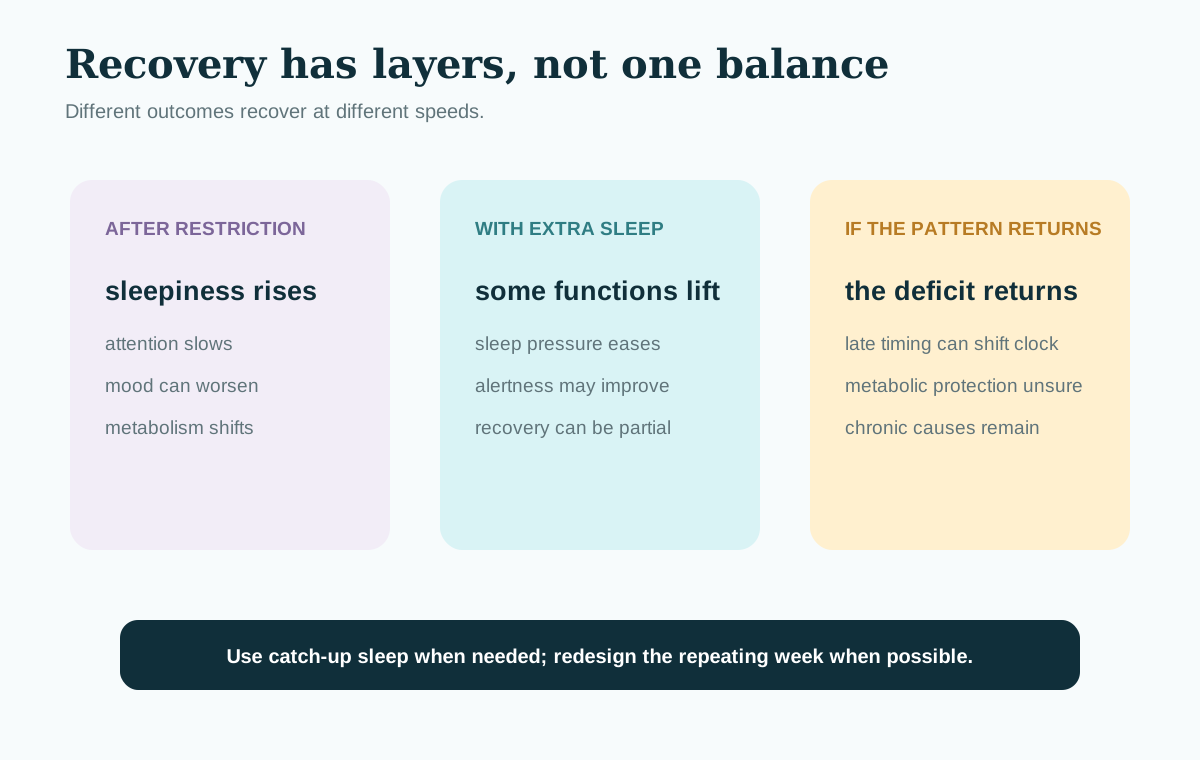
- Recovery sleep can improve sleepiness, mood and performance, but different systems recover at different rates.
- Weekend catch-up may help in the short term yet can shift sleep timing and may not reverse metabolic effects.
- The best plan combines immediate extra sleep with a more adequate repeating schedule.
Why the bank-account metaphor breaks down
If you need roughly eight hours and obtain six, calling the difference a two-hour debt is practical. But biology does not keep one ledger. Attention, sleepiness, glucose regulation, immune function, mood and circadian timing respond differently to restriction and recovery. Two extra hours later cannot be assumed to reset every outcome.
Sleep need also varies among people and across life stages, illness and pregnancy. For most healthy adults, expert consensus recommends regularly obtaining at least seven hours per night, while many need more. Your daytime function and the opportunity you give yourself to sleep matter alongside a tracker’s estimate.
What repeated short sleep does
Controlled studies show cumulative declines in vigilant attention and increases in subjective sleepiness when sleep is restricted across consecutive nights. People do not always recognise the full performance decline. That mismatch is important for driving, shift work and decisions made under pressure.
Short sleep can also change appetite, insulin sensitivity and other metabolic measures. Laboratory protocols are deliberately controlled and often more severe than ordinary life, so their exact effects do not transfer to every person. They nevertheless show why “I am used to five hours” is not a safety guarantee.
What recovery sleep can restore
After an occasional short night, allow a longer sleep opportunity as soon as circumstances permit. Sleep pressure may drive deeper or longer sleep, and alertness or mood can improve. More than one adequate night may be needed after sustained restriction, and complex performance can lag behind subjective recovery.
A 2025 review concluded that weekend catch-up sleep may provide partial short-term recovery but is not a sustainable replacement for regular sufficient sleep. Evidence about long-term health outcomes is mixed because observational studies define catch-up differently and because people who sleep longer on weekends differ in many other ways.
The weekend experiment
In one controlled study, healthy young adults underwent five nights with five-hour sleep opportunities, two weekend recovery nights and then renewed restriction. Weekend recovery did not prevent metabolic dysregulation when insufficient sleep resumed. The sample was small and the schedule artificial, but it directly challenges the idea that two recovery nights make a repeating pattern consequence-free.
Sleeping very late can also delay circadian timing, making the next early bedtime and Monday wake time harder. That does not mean you should set an early alarm while severely sleep deprived. It means duration and timing solve partly different problems.
A practical recovery plan
| Time frame | Action |
|---|---|
| Today | Reduce driving or other high-risk tasks if sleepy; take an appropriate nap or earlier night. |
| Next few nights | Give yourself extra sleep opportunity without demanding an exact repayment rate. |
| Next week | Move bedtime earlier in small steps or remove the recurring barrier. |
| Longer term | Keep wake time reasonably stable while protecting enough total sleep. |
Do not use caffeine as a substitute for sleep. It can temporarily support alertness but may push sleep later when taken late in the day. Alcohol may shorten sleep onset while disrupting later sleep.
When the schedule is not fully yours
Caregiving, shift work, multiple jobs, pain, housing and neighbourhood conditions can restrict sleep opportunity. Individual sleep hygiene cannot fix a structural deficit. Use the parts you control, and advocate for safer shifts, protected breaks, transport alternatives and shared caregiving where possible.
If extra opportunity does not lead to restorative sleep, consider insomnia, sleep apnoea, restless legs, medication effects or another condition. Seek assessment for loud snoring with pauses, persistent excessive sleepiness, morning headaches or near-misses while driving.