Build a Sleep-Friendly Bedroom Without Buying More Gear
A sleep-friendly room is mostly a set of cues: dark enough, quiet enough, comfortably cool and less connected to wakeful work.
 Elena MoralesSleep & Recovery editor5 September 2026
Sleep & Recovery · Practical guide
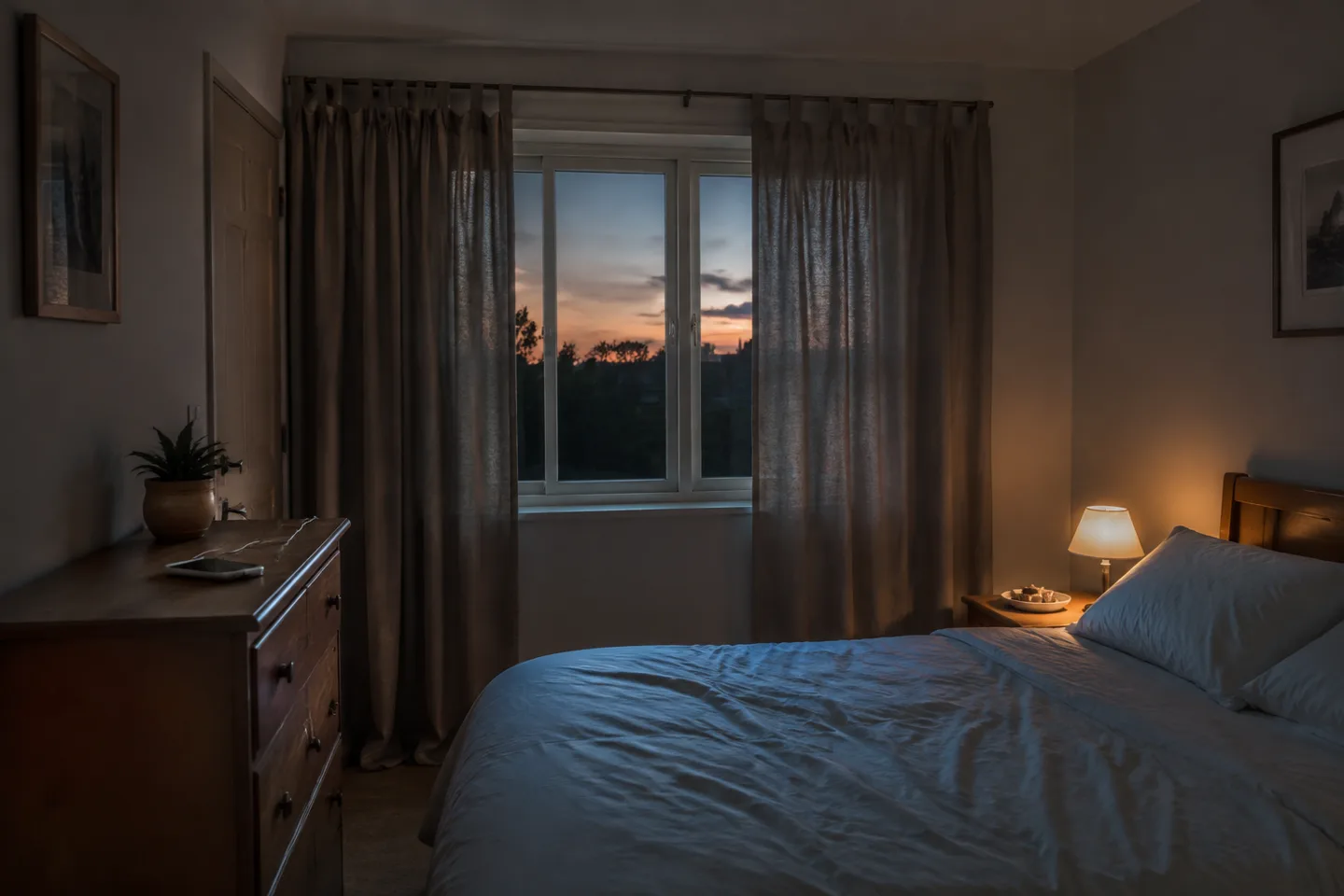
A sleep-friendly room is mostly a set of cues: dark enough, quiet enough, comfortably cool and less connected to wakeful work. Start with what you can rearrange tonight.
In short
- Protect enough time for sleep before optimising the room.
- Use existing curtains, doors, clothing and device settings before shopping.
- Keep the bed associated with sleep and intimacy rather than work or prolonged wakefulness.
- Persistent insomnia, loud snoring or dangerous sleepiness needs assessment, not more bedroom accessories.
Begin with an audit, not a basket
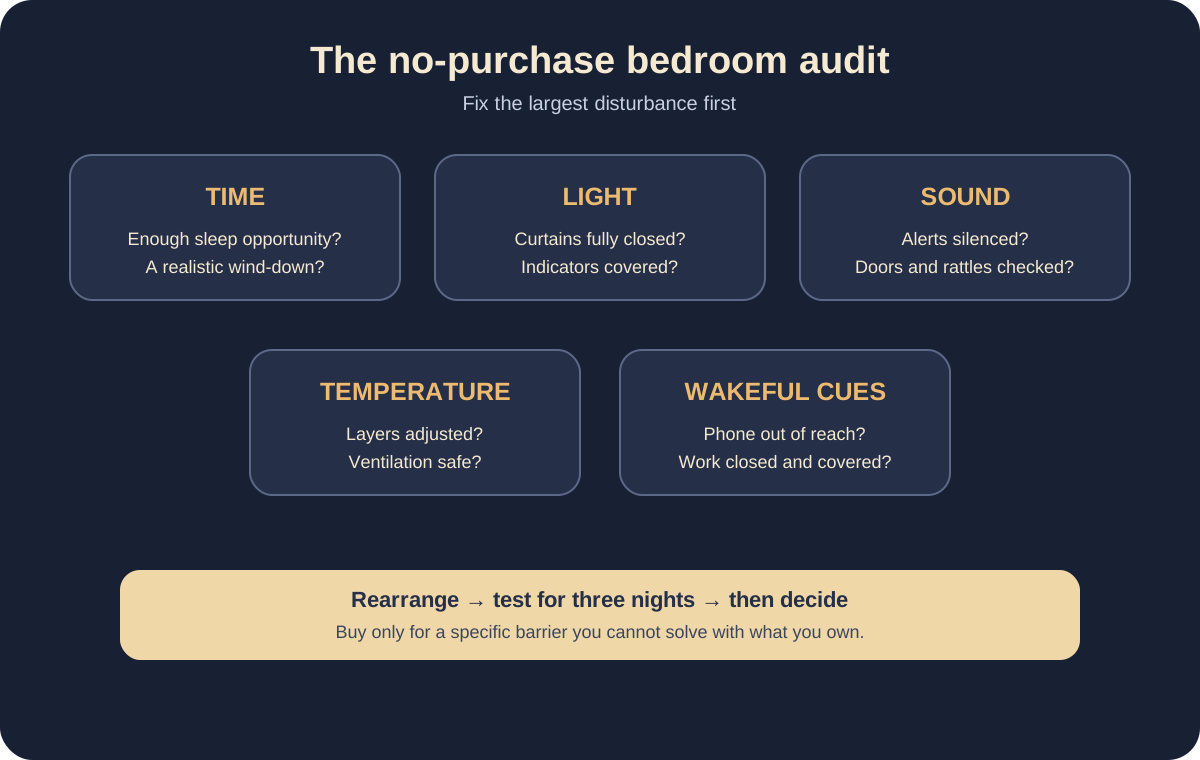
Lie down at the time you usually sleep. Notice the brightest light, most predictable noise, source of heat or cold and easiest route back into work or scrolling. Fix the dominant obstacle first. A perfect blackout mask will not replace an adequate sleep opportunity or resolve untreated sleep apnoea.
Run the audit again in the early morning, when traffic, daylight and household activity may differ. Shift workers should assess the room during their actual sleep window.
Light: reduce contrast and surprise
Close existing curtains fully, cover small unnecessary indicator lights and keep the route to the bathroom safely navigable with low, warm light. In the final hour, dim the whole environment rather than staring at a warm-coloured phone in an otherwise dark room. Morning daylight is also part of the system: it helps anchor the wake side of the rhythm.
If you cannot make the room fully dark, aim for dark enough that light is not waking you. Safety and accessibility come first; some people need a night light.
Sound: control what is controllable
Close the door, silence non-essential phone alerts and move rattling objects. Ask household members for a quiet window with a clear start and end. A steady fan or existing neutral background sound may mask intermittent noise, but keep volume moderate and equipment safe.
Earplugs can help some people but may be unsuitable if you must hear a child, alarm or emergency signal. Noise conflict is often a household coordination problem, not an acoustic-gadget problem.
Temperature and bedding
The National Heart, Lung, and Blood Institute recommends a quiet, cool and dark bedroom. “Cool” is individual: the useful temperature is one that avoids sweating or shivering. Ventilate when safe, adjust layers and choose the lightest existing bedding that keeps you comfortable.
Partners may need separate blankets. Hot flushes, fever, pain and some medicines can change thermal comfort; treat the underlying issue where appropriate.
Remove wakeful cues
Move the phone beyond automatic reach and enable do-not-disturb with exceptions for genuine emergencies. If possible, keep laptops and work papers outside the room. When space is limited, close them and cover the work surface at night; a visible boundary can still mark the role change.
Turn the clock face away if checking it increases worry. Prepare the alarm before the wind-down so bedtime does not become a sequence of settings and messages.
Strengthen the bed–sleep association
People with insomnia can begin to associate bed with wakefulness, frustration and effort. Evidence-based cognitive behavioural therapy for insomnia uses stimulus-control principles: go to bed when sleepy, use the bed for sleep, and if wakefulness becomes prolonged and distressing, move to a quiet low-light activity until sleepiness returns. Individual advice matters for mobility, safety, caregiving and bipolar disorder.
Do not watch the minutes. The point is to reduce struggle, not obey a rigid twenty-minute rule.
A three-night sequence
- Night one: protect the sleep window and place the phone away from the bed.
- Night two: address the largest light or noise source.
- Night three: adjust layers and create a ten-minute wind-down cue.
Keep changes that help and drop those that create stress. Do not judge the room from one unusual night; sleep naturally varies.
When the room is not the main issue
Seek help for insomnia lasting months, sleepiness that affects driving, pauses or gasps during sleep, restless legs, severe nightmares or a rapidly shifting sleep need. Anxiety, pain, menopause, medication, alcohol, shift work and medical conditions may require a broader plan. Cognitive behavioural therapy for insomnia is the recommended first-line treatment for chronic insomnia in many guidelines.