Sleep Inertia: Why Waking Up Can Feel So Difficult
Why alertness can lag behind waking, which conditions deepen sleep inertia and how to build a safer transition before driving or other demanding tasks.
 Elena MoralesSleep & Recovery editor5 September 2026
Sleep & Recovery · Explainer
Sleep inertia is the temporary grogginess, disorientation and performance dip that can follow waking. It is usually brief, but timing, sleep loss and the task waiting for you can make it matter.

In short
- Sleep inertia is a normal transition state, not a character flaw.
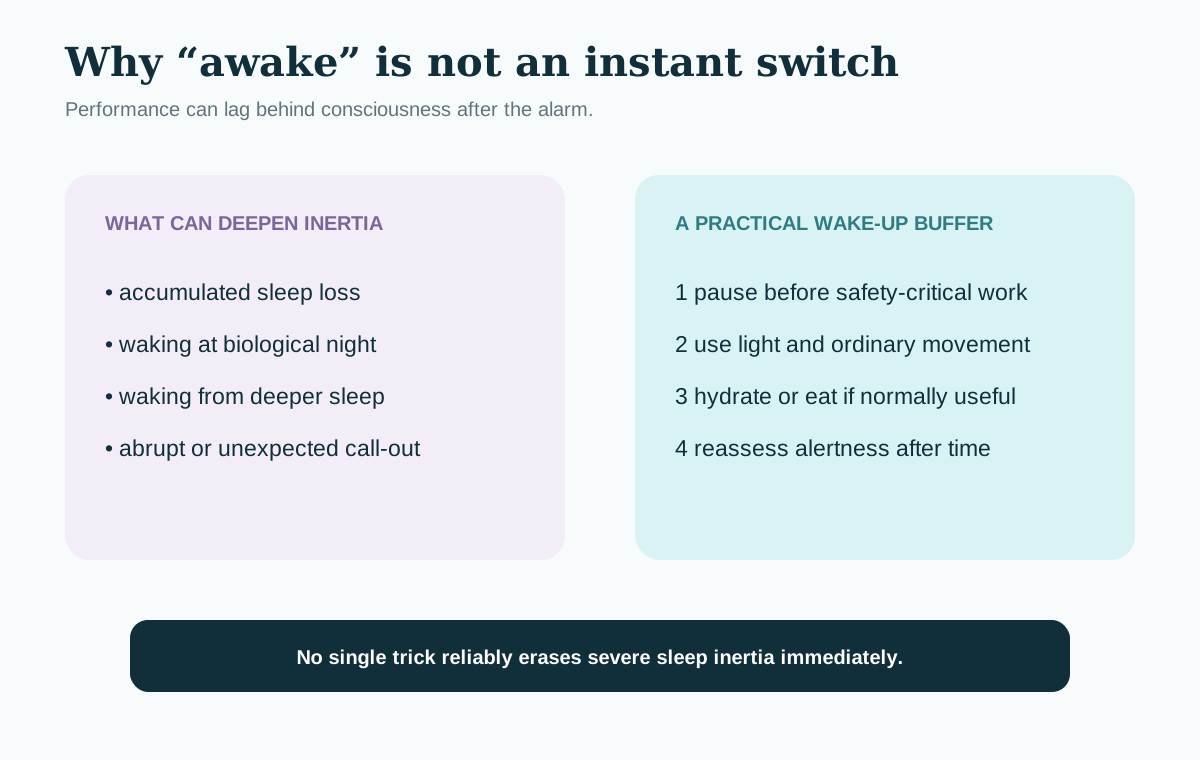
- It can be stronger after sleep loss, during the biological night and after waking from deeper sleep.
- Time is the most reliable ingredient; evidence for instant countermeasures remains limited.
- Build a buffer before driving, clinical decisions or other safety-critical work whenever possible.
What sleep inertia feels like
The alarm sounds, your eyes open, yet thinking feels thick and movement slow. Researchers use “sleep inertia” for this temporary reduction in alertness and performance after awakening. It can affect reaction time, working memory, decision-making and mood. The subjective feeling and the measured impairment do not always move together: someone may feel ready before performance has fully recovered.
For many ordinary awakenings, the effect fades over minutes. Under some conditions it can persist longer. Duration estimates vary because studies use different sleep schedules, tasks and definitions. A single universal “you are impaired for exactly X minutes” rule is therefore misleading.
Why it happens
Sleep and wake are coordinated by several processes. Sleep pressure builds with time awake and eases during sleep. Circadian timing changes the body’s tendency toward alertness across the day and night. On waking, brain systems do not all return to a waking pattern at the same speed. That uneven transition may help explain why a person can be conscious yet cognitively sluggish.
The sleep stage at awakening can influence severity, with deeper non-REM sleep often linked to stronger inertia, although real-life predictions are imperfect. Waking during the biological night, when the circadian system still promotes sleep, can also be difficult. Accumulated sleep restriction tends to worsen the problem.
Naps are useful—but timing changes the trade-off
A short nap can improve later alertness while still producing a brief post-waking dip. Longer naps make it more likely that a person enters deeper sleep, especially when already sleep deprived, but sleep stage cannot be inferred perfectly from the clock alone. If you need to perform immediately after a nap, leave a transition window.
For emergency, aviation, healthcare and on-call work, that window may not always be available. Fatigue-risk systems therefore need more than advice to “wake up better”: staffing, protected sleep opportunity, task handover and recognition of impairment are organisational safety measures.
Do light, caffeine, sound or exercise fix it?
| Strategy | Reasonable expectation | Limit |
|---|---|---|
| Bright light | Can support circadian alerting, especially when timed appropriately. | Immediate performance effects after waking are inconsistent. |
| Caffeine | May help once absorbed; “caffeine naps” are sometimes studied. | Not instant, can disturb later sleep and is not suitable for everyone. |
| Alarm sound or music | Some tones or melodic alarms may improve subjective or task outcomes. | Studies are small and protocols vary. |
| Movement | Ordinary activity may feel activating and supports a waking routine. | Evidence for a reliable immediate objective effect is limited. |
No reactive countermeasure has strong evidence for completely and immediately removing sleep inertia in every setting. A cold shower may feel vivid without guaranteeing restored judgment. Use simple aids as supports, not as permission to undertake a hazardous task before you are ready.
A practical waking sequence
- Expect a transition. Place a buffer between the alarm and demanding decisions.
- Use environmental cues. Open curtains or use appropriate light, stand up and move normally.
- Orient deliberately. Check the time, place and next task; avoid responding to important messages on autopilot.
- Reassess. If you remain markedly sleepy, delay driving or machinery and arrange an alternative.
- Address the sleep opportunity. Regularly severe inertia is not solved by stacking louder alarms onto chronic sleep loss.
When grogginess deserves attention
Persistent difficulty waking can accompany insufficient sleep, irregular schedules, sedating medication, alcohol use, depression, sleep apnoea, hypersomnolence disorders or other health conditions. Seek assessment if it is frequent, prolonged, worsening, causes missed obligations or creates driving and workplace risk.
Urgent evaluation is appropriate for new confusion that does not clear, fainting, weakness on one side, severe headache, seizure, breathing difficulty or other acute neurological or medical symptoms. Those are not ordinary sleep inertia.