Seven Small Ways to Unwind Without Optimising Everything
Unwinding does not need a tracker or perfect routine. Seven capacity-matched ways to change attention, sensory input, movement or connection without turning rest into work.
 Daniel OkaforStress & Emotional Health editor5 September 2026
Stress & Emotional Health · Practical guide
Unwinding does not need a tracker, perfect routine or transformation story. It can be a small shift in attention, posture, sensory input or social contact that makes the next part of the day easier.

In short
- A useful break changes something about the demand, the body or the environment.
- Micro-breaks show small average benefits for vigour and fatigue; demanding work may require longer recovery.
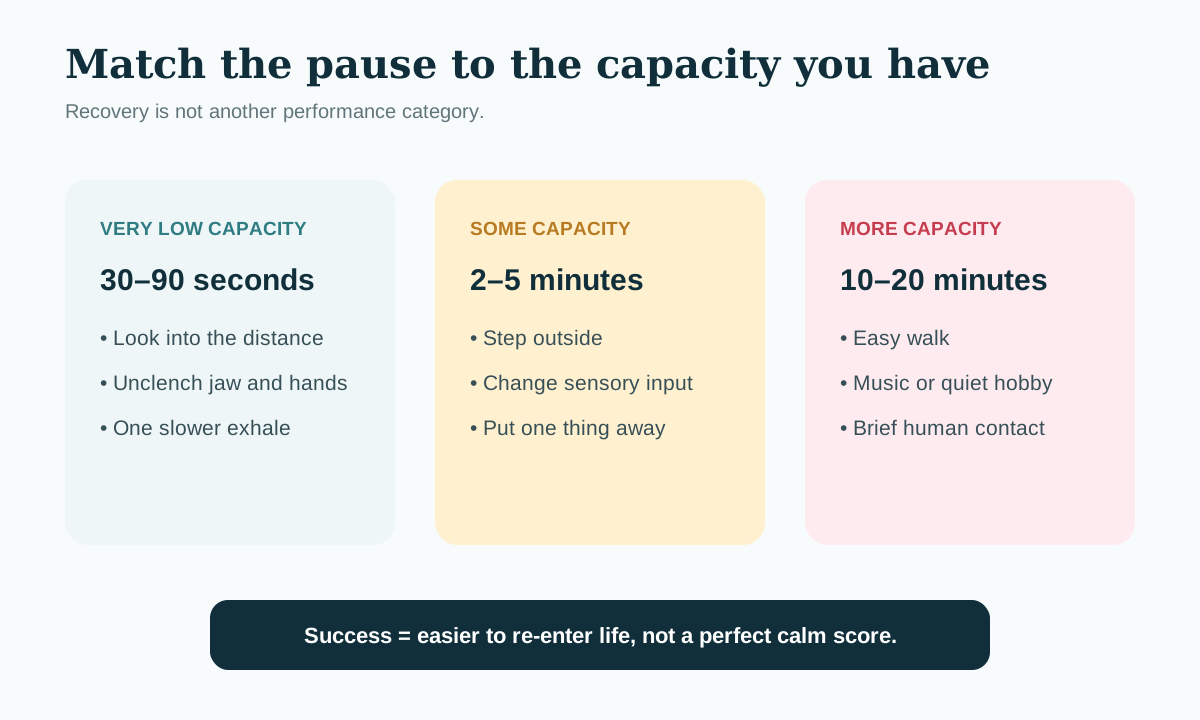
- Choose the smallest action you can do willingly instead of optimising every variable.
- If you cannot recover across days, the answer may involve workload, sleep, health or support—not a better ritual.
Why “relax harder” backfires
When recovery becomes another project, the mind keeps evaluating: Am I calm yet? Did I breathe correctly? Was the break productive? That monitoring can preserve the performance mode you were trying to leave. A pause works better as permission to reduce demand than as a test you must pass.
A 2022 meta-analysis of 22 study samples found small average effects of micro-breaks on vigour and fatigue, but no clear overall performance benefit. Longer breaks appeared more helpful for performance, and highly demanding tasks may need more than ten minutes. The practical message is modest: small breaks can help, but they do not erase sustained overload.
1. Let the eyes change distance
Near work narrows visual attention and often keeps the head still. Look through a window or down a corridor for 30 to 60 seconds. Notice shapes and movement without turning it into a concentration exercise. This is also a simple way to interrupt prolonged screen use.
2. Finish one body sentence
Drop the shoulders, release the tongue from the roof of the mouth, or stand and feel both feet. One slower comfortable exhale may be enough. Avoid repeated deep breaths if they make you light-headed. The aim is not to force a nervous-system state; it is to give the body one clear change in instruction.
3. Change the sensory channel
If the day has been visually dense, choose sound or touch: wash your hands in warm water, step into quieter air or listen to one familiar track. If sound has been relentless, choose quiet. Restoration depends partly on what the break replaces.
4. Move without making it exercise
Walk to another room, refill a glass or circle the shoulders. Movement can interrupt stillness and provide a boundary between tasks. It does not need a calorie estimate, step target or mobility score.
5. Close one loop
Write tomorrow’s first task, put one object away or send the necessary “I will reply tomorrow” message. A small closure cue can reduce the need to keep rehearsing unfinished work. Keep it deliberately narrow; this is not an invitation to clear the entire inbox.
6. Borrow another nervous system
Brief contact with a safe person can shift perspective and reduce isolation. Send a voice note, share a cup of tea or sit near someone without solving the day. If social interaction has been the demand, solitude may be the more restorative option.
7. Choose a low-stakes pleasure
Read two pages, water a plant, make something simple, watch the light change or listen to a song. Leisure does not need to teach, improve or monetise you. Psychological detachment from work is associated with better wellbeing and less fatigue, although the evidence cannot promise the same effect for everyone.
A two-question review
| Ask | Use the answer |
|---|---|
| What demand has been dominant—mental, social, sensory or physical? | Choose a break that changes that channel. |
| Do I feel more able to re-enter the evening? | Keep, shorten or replace the action next time. |
If rest repeatedly brings panic, agitation or intrusive memories, or if exhaustion persists despite time away, seek appropriate support. Burnout, depression, sleep disorders, pain and medical conditions are not failures of recovery technique.