Social Connection Is a Health Habit Too
Social health includes network structure, available support and relationship quality. How to strengthen connection without forced sociability or risk metaphors.
 Sofia LindbergLongevity & Prevention editor5 September 2026
Longevity & Prevention · Feature
Social connection belongs beside movement, sleep and nutrition in a broad view of health. It is not a prescription to be constantly sociable: structure, support, belonging and safety all matter.

In short
- Social isolation is objective lack of contact; loneliness is the distressing sense that desired connection is missing.
- Both are associated with poorer health and higher mortality, but observational estimates are not a personal countdown.
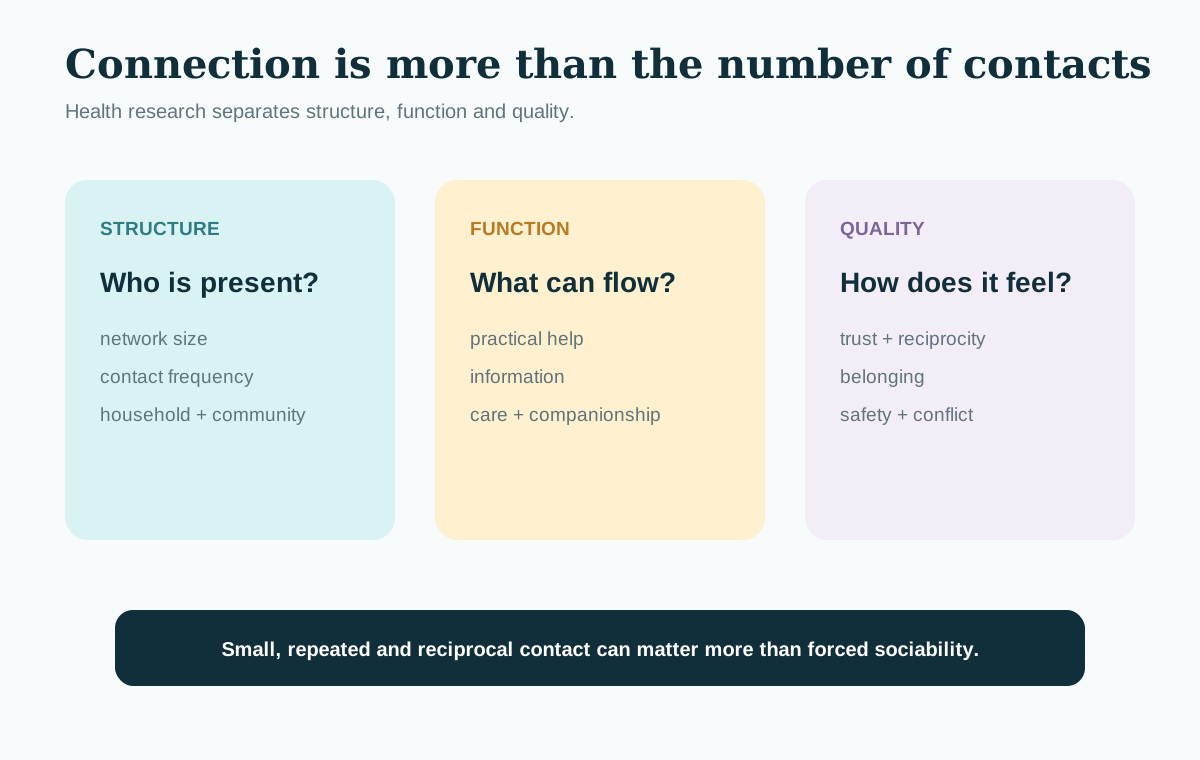
- Connection includes network structure, practical function and relationship quality.
- Small, repeated and reciprocal contact is a more realistic target than “be more social.”
Two problems that can overlap—but do not have to
Social isolation describes limited relationships, contact or participation. Loneliness is subjective: the gap between the connection someone wants and experiences. A person can live alone without feeling lonely, or feel painfully alone in a household or crowd. Measures, causes and useful responses therefore differ.
In 2025, the World Health Organization’s Commission on Social Connection described loneliness and isolation as widespread public-health concerns. That framing matters because transport, discrimination, disability access, work schedules, housing, caregiving and digital infrastructure shape opportunities to connect. It is not only an individual motivation problem.
What health studies find
Large cohort meta-analyses associate social isolation and loneliness with higher all-cause mortality. Studies also report links with cardiovascular disease, depression, cognitive outcomes and other aspects of health. The breadth and consistency make social connection important, but effect estimates combine different populations and definitions.
Most long-term evidence is observational. Illness can reduce mobility and contact; financial hardship can affect both health and relationships; depression can increase loneliness and mortality risk. Researchers adjust for many factors, but residual confounding and reverse causation remain possible. A headline comparing loneliness with a fixed number of cigarettes compresses unlike risks into a memorable metaphor and should not be read as an exact equivalence.
How connection could matter
Supportive relationships can offer practical help, information, encouragement, touch, shared resources and a sense of belonging. They can influence healthcare access, sleep, activity, stress responses and recovery from illness. Communities can also create norms and material conditions that support or harm health.
Quality changes the picture. Conflict, coercion, discrimination and caregiving strain can be physiologically and emotionally costly. More contact is not automatically healthier, and leaving an unsafe relationship may reduce network size while protecting health.
A habit made of three dimensions
| Dimension | Question | Small experiment |
|---|---|---|
| Structure | Who do I encounter reliably? | Choose one recurring group, route, class or weekly call. |
| Function | Can help, care or information move both ways? | Make one specific offer or request instead of “we should catch up.” |
| Quality | Do I feel respected and able to be real? | Invest in one safer relationship; set a boundary in a draining one. |
Low-pressure ways to strengthen contact
Start with “weak ties” if intimacy feels too demanding: greet a neighbour, return to the same library hour, volunteer for a defined shift or attend a group organised around an activity. Familiarity grows through repeated exposure. For existing relationships, make the invitation specific: a twenty-minute walk on Tuesday, a voice note on the commute or dinner once a month.
Combine connection with another valued routine. Walk with someone, cook in parallel on a call, join a repair group or accompany a friend to an appointment. Shared activity reduces the pressure to sustain constant conversation and gives the relationship a reliable container.
Digital contact counts, with context
A message, game, forum or video call can provide genuine support, especially across distance, disability or minority experience. The useful question is not whether connection is online or offline but what it enables: reciprocity, recognition, practical help and belonging—or comparison, harassment and compulsive use.
If passive scrolling increases loneliness, replace a small part with direct contact or a moderated community. If online contact is the safest available form, it need not be downgraded as unreal.
When to seek more support
Persistent loneliness can accompany depression, grief, anxiety, hearing loss, chronic illness or major life transitions. A primary-care clinician, therapist, social prescriber, community organisation or peer group may help identify both emotional and practical barriers. Hearing and mobility support can be social interventions too.
If a relationship is controlling or violent, prioritise safety and specialist support over increasing contact. If loneliness comes with thoughts of self-harm or inability to stay safe, contact emergency or crisis services in your location.
Sources and further reading
- WHO Commission on Social Connection (2025): From loneliness to social connection
- Wang et al. (2023): Social isolation, loneliness and mortality across 90 cohort studies
- Social isolation and all-cause mortality: meta-analysis of cohort studies
- Social connection, cognitive outcomes and mortality across 13 cohorts
- US Surgeon General: Social connection advisory and resources