Social Support and Stress: Why Connection Changes the Load
Emotional, practical and informational support can change how stress is understood and managed, but connection is not a universal buffer.
 Daniel OkaforStress & Emotional Health editor5 September 2026
Stress & Emotional Health · Science guide
Support can change how a difficult situation is interpreted, shared and endured. Connection does not erase the stressor, and the right kind of help depends on the person and moment.

In short
- Perceived available support is consistently associated with better health and coping.
- Support may buffer stress responses, but effects are not uniform.
- Emotional, practical, informational and companionship support solve different problems.
- Connection should not be prescribed as a substitute for money, safety or treatment.
What “social support” means
Researchers distinguish the structure of a network from the support a person believes is available and the support they actually receive. You can know many people and still feel unsupported, or have a small network that feels dependable. Perceived availability often predicts wellbeing more strongly than the number of contacts.
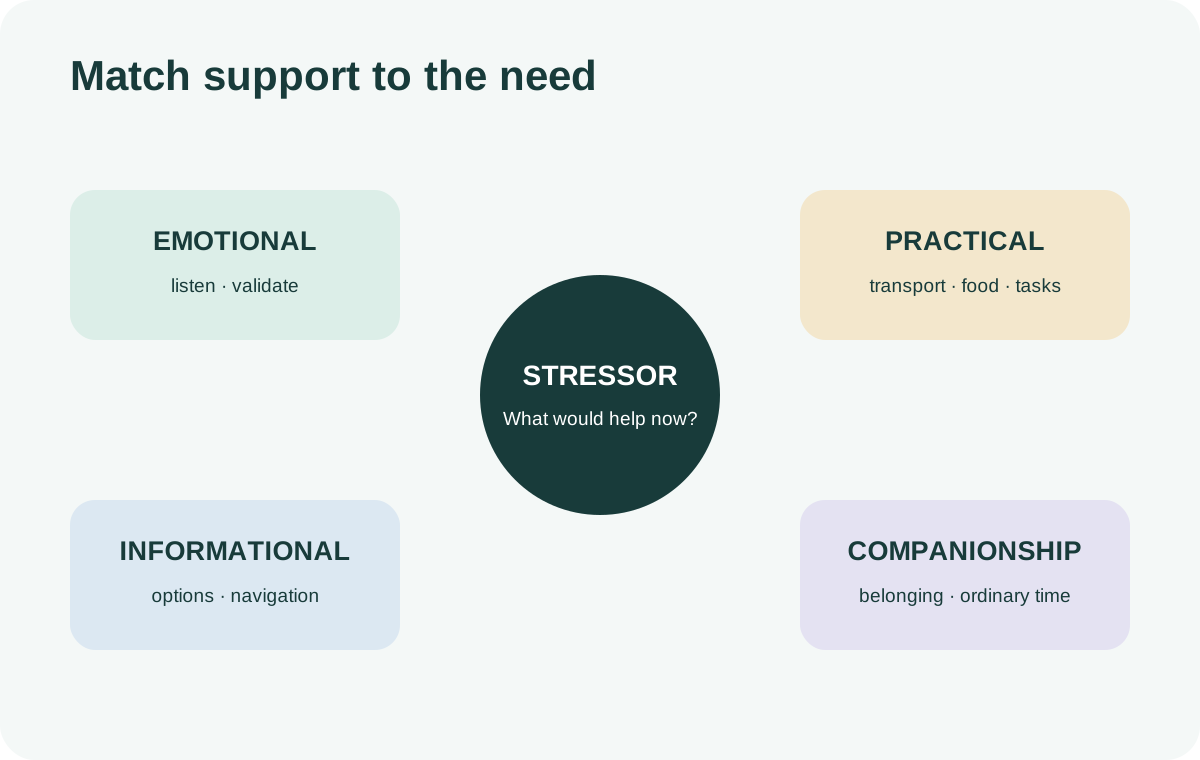
Support can be emotional, such as listening and reassurance; practical, such as childcare or transport; informational, such as helping interpret options; or companionate, such as sharing ordinary time.
The stress-buffering idea
One hypothesis is that support changes appraisal: a demand may seem more manageable when help is available. Supportive figures can also influence threat learning and physiological systems involved in stress. In daily life, shared planning may reduce uncertainty and practical help may reduce the demand itself.
Evidence does not show a uniform protective shield. A longitudinal study among people living with urban poverty found buffering mainly at the highest stress exposure and warned against overestimating what support can offset. Context and power matter.
Received help can miss the target
Unasked-for advice may imply incompetence. Reassurance may minimise a real danger. Help can create debt, expose privacy or come from a controlling person. The recipient's view of the support is crucial.
A useful opening question is: “Would it help most if I listened, helped solve it, or took one task?” That makes the support specific and gives the other person control.
Build a diversified support map
No single person needs to meet every need. Map four columns: people who listen, people who help practically, people with relevant knowledge and places where you feel ordinary belonging. Include professionals, community groups and services as well as friends or family.
Then identify one gap. If emergencies are the problem, exchange practical details with a neighbour. If specialist information is missing, find a credible service. If companionship is missing, choose a repeated low-pressure setting where familiarity can grow.
Small contact still counts
Connection does not have to begin with disclosure. Greeting a regular barista, attending a class or walking with someone can create predictability and belonging. Repetition is often more effective than waiting for an intense “deep conversation.”
Digital contact can be meaningful, especially for disability, distance or minority communities. Judge it by reciprocity and aftermath: do you feel seen and steadier, or compared and depleted?
How to ask clearly
- “Could you listen for ten minutes? I do not need solutions yet.”
- “Can you collect the prescription on Thursday?”
- “Would you sit with me while I make this call?”
- “Can we walk this weekend? I have had a hard week.”
A bounded request is easier to answer than “I need more support.” It also leaves room for an honest no.
How to support without taking over
Reflect what you heard, validate the difficulty without claiming to know exactly how it feels, and ask permission before advice. Offer one concrete action you can genuinely complete. Follow up after the dramatic moment, when support often disappears.
Keep your own limits. Sustainable support includes handovers and a wider network; it is not permanent availability.
When connection is not enough
Loneliness and isolation are not personal failures. Poverty, discrimination, migration, caring roles, inaccessible spaces and illness can constrain networks. Community and policy responses are necessary. Severe depression, trauma, abuse and suicidal thoughts require professional or emergency help, even when friends are present.