Sound Frequency and Vibration: Benefits Limits and Safety
Hertz is a unit, not a treatment. Separate audible sound, mechanical vibration and medical devices, then match claims to the real exposure, dose, evidence and safety limits.
 Jonas ReedCalm Signal editor5 September 2026
Calm Signal · Safety guide
Frequency describes repetition per second. It can refer to an audible tone, a mechanical platform or a medical device—but a shared number in hertz does not give those exposures the same mechanism or health effect.
In short
- Hertz is a unit, not a therapeutic ingredient.
- Audible sound acts mainly through hearing, attention and meaning; mechanical vibration also loads tissue and balance systems.
- Evidence for one device and protocol cannot be transferred to a playlist with the same frequency label.
- Hearing safety, medical context and stop criteria matter more than a famous number.
Start by separating three exposures
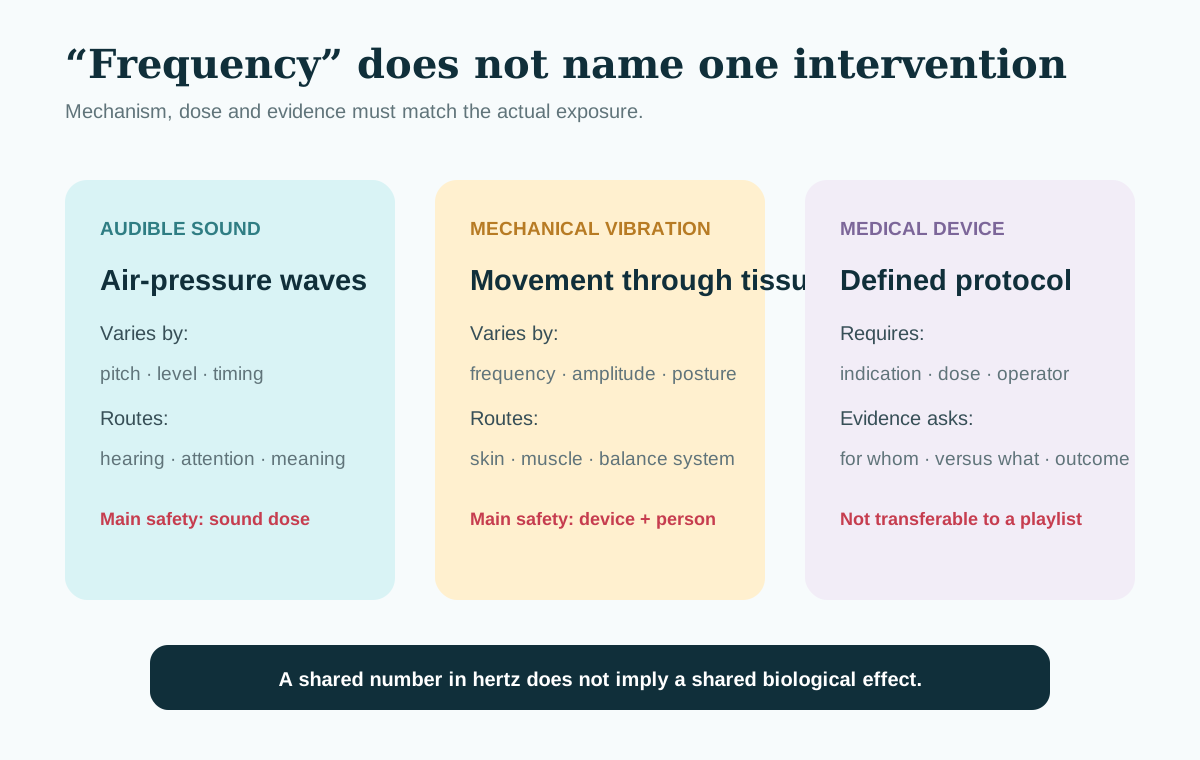
An audible tone is an air-pressure wave heard through speakers or headphones. Mechanical vibration moves a chair, platform or applicator in contact with the body. A medical device may use ultrasound, shock waves or another precisely controlled form of energy for a defined indication. These categories differ in dose, penetration, operator skill and risk.
What frequency tells you
For sound, frequency contributes to perceived pitch, but loudness depends strongly on sound-pressure level and hearing sensitivity. For mechanical vibration, frequency describes how often movement repeats; amplitude, acceleration, posture, contact area and duration help determine the physical dose. Two “40 Hz” experiences can therefore be profoundly different.
Where benefits may come from
Music and sound can influence attention, arousal, expectation, movement and social connection. Vibroacoustic therapy combines low-frequency sound with bodily vibration through a chair or bed. A 2022 scoping review of pain studies found highly heterogeneous protocols and evidence too sparse to identify beneficial properties; it asked researchers to report frequency, amplitude, pulsation and loudness.
Whole-body vibration is an exercise modality studied for strength, balance and some clinical outcomes. Reviews report potential benefits in selected populations, but protocols are not standardised and it is not consistently superior to conventional exercise. That literature does not show that listening to a tone of the same nominal frequency reproduces the effect.
Why “resonates with the organ” is not enough
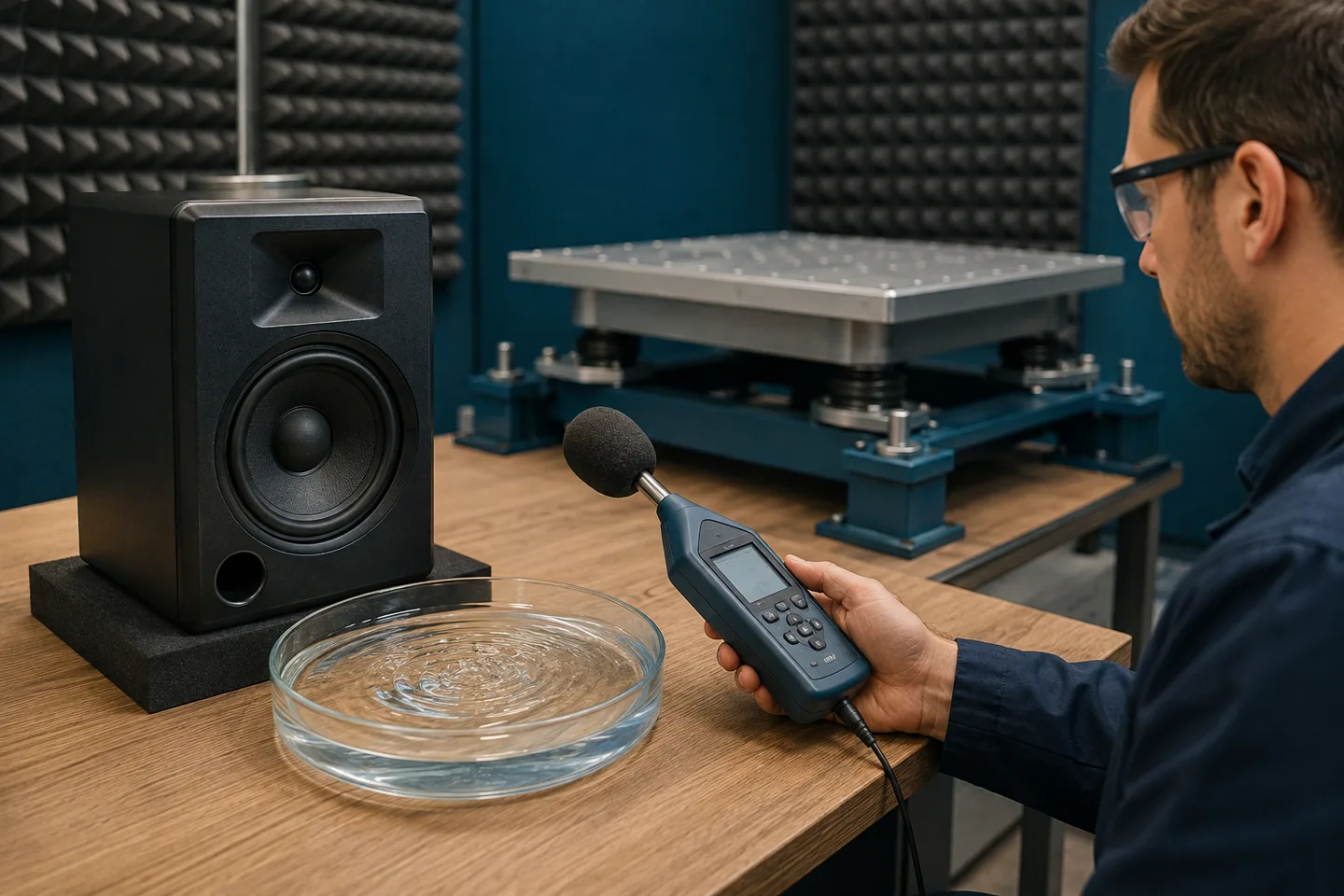
Biological tissues have complex mechanical properties and are coupled to surrounding structures. A demonstration of patterns in water or sand shows physics in that setup, not selective healing in a human body. To support a health claim, a study needs a defined population, intervention, comparison, outcome, adverse-event process and replication—not just an attractive pattern.
A claim-checking table
| Ask | Why it matters |
|---|---|
| What physically reaches the person? | Airborne sound, platform motion and ultrasound are not interchangeable. |
| What is the full dose? | Frequency without level, amplitude and time is incomplete. |
| Who was studied? | Healthy volunteers and people with a specific condition answer different questions. |
| What was the comparison? | Silence, rest, music and active exercise produce different estimates. |
| Was the outcome meaningful? | Short-term relaxation is not proof of disease treatment. |
Safety boundaries
For audible sound, protect hearing by managing level and duration; stop for pain, sudden hearing change, worsening tinnitus, dizziness or distress. For vibration platforms or chairs, follow device instructions and seek individual advice with pregnancy, recent surgery, implanted devices, severe cardiovascular disease, balance disorders, fractures or acute pain. Do not use immersive sound while driving or operating machinery.
Sudden hearing loss, severe vertigo, neurological symptoms, chest pain or collapse require urgent assessment. A frequency-labelled wellness product should never delay established care.
Sources and further reading
- Kantor et al. (2022): Vibroacoustic therapy and pain—scoping review
- Petrigna et al. (2024): Whole-body vibration exercise—umbrella review
- Whole-body vibration and quality of life in chronic conditions—systematic review
- Sound interventions and adult stress—scoping review
- World Health Organization: Safe listening