Starting Resistance Training: A Beginner Safety Checklist
A safe beginner plan uses simple patterns, manageable effort, clear stop signals and gradual progression.
 Priya ShahMovement & Mobility editor5 September 2026
Movement & Mobility · Safety guide
Starting strength work does not require advanced equipment or exhaustive sessions. A safe beginning uses familiar patterns, manageable effort and small, observable progress.
In short
- Begin with one or two full-body sessions a week.
- Finish most sets with several good repetitions still possible.
- Add repetitions or load gradually, not both at once.
- Sharp pain, chest pressure, faintness or new neurological symptoms are stop signals.
Before the first session
Most healthy adults can begin light-to-moderate activity without medical clearance. Get individual advice if you have unstable heart symptoms, uncontrolled blood pressure, recent surgery, pregnancy complications, severe balance problems or a condition that changes exercise safety. A previous injury does not automatically ban lifting, but may change the entry point.
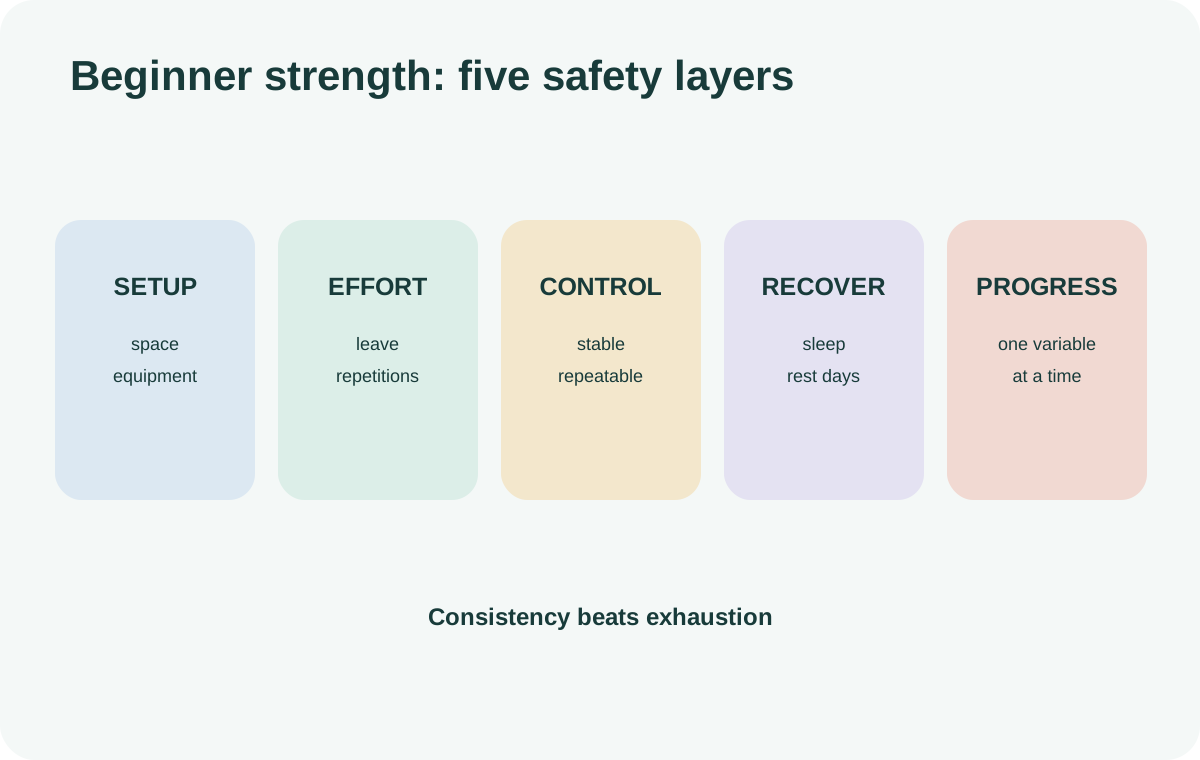
Choose a clear space, stable shoes or safe barefoot surface, and equipment you can control. Check bands for cracks and secure anchors. Keep children and pets away from moving weights.
Cover five movement patterns
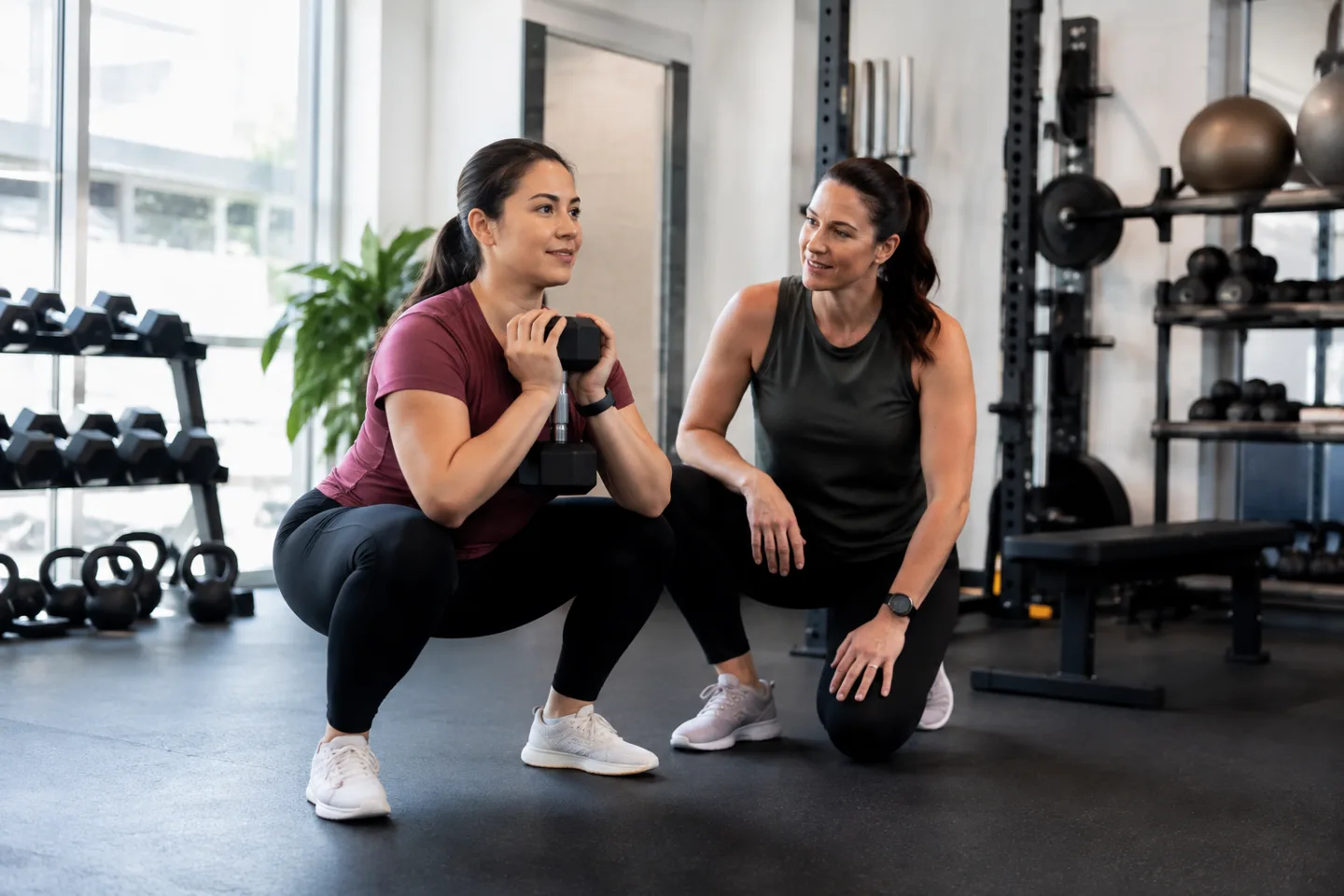
A simple session can include a squat to a chair, hip hinge, push, pull and carry or trunk-control task. Body weight, bands, machines and free weights can all work. Equipment is a tool, not a hierarchy.
Use a range in which you can breathe and control direction. Pain-free depth varies with proportions, mobility and experience. A box, rail or reduced range is a valid regression.
Choose a starting dose
Try one set of 8 to 12 controlled repetitions for four or five exercises. Rest long enough that breathing and technique recover. The final repetitions should feel purposeful but not desperate—roughly an effort of 5 to 7 on a 10-point scale.
Training to failure is not required for general health. Early consistency matters more than advanced techniques. A short session you can repeat is useful training data.
Use three technique checks
- Stable: the equipment, feet and contact points stay secure.
- Controlled: you can pause or reverse without collapse.
- Breathing: you are not unintentionally holding your breath through long repetitions.
There is no single correct joint angle for everyone. Seek coaching when you cannot find a comfortable repeatable version.
Progress with evidence from your body
When all planned repetitions are controlled for two sessions and recovery is normal, add one or two repetitions or the smallest available load. The gap between current and new activity predicts injury risk better than an arbitrary “perfect” percentage.
Expect adaptation, not constant soreness. Delayed muscle soreness can occur for a day or two after unfamiliar work, but severe pain, marked swelling, weakness or dark urine requires medical attention.
Recovery belongs in the programme
Leave at least a day between full-body sessions at first. Sleep, adequate food and protein, and management of other physical work affect recovery. An easy week during illness, travel or high stress preserves the habit.
Do not compensate for a missed session by doubling the next one. Resume the plan.
Red flags during exercise
Stop for chest pressure, faintness, severe unusual breathlessness, sudden weakness, loss of coordination or sharp escalating pain. Seek urgent help where indicated. Joint discomfort that persists, swelling or a progressive loss of function deserves assessment.
Normal muscular effort is local, builds gradually and eases after the set. It is different from electrical pain, numbness or a sense that a joint is giving way.
A beginner week
On Monday and Thursday, perform chair squat, supported row, wall or bench push-up, hip hinge and suitcase carry. Start with one set each. Walk or do other enjoyable movement on additional days. After two weeks, add a second set to two exercises rather than expanding everything.
Record exercise, load, repetitions and effort. Avoid judging the session by calories or exhaustion.