Staying Well While Travelling: Sleep Food Movement and Medicines
A practical travel checklist for medicine continuity, sleep adaptation, safer food and water, movement and destination-specific preparation.
 Claire DupontEveryday Health editor5 September 2026
Everyday Health · Checklist
Travel disrupts routines before it creates new ones. A small plan for medicines, sleep, food, water and movement protects the essentials without turning the trip into a health project.
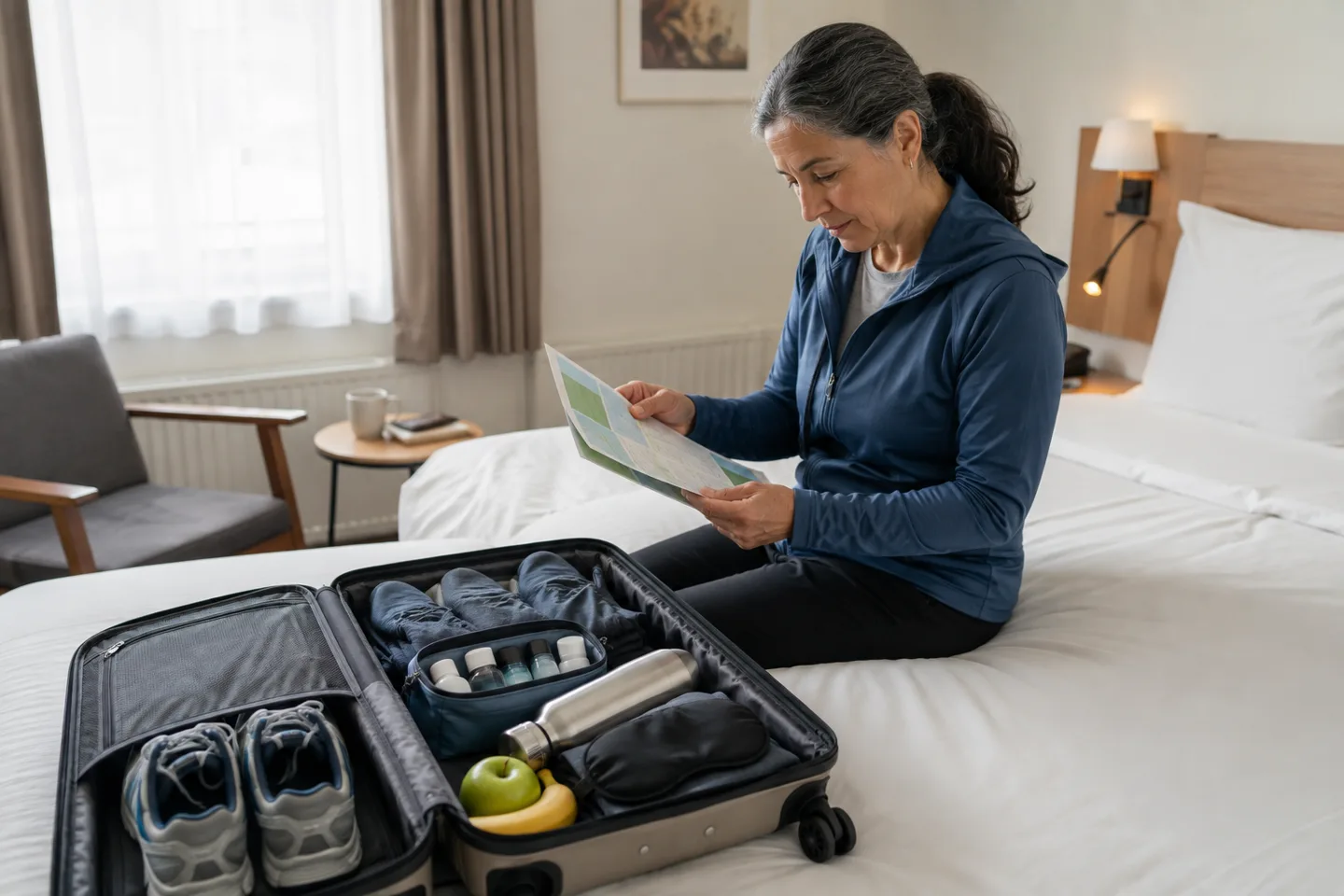
In short
- Check destination-specific health advice early.
- Carry regular medicines in original labelled containers, with copies of prescriptions.
- Use destination time, daylight and meal cues to adapt gradually.
- Choose safe food and water practices appropriate to the destination.
Before departure: reduce avoidable surprises
Review the itinerary, altitude, climate, activities, transport and access to care. For international travel, consult an official destination page and a travel-health professional early enough for vaccines or preventive medicines. Check insurance, including evacuation if the trip is remote.
List diagnoses, allergies, medicines and emergency contacts. Carry a concise medical summary and immunisation record. Check whether the destination restricts any prescription or over-the-counter medicine; legality at home does not guarantee permission abroad.
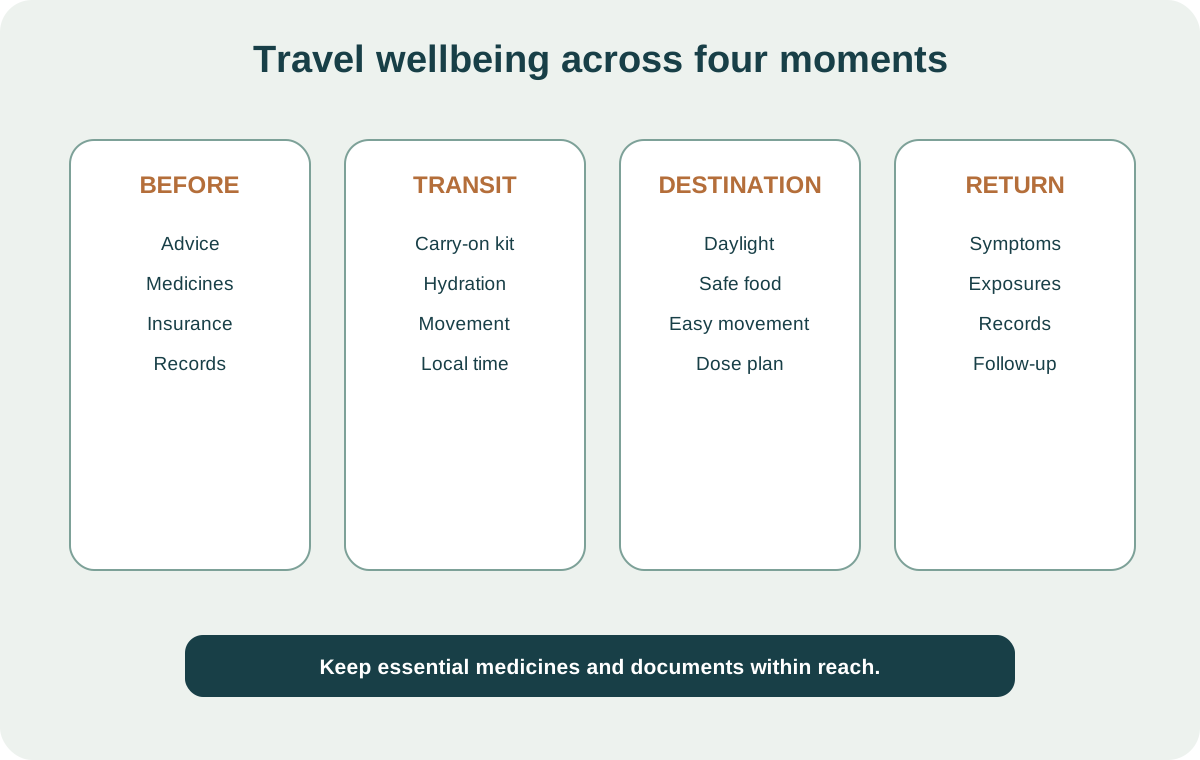
Medicines: protect continuity
Pack enough for the trip plus a reasonable delay buffer, within legal limits. Keep essential medicines and devices in carry-on baggage rather than checked luggage. Original labelled packaging and a prescription copy can simplify questions.
Ask a clinician how to adjust time-sensitive doses across time zones; do not improvise with insulin, anticoagulants, seizure medicines or other narrow-timing treatments. Know storage needs. Cabin, car and luggage temperatures can damage some products.
Bring only travel medicines recommended for your route and health. Antibiotics, antimalarials, sleep medicines and altitude medicines have specific indications and risks.
Sleep and jet lag
Jet lag is a mismatch between the internal clock and local time. Before a large time-zone change, modestly shifting sleep can help. During travel, start orienting meals, light and sleep to the destination when practical. At arrival, seek daytime light at an appropriate time, move gently and avoid a very long daytime sleep.
Short naps can improve alertness; long or late naps may delay adaptation. Hydration can ease travel discomfort, but it does not reset the circadian clock. Alcohol can worsen sleep quality. Melatonin timing is complex and product quality varies; ask for professional guidance if considering it.
Food and water without fear
Risk varies by destination. Where sanitation is uncertain, prefer food cooked thoroughly and served hot, sealed drinks, and water that is bottled, boiled or treated appropriately. Wash hands or use alcohol hand rub before eating. Avoid raw animal foods and unpasteurised products when risk is high.
Food safety matters more than maintaining a perfect diet. For energy, build meals from available staples: a grain or starchy food, a protein source, fruit or vegetables and water. Carry a familiar snack for delays, especially with diabetes, allergies or medication that must be taken with food.
Movement during transit
On long journeys, change position and walk periodically when safe. Ankle pumps and calf contractions are easy at the seat. People at elevated risk of blood clots should obtain individual advice about compression, medication and movement; aspirin is not a universal prevention strategy.
At the destination, use low-pressure movement to orient yourself: a daylight walk, brief mobility or the stairs. Delay hard training after severe sleep loss, heat exposure, altitude gain or illness.
A compact travel checklist
- Official destination health advice and needed appointments.
- Insurance documents and local emergency numbers.
- Regular medicines, copies, spare supply and storage plan.
- Glasses, hearing devices, chargers and essential medical equipment.
- Water bottle, safe snacks, hand hygiene, sun and insect protection.
- Sleep mask and earplugs if tolerated.
- Two copies of key records, stored separately.
During illness abroad
Know in advance where reputable care is available. Seek urgent help for severe breathing difficulty, chest pain, fainting, confusion, signs of stroke, major injury, uncontrolled bleeding, severe dehydration or allergic reaction. Fever after travel can require prompt assessment depending on destination and timing.
After returning, tell a clinician where you travelled, dates, activities, bites, exposures and treatment received. This context can change the differential diagnosis.