What Steady Energy at Breakfast Really Means
Steady energy is not a perfectly flat glucose line. Build a breakfast around fibre-rich carbohydrate, protein and enough food—then judge it by hunger, comfort and the morning you actually have.
 Noah WilliamsNutrition & Metabolism editor5 September 2026
Nutrition & Metabolism · Practical guide
“Steady energy” is not a special metabolic state or a promise that glucose will remain flat. In practical terms, it means a breakfast that leaves you comfortably fed, mentally available and able to reach the next meal without a dramatic swing in hunger.

In short
- Breakfast is useful for many people, but it is not compulsory for every healthy adult.
- A satisfying meal usually combines a fibre-rich carbohydrate, a meaningful protein source and some fruit or vegetables.
- Fat can add flavour and staying power, but more is not automatically better.
- The right breakfast depends on appetite, activity, culture, medication and the time of the next meal.
What “steady energy” can honestly mean
Energy after breakfast is subjective. It includes hunger, fullness, concentration, comfort and readiness to move—not just one reading from a glucose sensor. Blood glucose normally rises after a meal, and a rise is not evidence that a food is harmful. In people without diabetes, the body continually regulates glucose using several hormones and tissues.
The phrase becomes useful when it describes function. Did breakfast support the morning you actually had? Could you work, study, care for someone or exercise without becoming distracted by hunger? Did the meal feel comfortable rather than excessively heavy? Those questions are more informative than trying to engineer a perfectly flat line.
Breakfast is an option, not a moral test
Observational studies often find differences between people who eat and skip breakfast, but breakfast habits travel with many other differences in sleep, work schedules, income, activity and overall diet. Randomised trials have not shown that eating breakfast automatically “starts the metabolism” or causes weight loss.
A six-week trial in lean adults found no meaningful change in resting metabolic rate between a breakfast group and a group fasting until noon. The breakfast group consumed more energy but also recorded more physical-activity energy expenditure; the study was small and does not settle the question for everyone. The practical conclusion is modest: a person who feels well without an early meal does not need to eat one merely to obey a slogan.
Context changes the advice. Children, pregnant people, endurance athletes, shift workers and anyone using glucose-lowering medication may have different needs. In one small crossover trial in adults with type 2 diabetes, skipping breakfast worsened glucose responses after lunch and dinner. A prescribed fasting plan should therefore be discussed with the clinician managing the condition or medication.
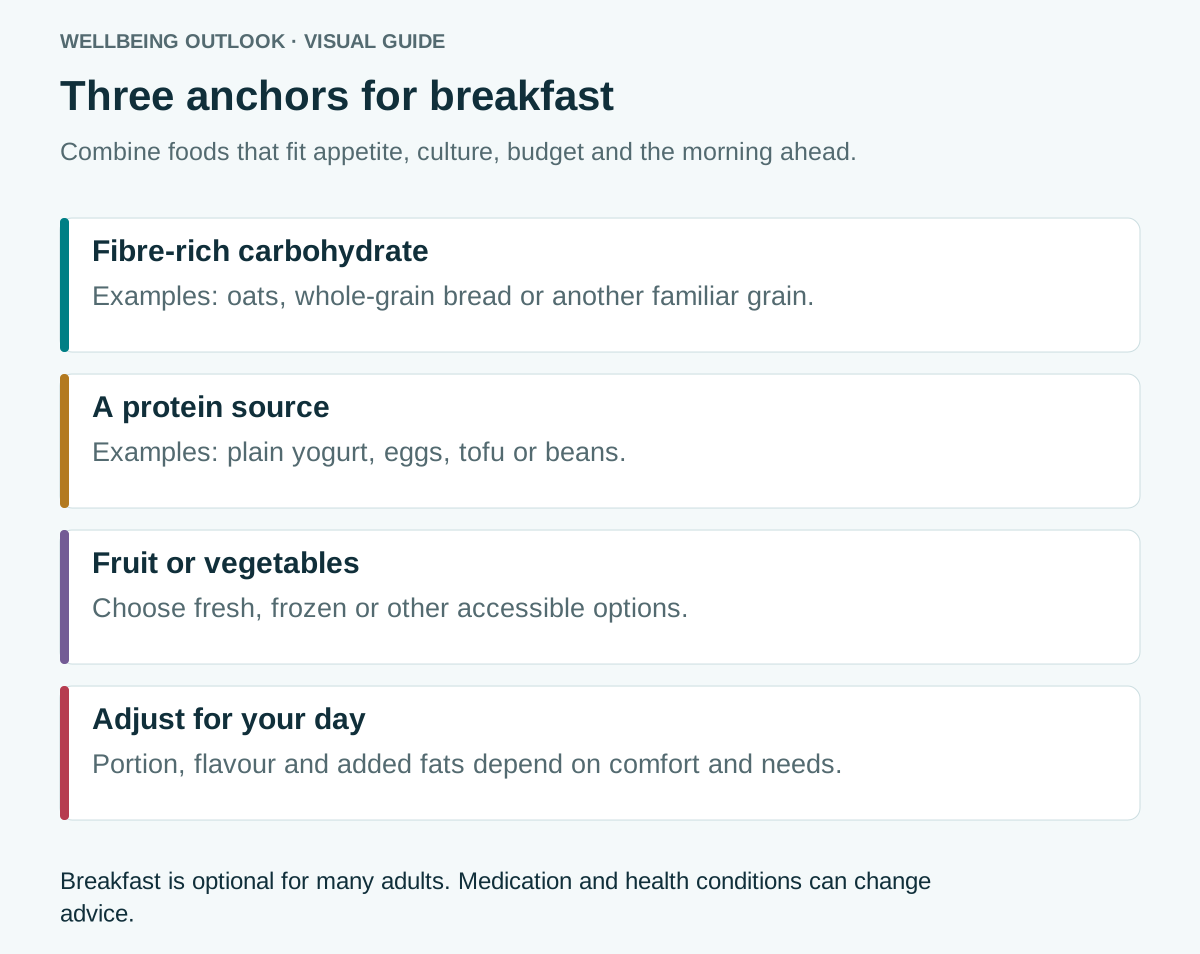
Build the meal around three anchors
1. A fibre-rich carbohydrate
Oats, wholegrain bread, unsweetened wholegrain cereal, beans, fruit and starchy vegetables provide carbohydrate together with fibre and micronutrients. Fibre changes the physical structure and digestion of a meal and can help with fullness. It is not a shield that cancels every other ingredient, and abruptly increasing it can be uncomfortable for some people.
The World Health Organization recommends that carbohydrate come mainly from whole grains, vegetables, fruit and pulses. That is a whole-day pattern, not a requirement to place every food group in one bowl.
2. A recognisable protein source
Options include yoghurt, milk, eggs, tofu, beans, lentils, fish, nuts and seeds. Small crossover trials have found that higher-protein breakfasts can increase short-term fullness and reduce the glucose excursion compared with lower-protein comparison meals. These experiments test particular meals in particular groups; they do not establish one universal gram target or prove that protein powder is necessary.
3. Produce, flavour and enough food
Fruit or vegetables add fibre, fluid, flavour and micronutrients. Nuts, seeds, avocado or an unsaturated oil can make a meal more satisfying. Portion still matters: a breakfast that is nutritionally impressive but too small for the morning ahead may not feel steady, while a very large meal may produce sluggishness simply because digestion is work.
A practical breakfast matrix
| Starting point | Add for balance | Example |
|---|---|---|
| Oats or wholegrain cereal | Protein plus fruit or seeds | Porridge with plain yoghurt, berries and walnuts |
| Toast | A protein topping and produce | Wholegrain toast with egg and tomatoes |
| Fruit | Protein and a more substantial fibre source | Fruit with unsweetened yoghurt and oats |
| Leftovers | No special breakfast rules required | Beans, vegetables and brown rice |
| Grab-and-go | Choose two or three components | Banana, plain yoghurt and a small handful of nuts |
These are templates, not prescriptions. Fortified dairy alternatives can work well; check that an alternative provides the nutrients you expect rather than assuming every plant drink is nutritionally equivalent to milk.
Why a sweet breakfast can feel short-lived
A pastry, sweet drink or refined cereal can deliver plenty of energy while providing relatively little protein or fibre. For some people, that combination is followed by earlier hunger. The response is not identical in everyone, and tiredness later in the morning may also reflect short sleep, dehydration, medication, stress or simply an insufficient portion.
The useful experiment is addition before prohibition. Add yoghurt or nuts to cereal; put peanut butter alongside toast and fruit; choose a less sweet version and add your own fruit. A breakfast does not have to be low-carbohydrate to be satisfying.
Caffeine can disguise the question
Coffee and tea can increase alertness, but they are not substitutes for food when food is needed. A large dose may also feel like “energy” while producing shakiness, anxiety, reflux or a later sleep problem. Notice both amount and timing. If a breakfast seems to work only when accompanied by escalating caffeine, sleep and workload deserve attention too.
A seven-day breakfast test
- Choose a breakfast you can realistically repeat three or four times.
- Write down its main components, approximate portion and when you ate.
- At two hours, note hunger, concentration and digestive comfort on a simple 0–10 scale.
- Record when you next became genuinely hungry and whether you reached for an unplanned snack.
- On other days, change one feature—for example, add protein or replace a refined grain with a higher-fibre option.
- Compare patterns without treating one unusual morning as a verdict.
Keep sleep, caffeine and morning activity in the notes. They may explain more than the recipe. A continuous glucose monitor is not required for this exercise, and readings from consumer devices should not be used to diagnose diabetes.
When generic breakfast advice is not enough
Seek individual advice if eating causes recurrent dizziness, faintness, vomiting or significant abdominal symptoms; if there is unexplained weight loss; or if food rules are becoming fearful or compulsive. People with diabetes, kidney disease, gastrointestinal conditions, food allergies or a history of an eating disorder may need advice that differs from a general healthy-eating template.