Mobility in Ten Minutes: A Practical Daily Framework
A ten-minute mobility routine can rehearse comfortable, controlled movement without chasing extreme range. Use a two–six–two framework for spine, hips and the day’s bottleneck.
 Priya ShahMovement & Mobility editor5 September 2026
Movement & Mobility · Practical guide
Mobility is the usable movement available to you, not a contest for the largest range. Ten minutes can help you explore stiff areas and rehearse everyday positions when the routine is specific, comfortable and repeatable.
In short
- Flexibility describes available range; mobility usually includes control within that range.
- A short routine works best when it targets movements relevant to your day.
- Mild stretch or effort can be acceptable; sharp, electrical or escalating pain is a reason to stop.
- Mobility complements strength and everyday activity rather than replacing them.
What ten minutes can realistically do
A single session may change comfort, temperature, confidence or short-term range. Lasting changes usually require repeated exposure and, often, strength in the new range. The routine is therefore a daily rehearsal, not a structural “reset.”
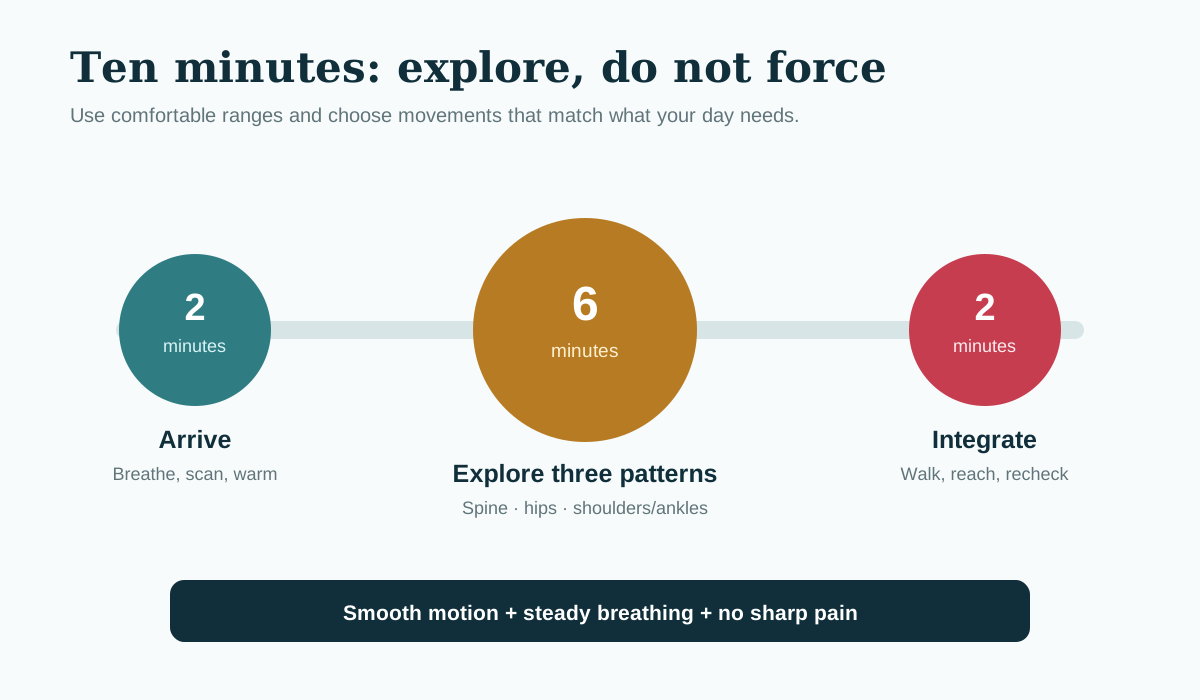
Minutes 0–2: arrive and check
Walk around the room, roll the shoulders and notice how turning, reaching and squatting feel today. Choose one to three areas rather than scanning every joint for a problem. Breathe normally and use a support if balance would distract from the movement.
Minutes 2–8: explore three patterns
Spine: supported rotation
Sit or stand tall with arms crossed loosely. Turn the chest within a comfortable range, pause, then return. Keep the pelvis mostly quiet without forcing it rigid. Repeat four to six times each side.
Hips: supported hip circles or leg swings
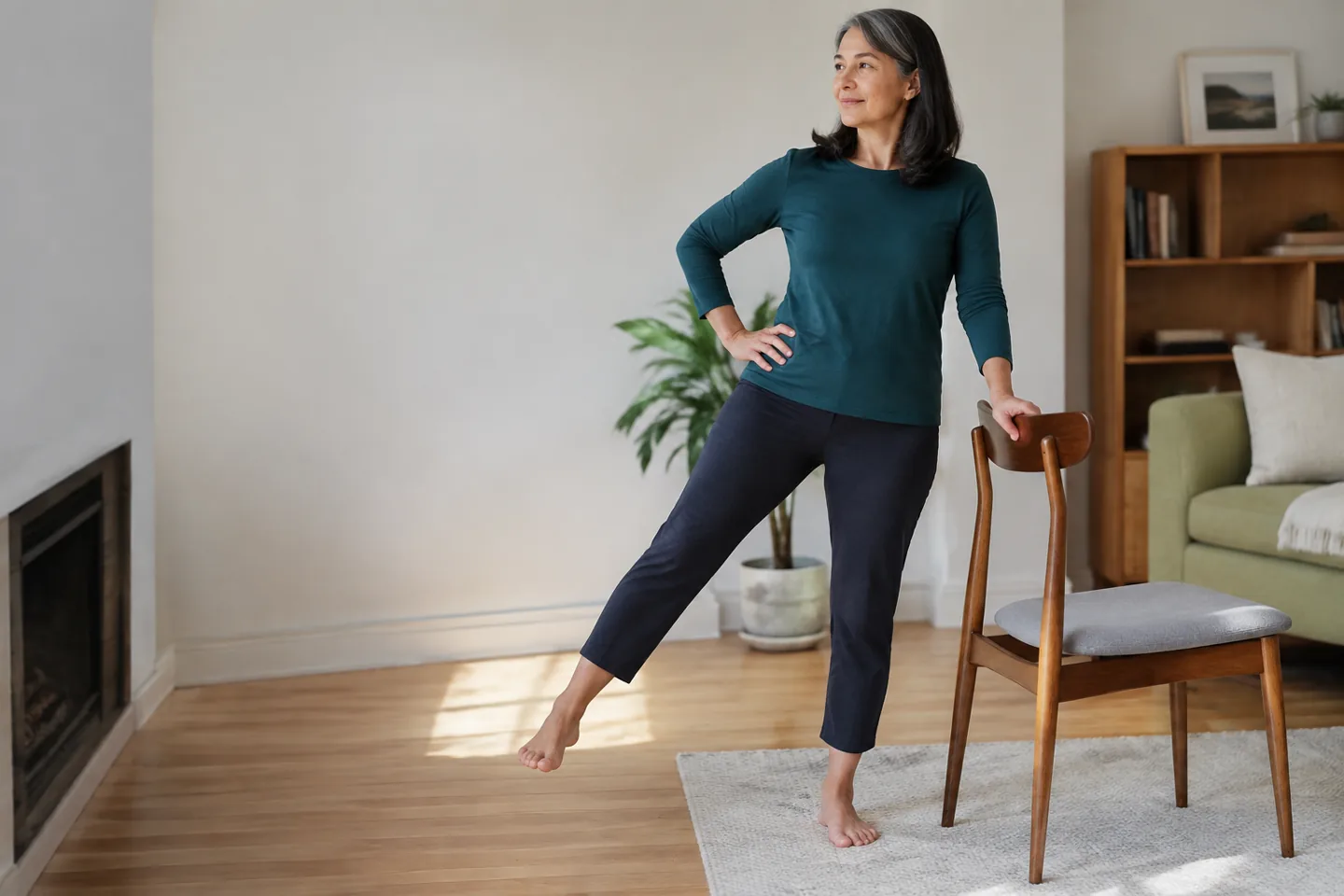
Hold a chair. Move one knee in a small controlled circle, or swing the relaxed leg gently forward and back. The standing leg stays soft. Choose a range in which the trunk does not need to lurch.
Shoulders or ankles: pick the day’s bottleneck
For shoulders, slide forearms up a wall without pinching. For ankles, rock the knee toward the toes while keeping the heel down. Perform slow repetitions rather than a long aggressive hold.
Minutes 8–10: integrate
Walk, reach overhead, sit and stand, or repeat the action you wanted to improve. Ask whether movement feels easier, the same or worse. “The same” can still be useful information. If worse, reduce range or choose a different pattern next time.
Progress without chasing pain
| Signal | Response |
|---|---|
| Mild stretch or muscular effort that settles | Continue slowly |
| Pinching at the end of range | Reduce range or change direction |
| Sharp, electric or radiating pain | Stop that movement |
| Dizziness, chest symptoms or sudden weakness | Stop and seek appropriate assessment |
Stretching can improve range over time, and strength training through suitable ranges can also build mobility. Balance and strength deserve particular attention with ageing. The World Health Organization recommends varied multicomponent activity emphasising functional balance and strength for older adults at risk of falls.
When to get individual guidance
Recent injury or surgery, joint instability, unexplained swelling, progressive weakness or neurological symptoms need tailored advice. A physiotherapist or qualified exercise professional can help select movements and loading. Hypermobility may call for control and strength rather than more end-range stretching.