Therapeutic Music Instruments: Tradition Mechanism and Evidence
In music therapy, the goal and the person guide the instrument. Explore how voice, percussion, pitched instruments and technology support participation without ‘healing frequency’ claims.
 Jonas ReedCalm Signal editor5 September 2026
Calm Signal · Feature
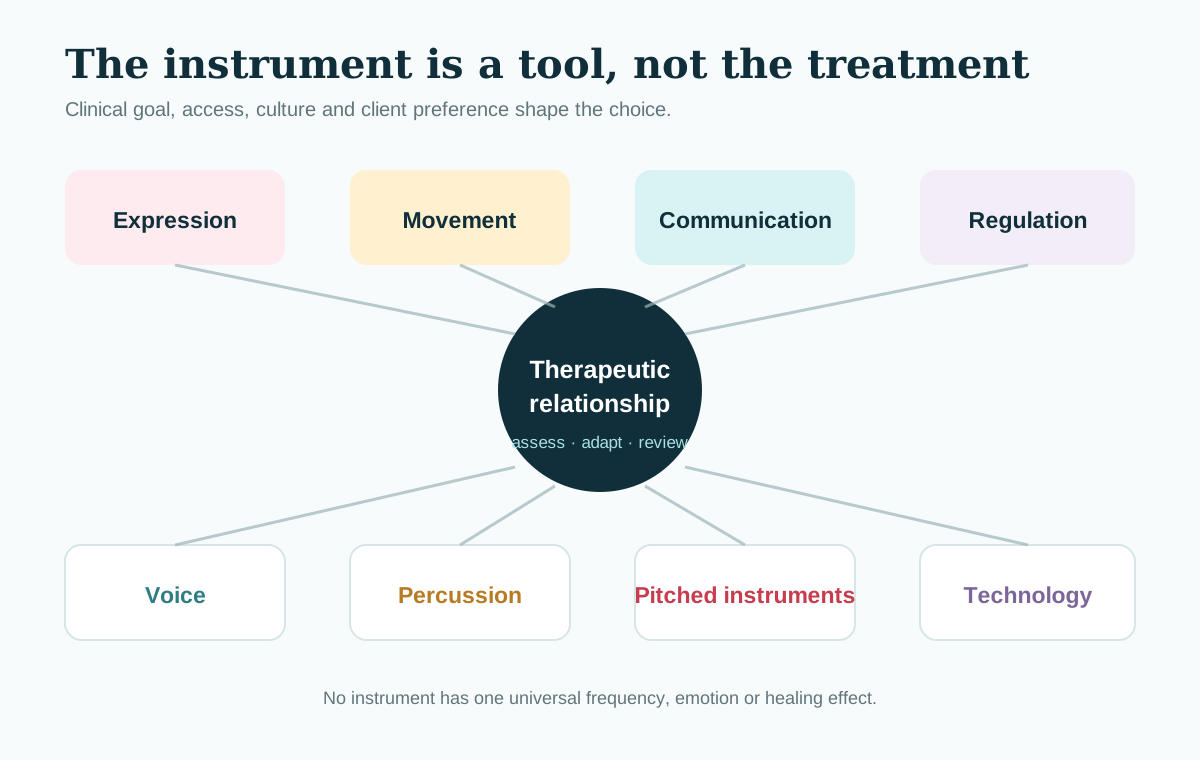
A drum, voice, guitar or tablet does not carry one fixed therapeutic effect. In music therapy, the instrument is selected around a person’s goals, preferences, culture, access needs and the relationship with a qualified practitioner.
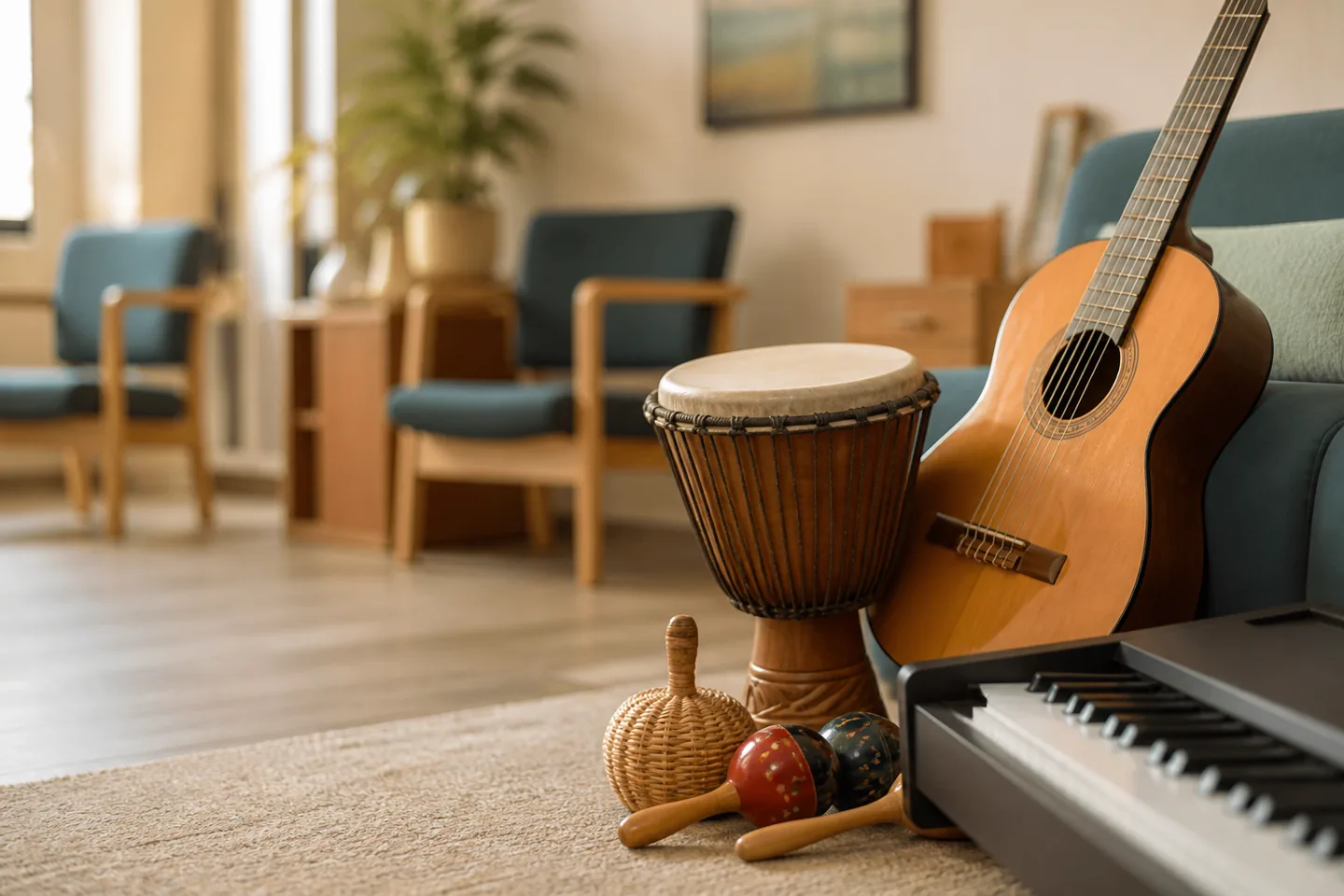
In short
- Music therapy is a clinical and relational practice, not simply listening to a therapeutic playlist.
- Instrument choice follows the goal and the person; no instrument has a universal healing property.
- Active music-making and receptive listening ask different things of the participant.
- Volume, physical access, sensory tolerance and hearing safety belong in the plan.
The instrument follows the goal
A music therapist may work toward communication, emotional expression, attention, movement, social participation, pain coping or quality of life. The same hand drum could support turn-taking in one session, steady movement in another and provide a non-verbal outlet in a third. What matters is the designed interaction: what the person is asked to notice or do, how the therapist responds, and whether the activity serves the agreed aim.
Voice: immediate and personal
Humming, singing, spoken rhythm and breath-supported sound require no separate object. Voice can support language, shared timing, autobiographical memory or emotional expression. It can also feel exposed. Participation might therefore mean choosing lyrics, listening, speaking a phrase or using a quiet vocal sound rather than performing a song.
Percussion: clear timing and rapid feedback
Drums, shakers and hand percussion make cause and effect obvious: a movement produces a sound now. They can support pulse, bilateral movement, imitation and group turn-taking. The activity can be adapted with lighter instruments, mounts, mallets or digital triggers. Loudness and vibration need active management for people with hearing, pain, startle or sensory sensitivities.
Pitched instruments: melody, harmony and structure
Piano, keyboard, guitar and tuned percussion offer notes that can be organised into predictable patterns or explored freely. A therapist may simplify harmony so a participant can make meaningful choices without needing formal technique. These instruments can accompany singing, cue movement or hold a stable musical frame while the person experiments.
Technology and adapted instruments
Tablets, switches, electronic instruments and recording tools can make music-making possible with limited grip, reach, breath or stamina. Technology may also let someone shape timbre, loop a phrase or compose privately before sharing. Adaptation is not a lesser version of participation; it is how the task becomes genuinely accessible.
Active and receptive methods
| Method | What happens | Possible demands |
|---|---|---|
| Active | Improvising, singing, playing, composing or moving | Motor effort, choice-making, social exposure |
| Receptive | Listening with guided attention, imagery or discussion | Sustained attention, memory, emotional tolerance |
| Mixed | Listening and then responding through sound, words or movement | Switching between reflection and action |
Research reviews report benefits in some clinical settings, including anxiety and serious mental disorders, but studies vary in population, method, dose and comparison group. The evidence does not show that one instrument or pitch treats a particular organ or condition. A plausible account involves attention, reward, prediction, timing, movement, memory, social coordination and the therapeutic relationship—not a single special frequency.
Questions worth asking
- What is the specific goal, and how will progress be noticed?
- Is this music therapy delivered by an appropriately trained and credentialed practitioner?
- Can the person decline, change the music or stop the activity?
- How are hearing, fatigue, trauma associations and cultural meaning considered?
- Is the claim about the method supported, or is it being attributed to an instrument alone?
Music can be meaningful outside therapy too. Personal listening, community music and learning an instrument may support wellbeing without being clinical treatment. Clear language protects both forms of experience.