Ultra-Processed Foods: What the Classification Can and Cannot Tell You
NOVA can flag dietary patterns, but it is not a complete nutrition score. A balanced guide to definitions, evidence, limitations and calmer shopping decisions.
 Noah WilliamsNutrition & Metabolism editor5 September 2026
Nutrition & Metabolism · Explainer
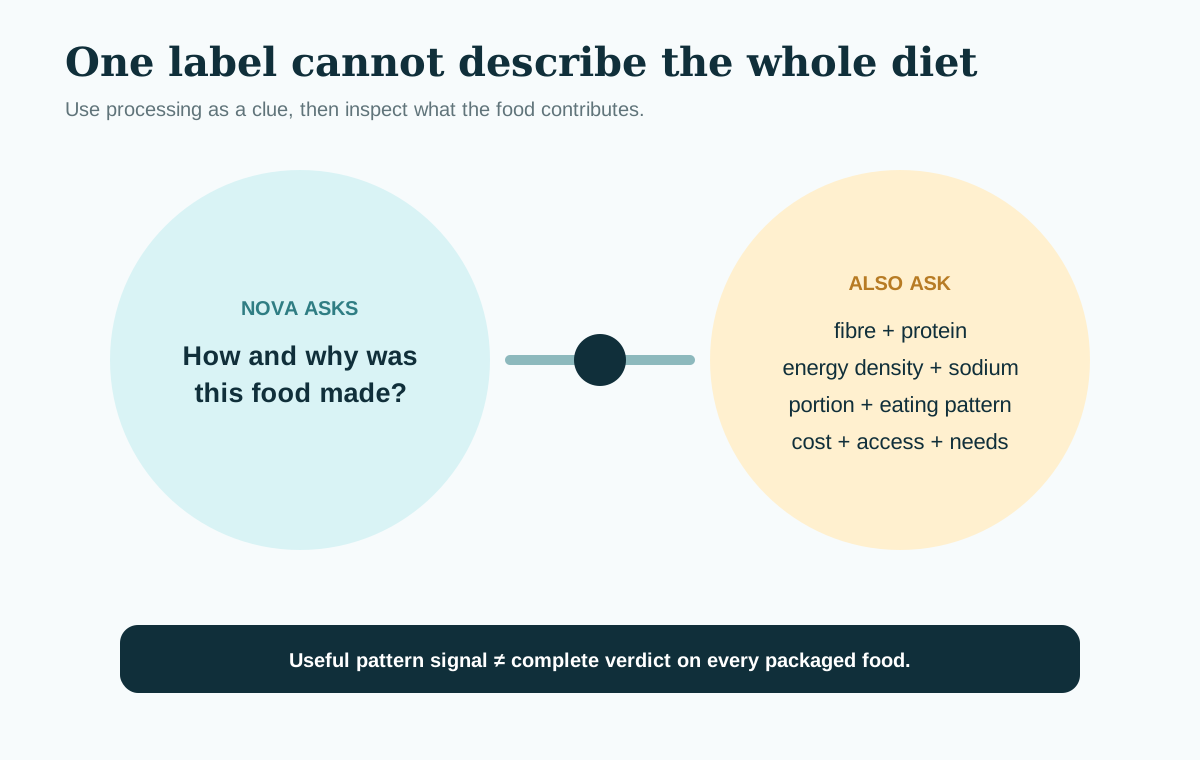
“Ultra-processed” is a useful description of how many industrial products are formulated, but it is not a complete nutrition score. Use the classification to notice patterns—not to turn every packet into a moral verdict.

In short
- NOVA groups foods by the extent and purpose of processing, not simply by nutrient content.
- High ultra-processed food intake is consistently associated with poorer health in observational research.
- A controlled trial found greater energy intake and weight gain on one ultra-processed menu, but it did not isolate every possible mechanism.
- Classification can be ambiguous, and some packaged foods provide affordable, fortified or medically useful nutrition.
What NOVA is trying to describe
NOVA separates foods into four broad groups: unprocessed or minimally processed foods; processed culinary ingredients; processed foods; and ultra-processed foods. The fourth group generally contains industrial formulations assembled from refined ingredients, substances extracted or modified from foods and additives used to create flavour, colour, texture or convenience.
The system asks about the nature and purpose of processing. Freezing vegetables, pasteurising milk or milling oats counts as processing but not necessarily ultra-processing. A packaged product is not automatically group four, and a home-cooked dish is not automatically nutritionally balanced.
Why the category became influential
Across many cohorts, people reporting higher ultra-processed food intake also show higher rates of several adverse outcomes. A large 2024 umbrella review mapped associations with mortality, cardiovascular disease, metabolic outcomes, mental health and other endpoints. The consistency is concerning, but much of this evidence is observational and cannot by itself identify which features cause harm.
Ultra-processed dietary patterns often differ in energy density, fibre, protein, sodium, added sugars, texture, eating speed, marketing and availability. They can also track income, time pressure, food access and other behaviours. Statistical adjustment reduces some confounding, not all of it.
What the controlled feeding trial showed
In a small inpatient crossover trial, 20 adults were offered ultra-processed and unprocessed diets for two weeks each. The menus were presented as matched for several nutrients, and participants could eat as much as they wanted. During the ultra-processed phase they consumed about 500 more kilocalories per day on average and gained weight; during the unprocessed phase they lost weight.
Because people ate faster and the available foods differed in characteristics such as energy density for foods actually consumed, the trial does not prove one universal “processing effect.” It does show that the tested ultra-processed menu causally increased intake under those controlled conditions. Longer and more varied trials are needed to separate texture, palatability, nutrient density, food form and other mechanisms.
Where the label can mislead
| Useful signal | Possible blind spot |
|---|---|
| Flags product formulations designed for convenience and high palatability. | Different coders may classify the same item differently without full ingredient details. |
| Captures aspects not visible in sugar, fat and salt alone. | Does not quantify dose: one serving and most of the diet receive the same category. |
| Helps describe population dietary patterns. | Products within the category vary widely in fibre, protein, sodium and fortification. |
| Encourages more minimally processed staples. | Can stigmatise practical foods used because of disability, budget, culture or time. |
A calmer way to shop
Start with what the food contributes. Look for fibre-rich grains, pulses, fruit, vegetables, nuts and seeds; enough protein for the meal; and sodium, added sugar or saturated fat in context. Compare similar products rather than demanding perfection. A higher-fibre bread, unsweetened yogurt, fortified plant drink or canned beans may be useful even if packaging or classification creates uncertainty.
Then look at the eating pattern. If snacks, sweet drinks and ready meals are crowding out filling staples, change one repeat purchase or meal anchor. Add fruit to breakfast, keep frozen vegetables available, choose water more often or combine a convenience food with beans and vegetables. Reduction does not require an all-or-nothing ban.
Who needs extra nuance
People managing allergies, gastrointestinal conditions, kidney disease, diabetes, eating disorders or medically prescribed diets may prioritise needs that NOVA does not capture. Texture-modified foods, oral nutrition supplements and fortified products can be clinically valuable. Safety, adequacy and accessibility come before ideological purity.
Labels also differ by country, and ingredient lists do not reveal every industrial process. Treat uncertain classification as uncertain rather than forcing a product into a group. A sustainable improvement you can afford and repeat is more useful than anxiety about a borderline ingredient.
Sources and further reading
- Monteiro et al. (2019): What ultra-processed foods are and how to identify them
- Hall et al. (2019): Inpatient randomised controlled feeding trial
- Lane et al. (2024): Ultra-processed food exposure and adverse health outcomes—umbrella review
- Debate article: limitations of ultra-processed food classification for guidance
- World Health Organization: Healthy diet