Vision Checks Across Adulthood: What to Ask
Prepare for adult eye checks by understanding what is tested, how risk shapes timing and which symptoms are urgent.
 Sofia LindbergLongevity & Prevention editor5 September 2026
Longevity & Prevention · Health literacy
Seeing clearly through current glasses is not the same as having healthy eyes. A comprehensive check looks at function, risk and eye structures that may change before symptoms appear.
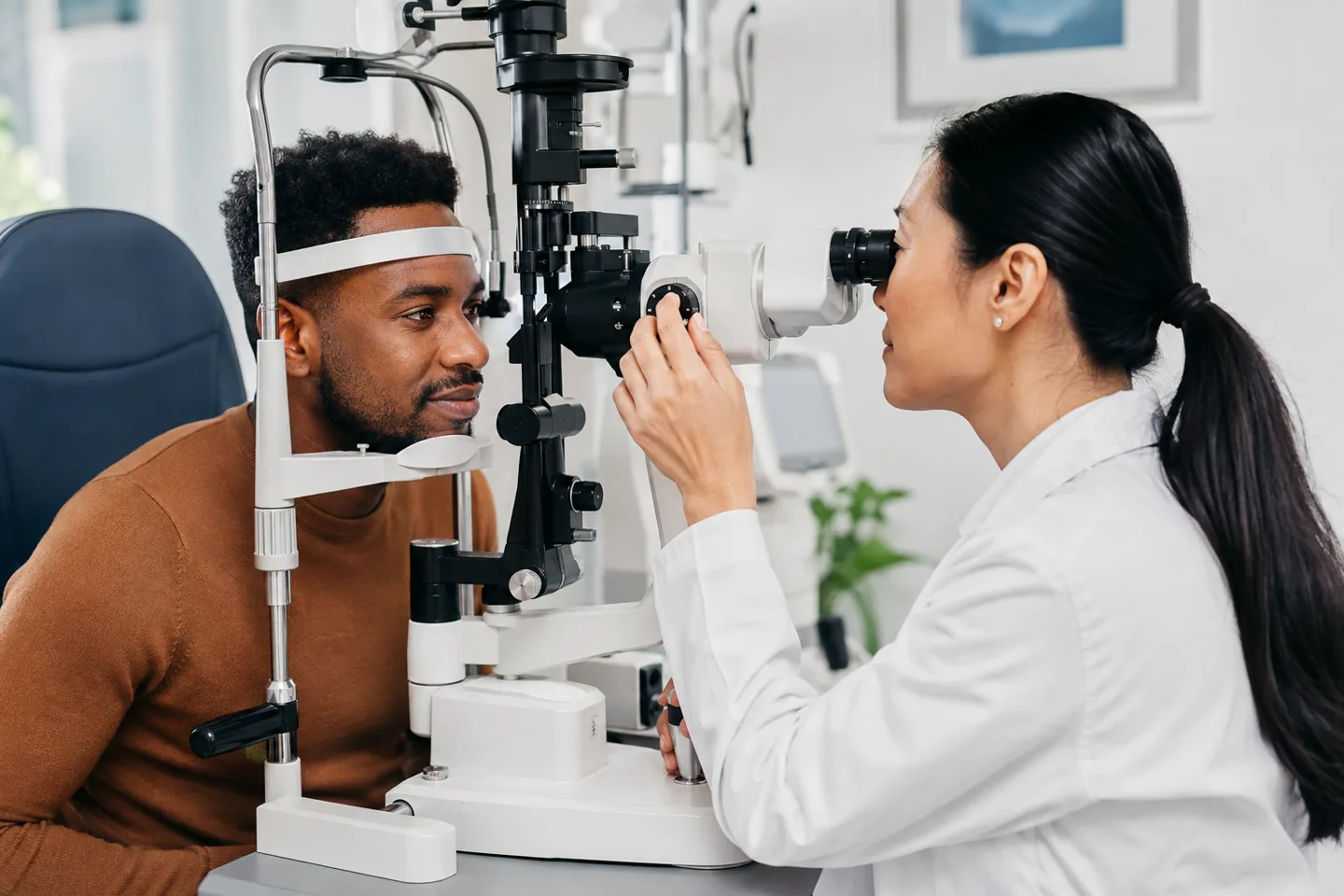
In short
- Check frequency depends on age, symptoms, family history and conditions such as diabetes.
- Dilation allows a wider view of the retina and optic nerve.
- Bring medicines, glasses and a short symptom history.
- Sudden vision loss, a curtain or new flashes with many floaters is urgent.
A refraction is not the whole exam
Reading letters and refining a glasses prescription assesses visual acuity and refractive error. A comprehensive examination may also assess eye movements, pupils, peripheral vision, pressure, the front of the eye, retina and optic nerve. Tests are selected according to risk and findings.
Many eye diseases have few early symptoms. Feeling fine therefore does not remove the value of risk-based checks.
Who may need closer follow-up?
Risk rises with age and family history, and for people with diabetes, high blood pressure, previous eye injury, high short-sightedness or medicines that affect the eye. Some racialised populations have higher glaucoma risk because of biological, social and access factors. Recommendations vary between countries.
Ask a clinician for an individual interval rather than relying on a universal schedule. The US National Eye Institute advises regular dilated exams for several higher-risk groups and notes that frequency should reflect risk.
What dilation adds
Drops widen the pupil so the clinician can inspect more of the retina and optic nerve. Vision may be blurred and light-sensitive for a few hours. Bring sunglasses and ask whether driving afterwards is safe for you.
Retinal photography can be useful but does not always replace a dilated examination. Ask how the tests complement each other.
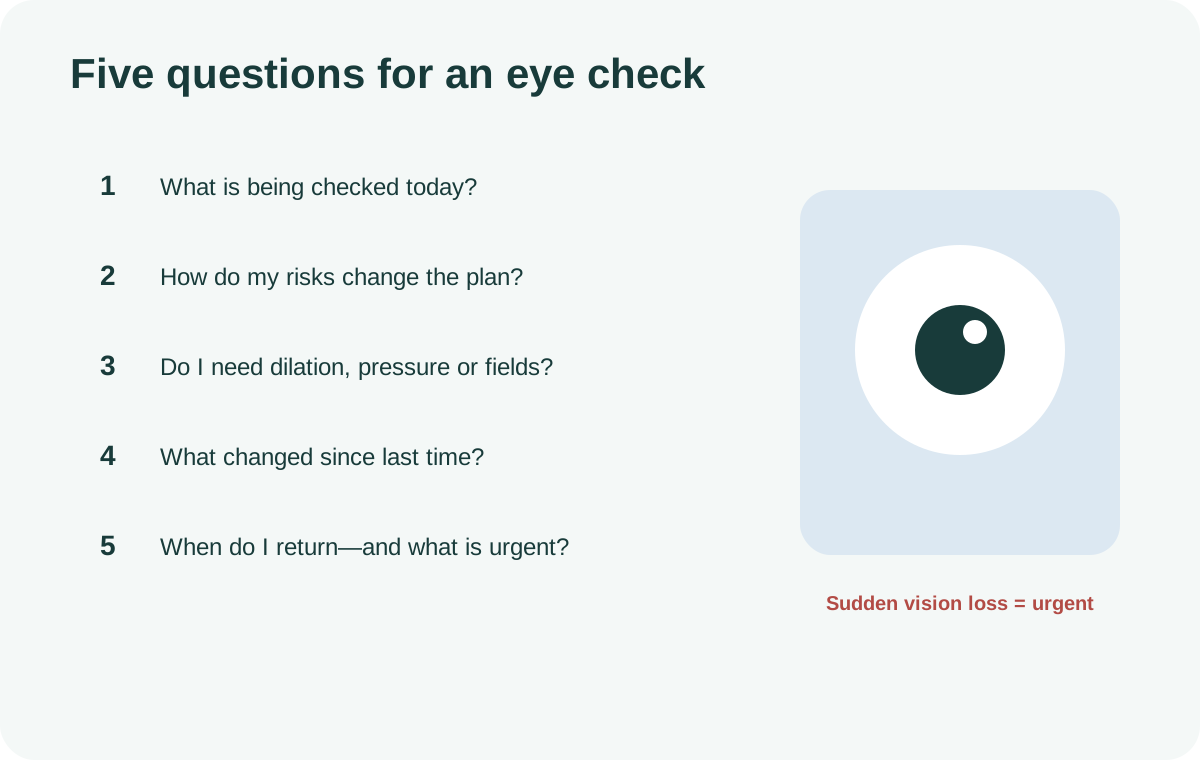
Five questions for the appointment
- What parts of eye health are being checked today?
- Do my symptoms or family history change my risk?
- Do I need dilation, pressure measurement or a visual-field test?
- Has anything changed since my previous exam?
- When should I return, and what symptoms should bring me back sooner?
Prepare useful information
Bring current glasses or contacts, a medicine and supplement list, eye-drop bottles and relevant family history. Note whether symptoms affect one or both eyes, began suddenly or gradually, and occur with headache, pain, halos, flashes or floaters.
Describe the task: night driving, reading, screens or recognising faces. “Blur” means different things in different settings.
Everyday protection
Use appropriate safety eyewear for tools, sport and chemicals. Wear sunglasses that block UVA and UVB, avoid smoking and manage diabetes and blood pressure with clinical care. Follow contact-lens hygiene and never sleep in lenses unless specifically prescribed.
Screen breaks can ease dryness and focusing fatigue but do not prevent every eye disease. Blink, adjust glare and place the screen at a comfortable distance.
Urgent warning signs
Seek same-day urgent assessment for sudden vision loss, a dark curtain or shadow, new flashes with a shower of floaters, severe eye pain, chemical injury or eye trauma. Vision change with weakness, facial droop or speech difficulty can be stroke and requires emergency help.
Do not wait for a routine appointment or drive yourself if vision is unsafe.
After the exam
Ask for the diagnosis or finding in plain language, the purpose of each treatment and the follow-up interval. Know how to use drops and whether they interact with contact lenses. If monitoring is chosen, clarify what change would trigger treatment.